
Frost doesn't need chipping. It needs a little warmth.
Let the Ice Let Go
How to defrost and clean a freezer safely, and why warm water works better than force.
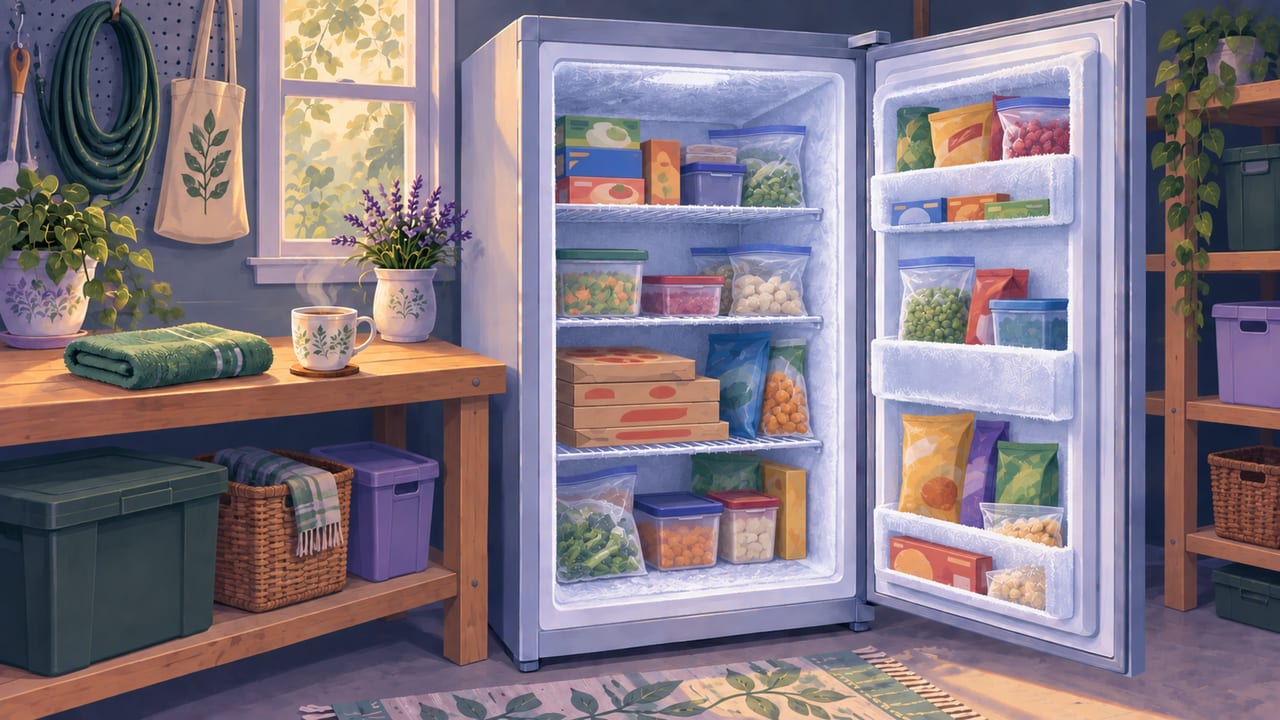
Defrosting the freezer is one of those jobs that feels bigger than it is. There's the food to deal with, the water you're sure will end up on the floor, and a thick white wall of ice that seems to be daring you. So the door stays shut, and the job waits another month. That's completely understandable.
Frost builds so slowly that you barely see it happen. One day a drawer sticks. Then a bag won't fit. Then you're pushing the door closed with your hip. When you finally look, it's tempting to grab a knife and start chipping. Please don't. It's the hard way, and the one way that can really hurt a freezer.
Ice isn't asking for a fight. Give it a little warmth and a little time, and it loosens its grip on its own. A couple of bowls of hot water do most of the work while you sit down with a cup of tea. Your part is mostly lifting the ice away when it's ready to go.
Where the frost comes from
Every time the door opens, a little warm, damp kitchen air slips in. The cold turns that moisture into frost on the walls. A few seconds here, a few seconds there, and over months it adds up.
So frost isn't a sign you've done anything wrong. It's just what happens when a cold box gets opened, day after day, by people who need to eat.
First, check whether yours needs it
Most newer fridge freezers are frost-free. They defrost themselves in small bursts you never see, so a wipe-down is all they need. Chest freezers and many upright freezers don't do this. They need defrosting by hand now and then.
Your manual will say which kind you have. A good sign it's time: the frost is about 1/4 inch thick, about the width of a pencil. Thicker frost takes up space and makes the freezer work harder to stay cold.
If yours is frost-free, skip ahead to "The regular wipe-down."
Keep the food cold
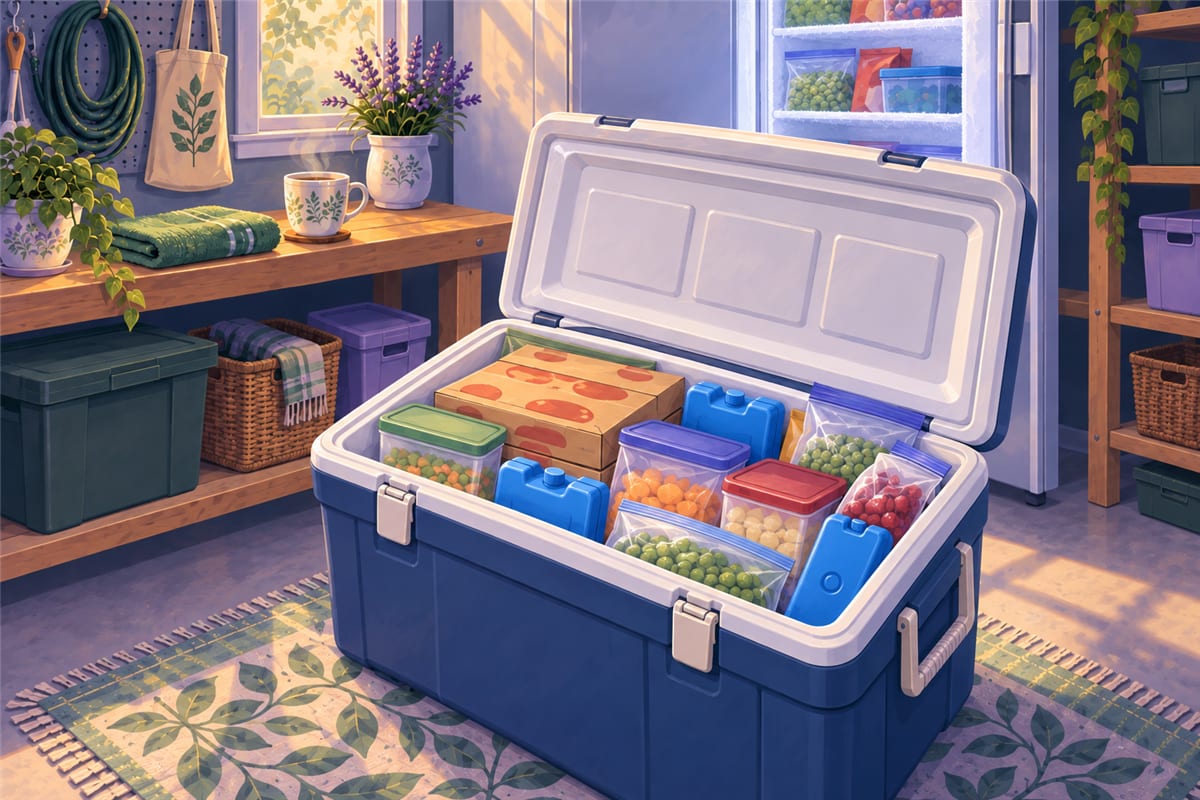
Pick a time when the freezer is fairly empty, like the day before a grocery trip. There's less to move.
Food stays safe when it stays cold, and a cooler buys you time. Pack the frozen food into one with ice packs, fullest things first. Packed close together, frozen food helps keep itself cold. Then keep the lid shut and work steadily. No cooler? A laundry basket lined with thick towels will do for a short time.
As you go, throw out anything that's clearly spoiled or badly freezer-burned. That's dry, gray or leathery patches. Everything else can wait for another day.
Defrosting a fridge freezer? Unplugging it stops the fridge too, so the fridge food goes in a cooler with ice packs as well.
Unplug and lay down towels
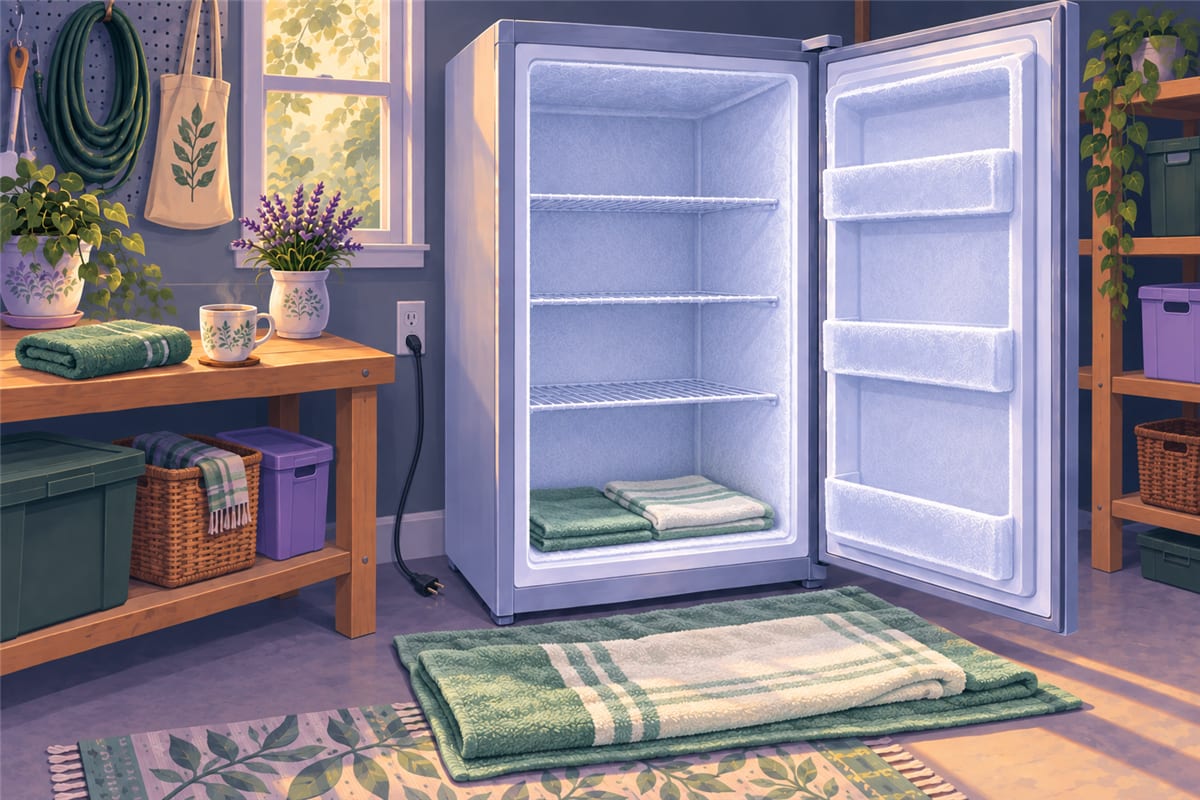
Unplug the freezer, or turn it off at its switch. Don't try to defrost one that's still running.
Take out any shelves, drawers and baskets that come out easily. A glass shelf that's frozen in place can stay for now. Set the loose pieces aside to warm up. Very cold glass can crack if it meets hot water, so wait until they feel like room temperature before you wash them.
Melting frost makes more water than you'd expect. Lay old towels on the freezer floor and on the kitchen floor in front of the door.
Some chest and upright freezers have a drain plug near the bottom. If yours does, check your manual and set a shallow pan under it.
Let hot water do the melting
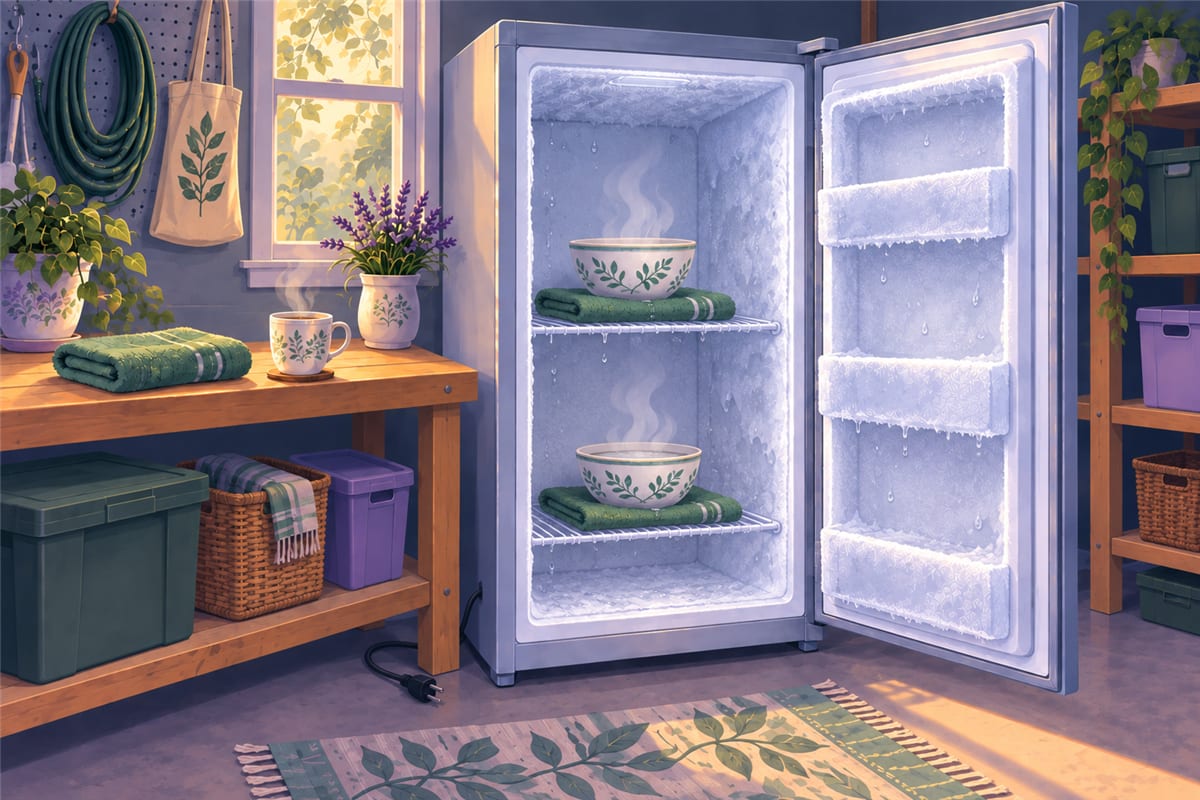
Fill two heat-safe bowls with hot water from the kettle or the faucet. Set each one on a folded towel inside the freezer, on a shelf or the floor. The towel protects the plastic from the heat.
Close the door and leave it for 15 minutes.
The steam warms the air inside, and the frost starts to loosen from the walls. It lets go in sheets and chunks instead of being chipped away bit by bit.
You open the door expecting a fight, and instead a big piece of ice just slides off into your hand. Lift away any frost that comes loose, with your hands or a plastic spatula. Push gently, and stop if it doesn't give. When the bowls cool, swap in fresh hot water and close the door again. Most freezers are clear in an hour or two.
As the towels get heavy, wring them out and swap in dry ones.
Short on energy?
Pack the food into the cooler, set the hot water inside, close the door and sit down. The water does the melting while you rest.
The regular wipe-down
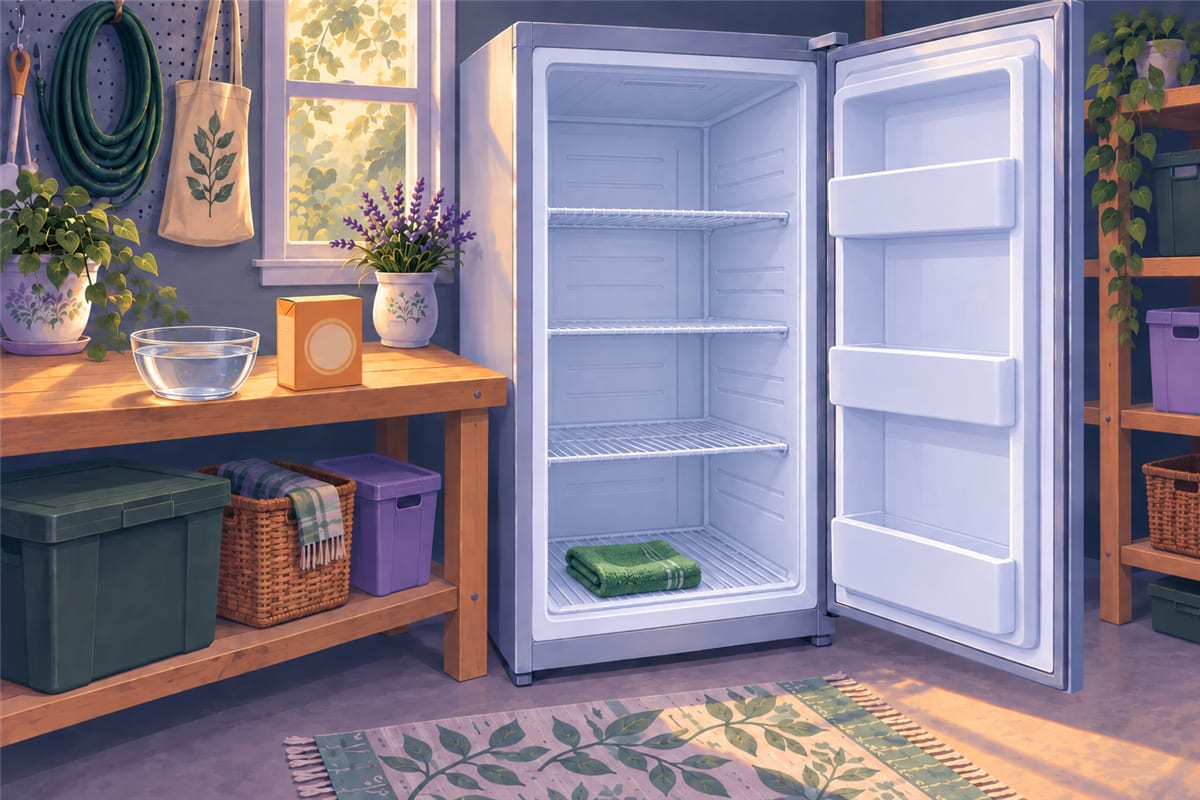
Once the frost is gone, or anytime a frost-free freezer needs a clean, mix 1 tablespoon of baking soda into 1 quart of warm water. It cleans without a strong smell, which matters here, because food in the freezer can pick up the smell of harsh cleaners.
Dip a soft cloth, wring it out well, and wipe the walls, floor and inside of the door. The shelves and drawers can go in the sink with warm, soapy water once they've warmed up.
Crumbs and sticky spills collect in the folds of the rubber seal around the door, so wipe it with warm, soapy water too. Go gently. A torn seal lets cold air leak out.
Then dry everything with a clean towel. Water left behind turns straight back into frost.
Plug it back in
Put the dry shelves and drawers back. Plug the freezer in, or turn it back on, and close the door.
Give it time to get cold again before you load it. Your manual may say how long. When it feels cold inside, put the food back quickly and close the door.
Never force the ice
Staying ahead of the frost
Thin frost melts much faster than thick. Most freezers that need defrosting only need it once or twice a year, so check the frost now and then and do it before it builds up.
In between, keep the door closed as much as you can. Every opening lets in warm, damp air, and that's what turns into frost. Wipe up spills when you see them, and keep an open box of baking soda on a shelf to help with smells.
Warmth over force
The jobs that look hardest often just need a gentler tool. You could spend an hour fighting the ice and still risk the freezer. Or you can give it some warmth, step away, and come back when it's ready to let go. Being patient isn't the same as doing less. Often it works better.
You don't have to break the ice. Just give it a little warmth.