
Burnt-on grease doesn't need force. It needs time.
Let Time Do the Scrubbing
How to clean an oven with baking soda, and why waiting works better than scrubbing.
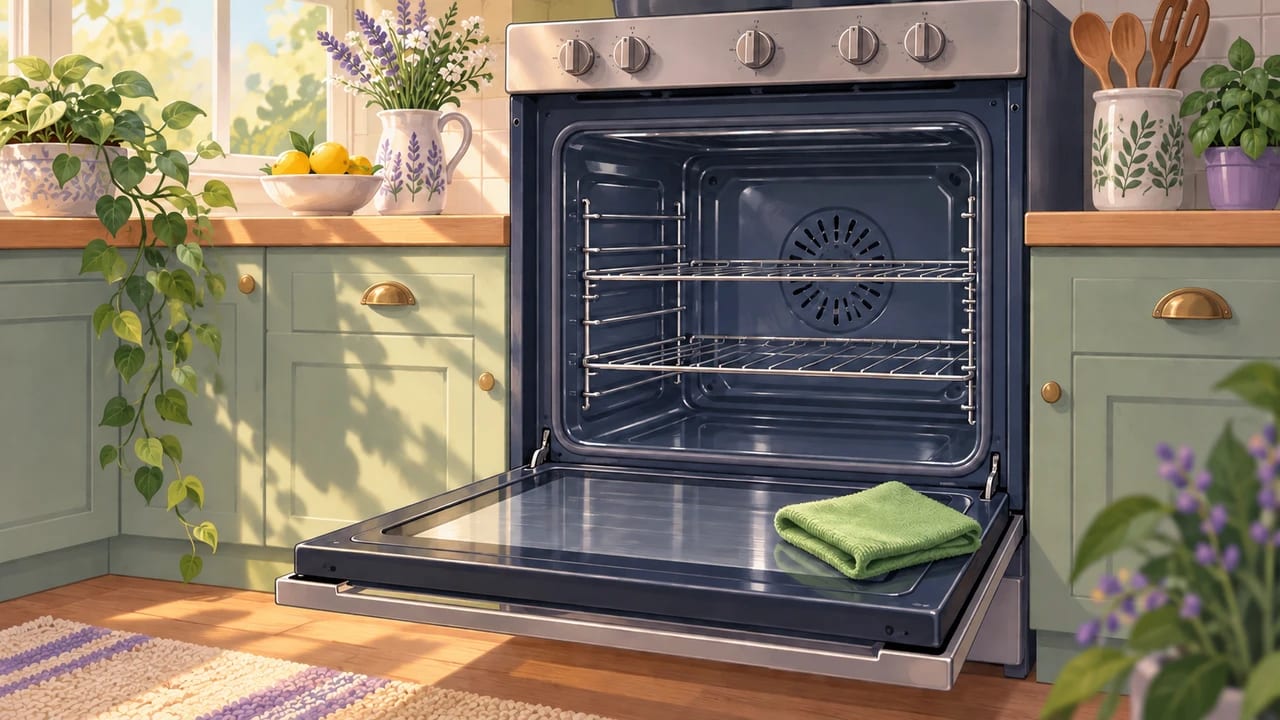
An oven hides its mess behind a door, so weeks can pass without a glance inside. When you finally do look, the dark, burnt-on spots can make it seem like a job for a whole afternoon and a lot of elbow grease.
That afternoon never has to happen. Burnt-on grease doesn't need force. It needs time. A simple paste of baking soda and water softens it slowly while you do something else, or while you sleep.
Start with a cool, off oven
Turn the oven off and wait until it is cool to the touch, inside and out. The walls, racks, and door glass hold heat for a long time after cooking. Evening is a good time to start, since the paste works best overnight.
If you have a gas oven and smell gas (rotten eggs), stop. Leave your home and call your gas company or 911 once you're outside.
Put the racks in to soak
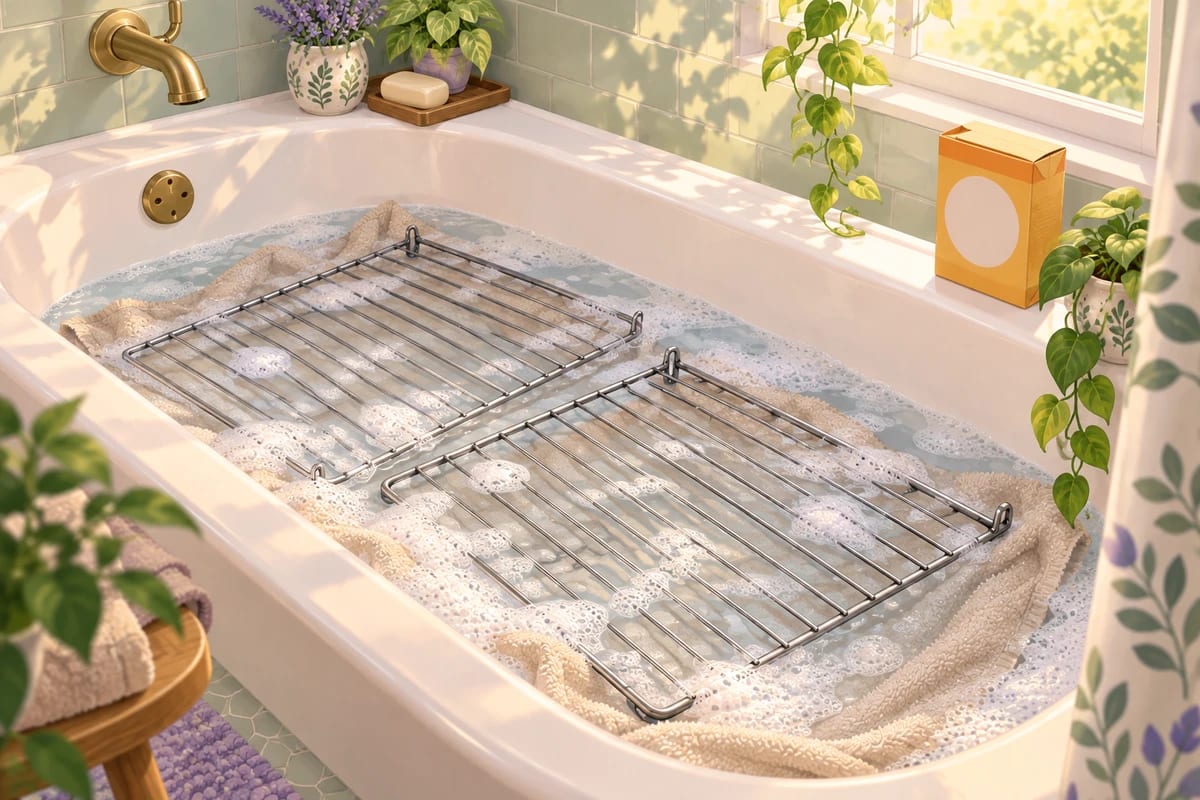
Slide the racks out first. They are the hardest part to clean inside the oven, and they clean much more easily on their own.
Lay an old towel in the bathtub so the racks don't scratch it. Set the racks on the towel. Fill the tub with hot water until the racks are covered. Add a good squeeze of dish soap and 1/2 cup of baking soda, and stir it with your hand. Leave them to soak overnight.
Hot, soapy water gets between the grease and the metal. By morning, most of it lets go with a light scrub.
If your oven has shiny, dark "self-clean" racks, check your manual first. Some should only be wiped, not soaked.
Short on energy?
Put the racks in the tub to soak, and stop there. By morning the grease will have let go on its own. That's enough for today.
Spread the paste
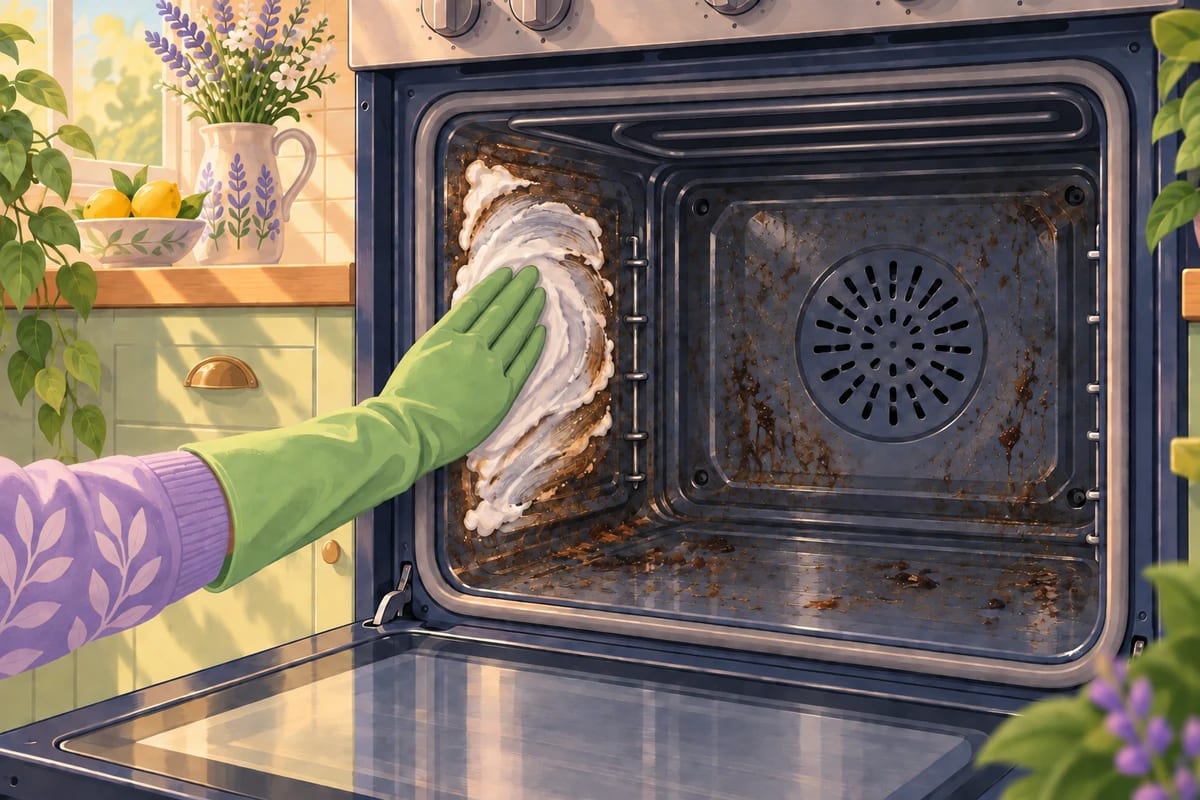
Sweep out any loose crumbs with a dry cloth or a soft brush.
Mix 1/2 cup of baking soda with about 3 tablespoons of water. You want a paste thick enough to stay on a wall, like frosting. Make a second batch if your oven needs more.
Spread it over the inside walls, the floor, and the inside of the door with your fingers or a soft cloth. Wear rubber gloves if you like. Go thicker on the dark, burnt spots.
Keep the paste off a few places:
- The heating elements, the metal coils at the top and bottom of an electric oven.
- The gas opening at the bottom back of a gas oven. Paste can block it.
- The temperature sensor, a thin metal rod on the back or side wall.
- The rubber seal around the door. It is soft, and scrubbing can tear it. A torn seal lets heat escape.
Baking soda won't scratch the oven's enamel, and it gives off no fumes, so you can leave it and walk away.
Leave it overnight
Close the oven door and leave the paste for at least 8 hours. Overnight is best. The paste may turn brown as it pulls up grease. That means it's working.
Don't turn the oven on while the paste is inside.
Clean the door glass
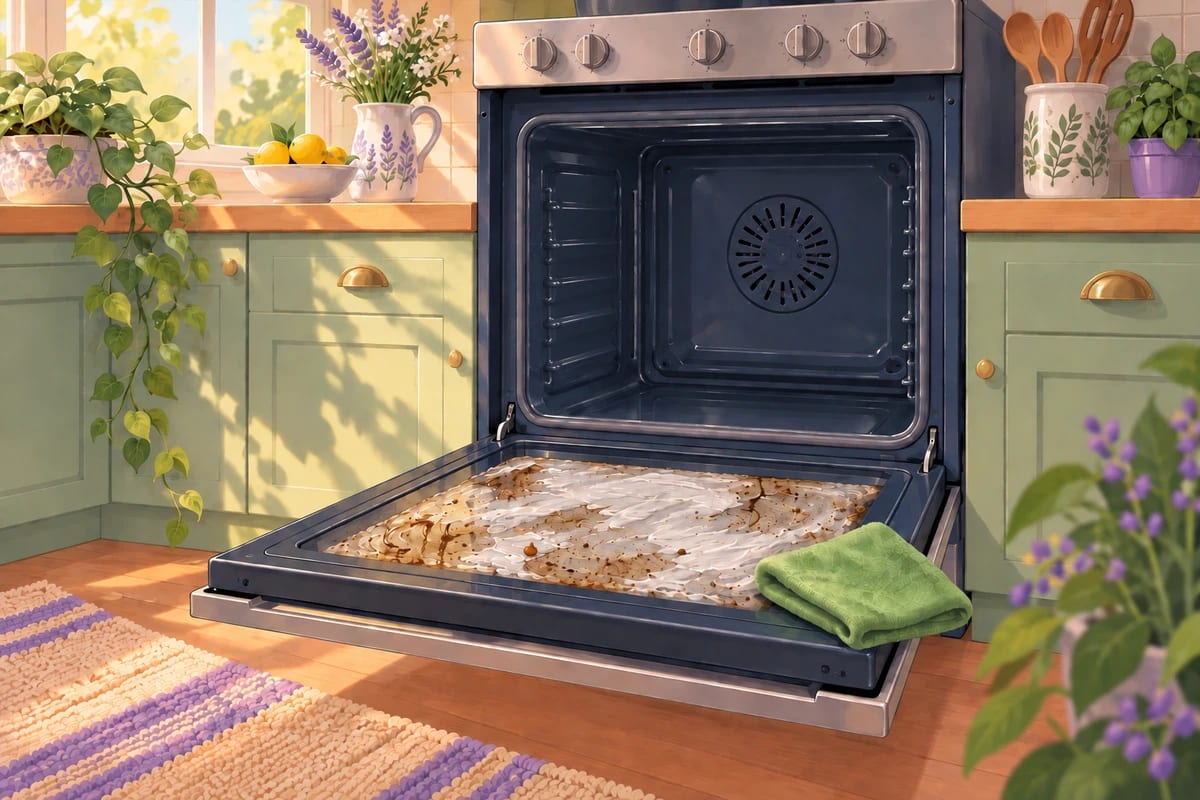
The door glass takes the same paste. Spread a thin layer on the inside of the glass and leave it for 20 minutes, or overnight with the rest. Wipe it off with a damp cloth.
Some ovens have dirt between the two panes of glass. Some doors can be taken apart to reach it, and some can't. Check your manual before you try. Never force the door apart.
Wipe it all out
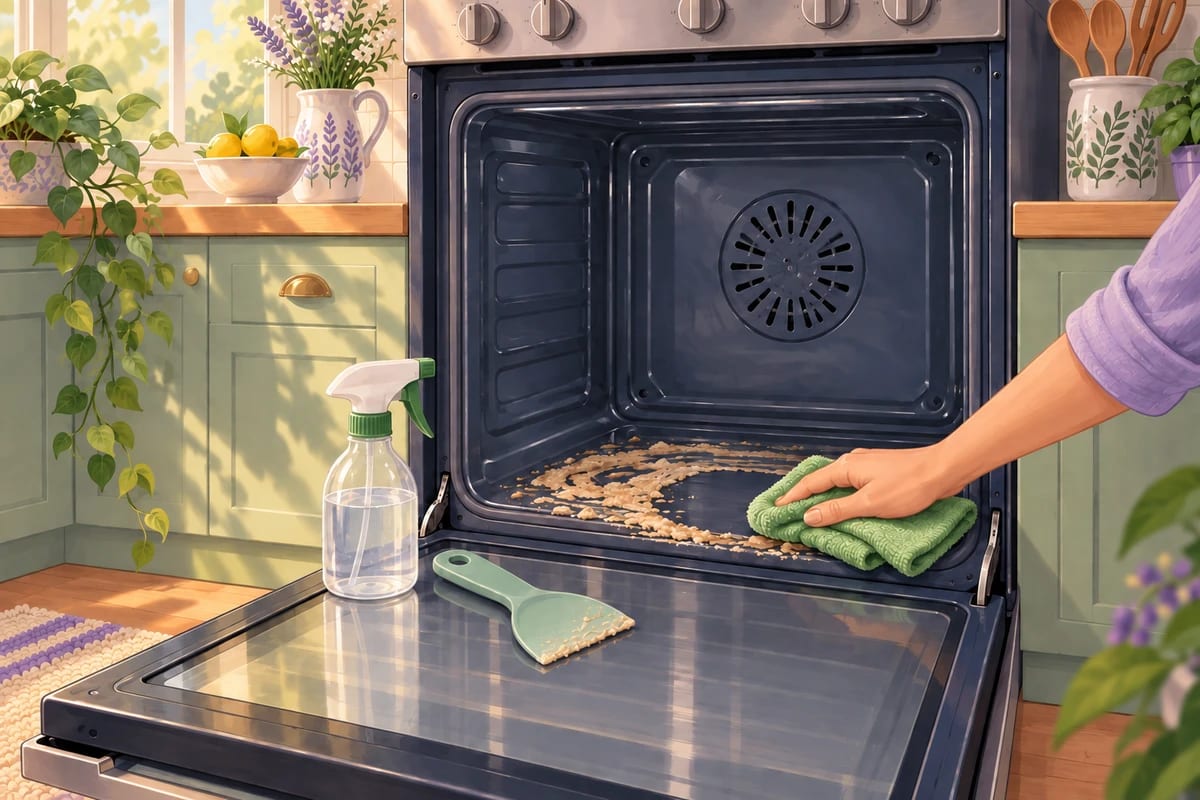
In the morning, wipe the paste out with a damp cloth. Rinse the cloth often. For thick spots, use a plastic scraper or an old gift card. Never use a knife or metal scraper, which can chip the enamel.
A thin white film may stay behind. Spray a little white vinegar on it. It will fizz as it meets the baking soda. That's normal and safe. Wipe it clean with a damp cloth.
Vinegar loosens the last bit of baking soda so it doesn't leave a chalky film or a smell the next time you bake.
Finish the racks
By now the racks have soaked all night. Scrub them with a non-scratch pad, rinse them, and dry them with a towel. Slide them back in.
Leave the oven door open for about an hour so the inside can dry.
About the self-clean button
Many ovens have a self-clean setting. It heats the oven very hot to burn off grease. It works, but it runs for hours, can make smoke and strong fumes, and can harm pet birds in the home. If you use it, follow your manual, open a window, take the racks out unless your manual says otherwise, and stay home while it runs.
Never mix cleaners. Store-bought oven cleaner is very strong, and some can damage a self-cleaning oven. Check your manual before you use one.
Keeping it easy
Most ovens need this full clean a few times a year. In between, wipe up spills once the oven is cool, before they bake on the next time you cook. A baking sheet on the rack below a bubbling dish catches drips before they reach the floor.
Don't line the oven floor with foil. It can stick to the enamel and block air in a gas oven.
The larger lesson
Some cleaning is about effort. This kind is about patience. Spread the paste, close the door, and let the night do most of the work.
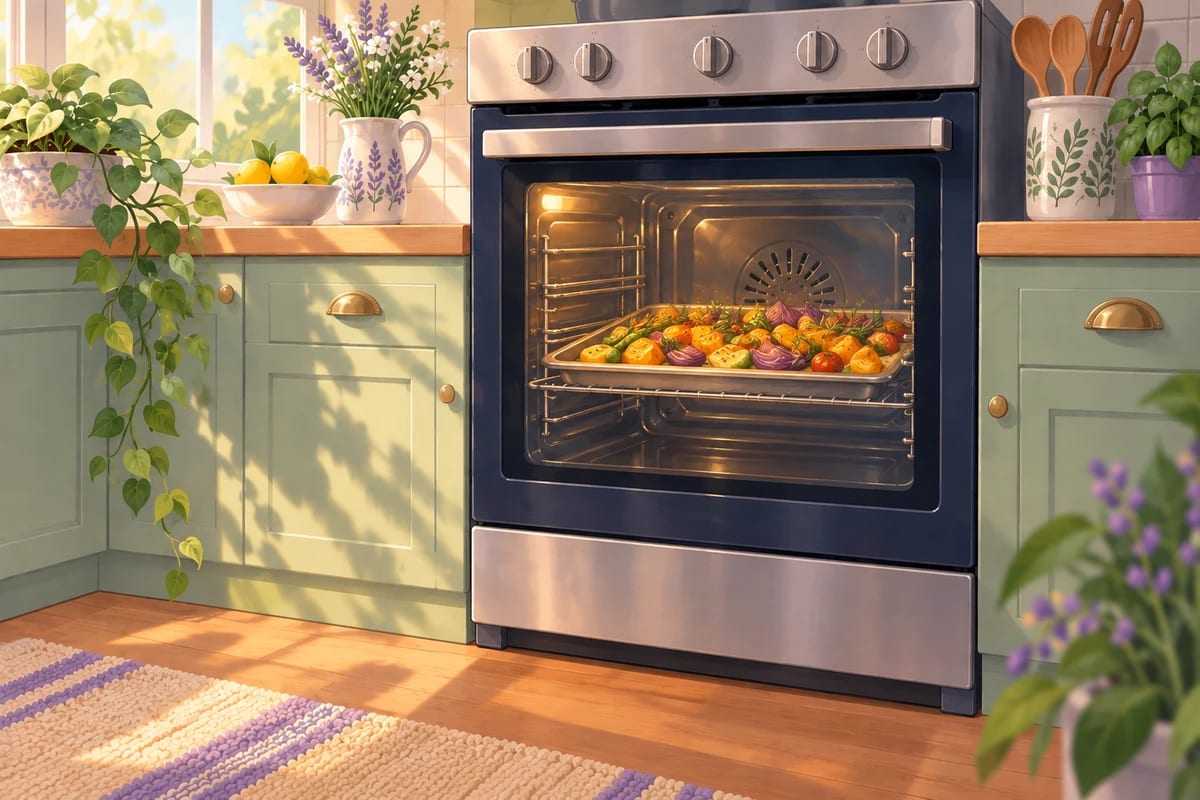
Time does the scrubbing. You just wipe it away.