
The smell is hiding under the rubber.
Lift the Flap
How to clean a garbage disposal safely, and why the smell usually hides under the rubber.
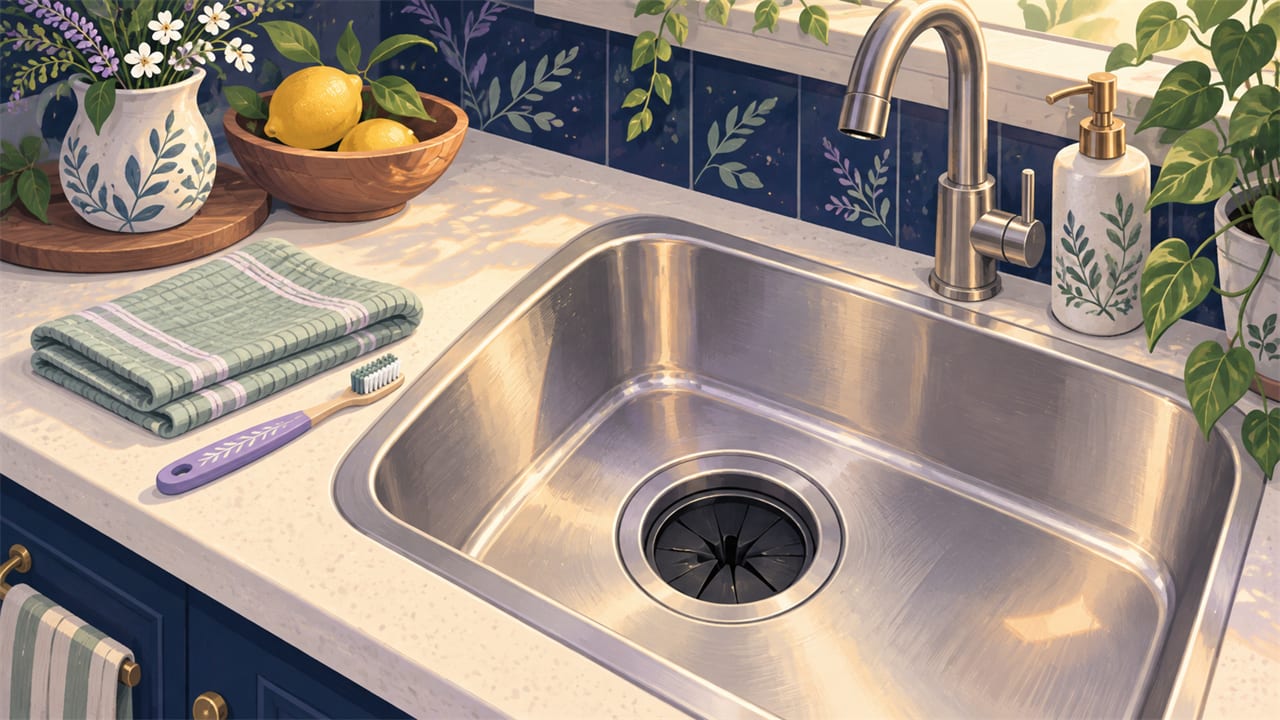
A garbage disposal lives under the sink, out of sight, and does its job with the flip of a switch. Nobody thinks about it until the day they lean over the sink and notice a sour smell coming up from the drain.
For a lot of us, that's where the uneasy feeling starts. The disposal is dark. It has blades somewhere down there. And nobody wants to think about what's stuck inside. So it gets left alone, and the smell gets a little stronger.
You never have to go in there. Not once. Most of the smell comes from a place a toothbrush can reach: the rubber flaps at the top of the drain. And the inside cleans itself, with a little help from baking soda, ice and cold water.
That's the whole idea of this job. The tools do the reaching. Your hands stay outside.
Power off, hands out
A disposal has hard metal parts that spin fast. Even when it's off, it can start if someone bumps the switch. So the rule never changes: never put your hand or fingers into the disposal. Not to look, not to grab, not for a second.
Turn the disposal off at its wall switch. Then, before you reach anywhere near it, cut the power too. Many disposals plug into an outlet under the sink, so you can simply unplug it. If yours is wired in, turn off its breaker or its separate power switch.
A switch can be bumped. A plug that's pulled out, or a breaker that's off, can't start the disposal by accident.
If something fell in
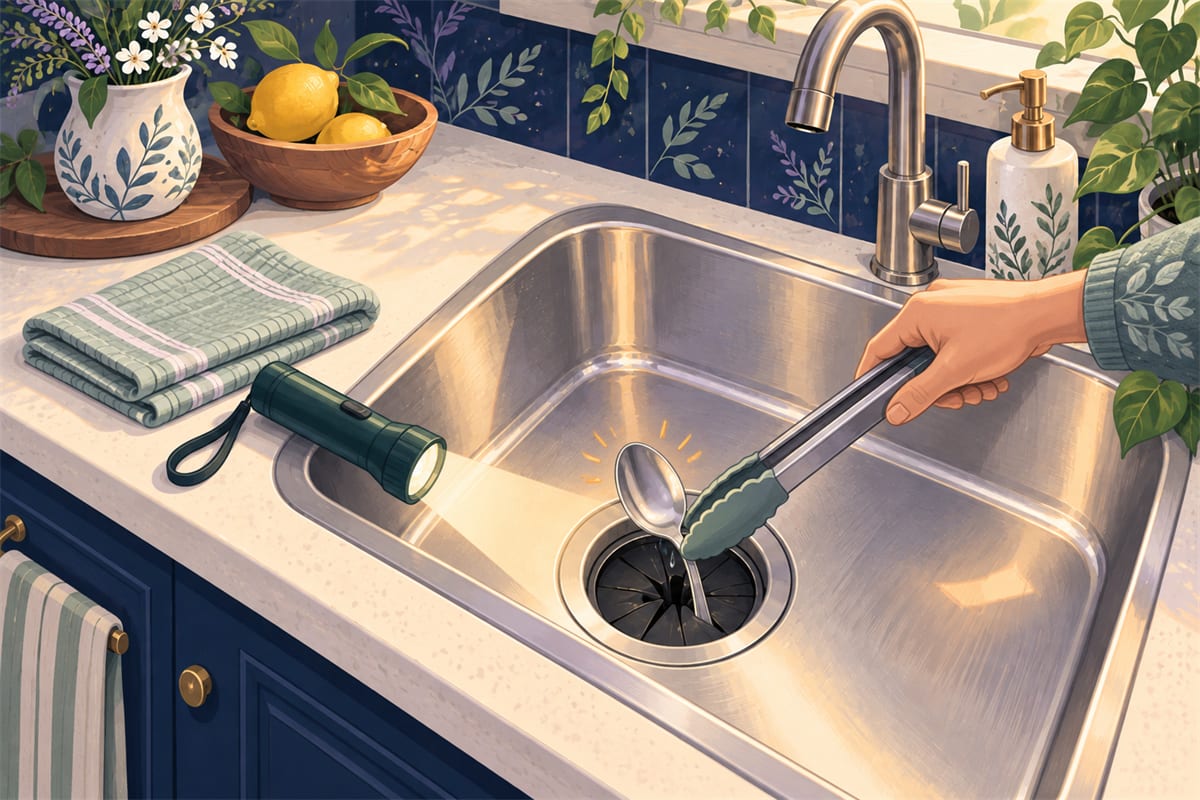
Shine a flashlight into the drain and take a look. A spoon, a bottle cap, a fruit pit: small things get stuck down there.
If you see something, lift it out with tongs or long pliers, and take your time. Never use your fingers, even with the power off.
A disposal that hums but won't turn may have something jammed in it. Switch it off and cut the power first. Many disposals have a small reset button on the bottom, and some have a slot for a hex key that turns the parts by hand from underneath. Your manual will show you. If you're not sure, call a plumber.
Clean the splash guard
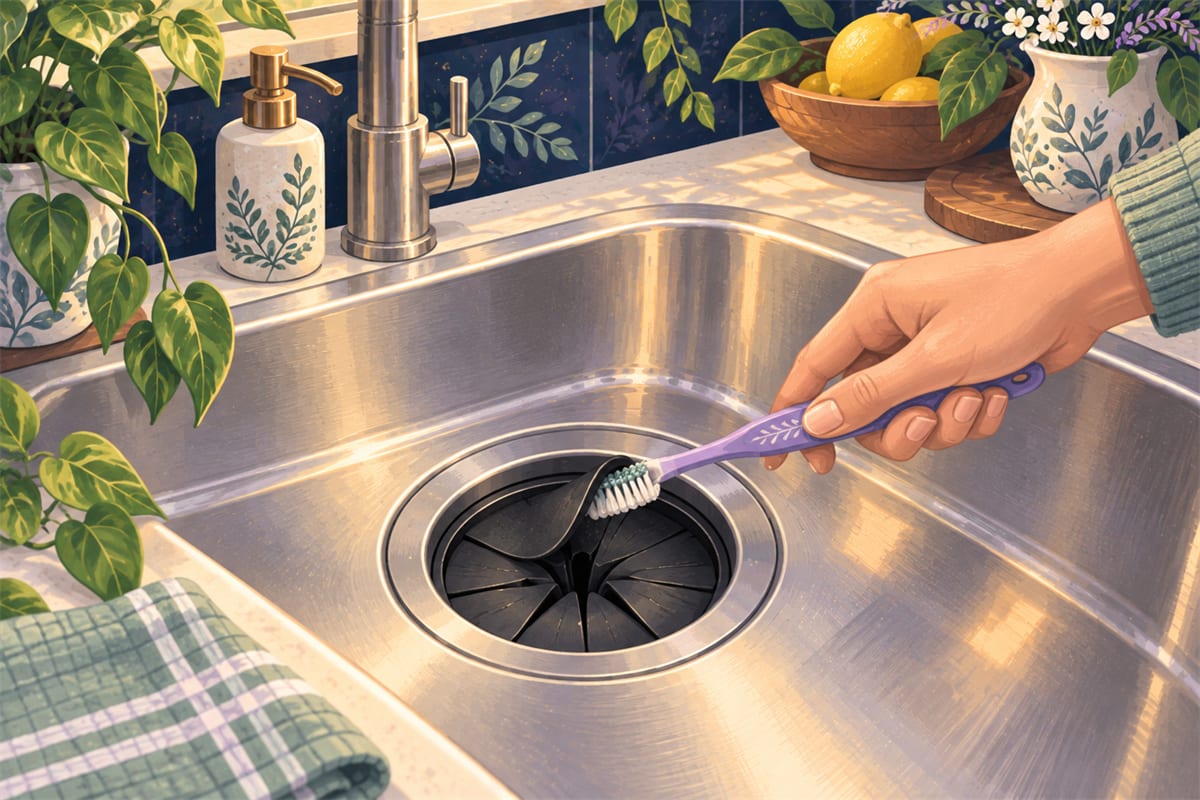
The splash guard is the ring of rubber flaps at the top of the drain. It keeps food and water from flying back up at you. But the flaps stay damp, and food and grease cling to their undersides, held against the rubber where you can't see them and the water never reaches. This is where most of the smell starts. It's also the part most people never think to clean.
Lift one flap at a time with the handle of an old toothbrush. Scrub the underside with the bristles, a little dish soap and warm water. Work your way around the ring, rinsing the brush often.
If your splash guard lifts out, take it out and wash it in warm, soapy water at the sink. Check your manual first, because some are fixed in place.
Let baking soda and vinegar work
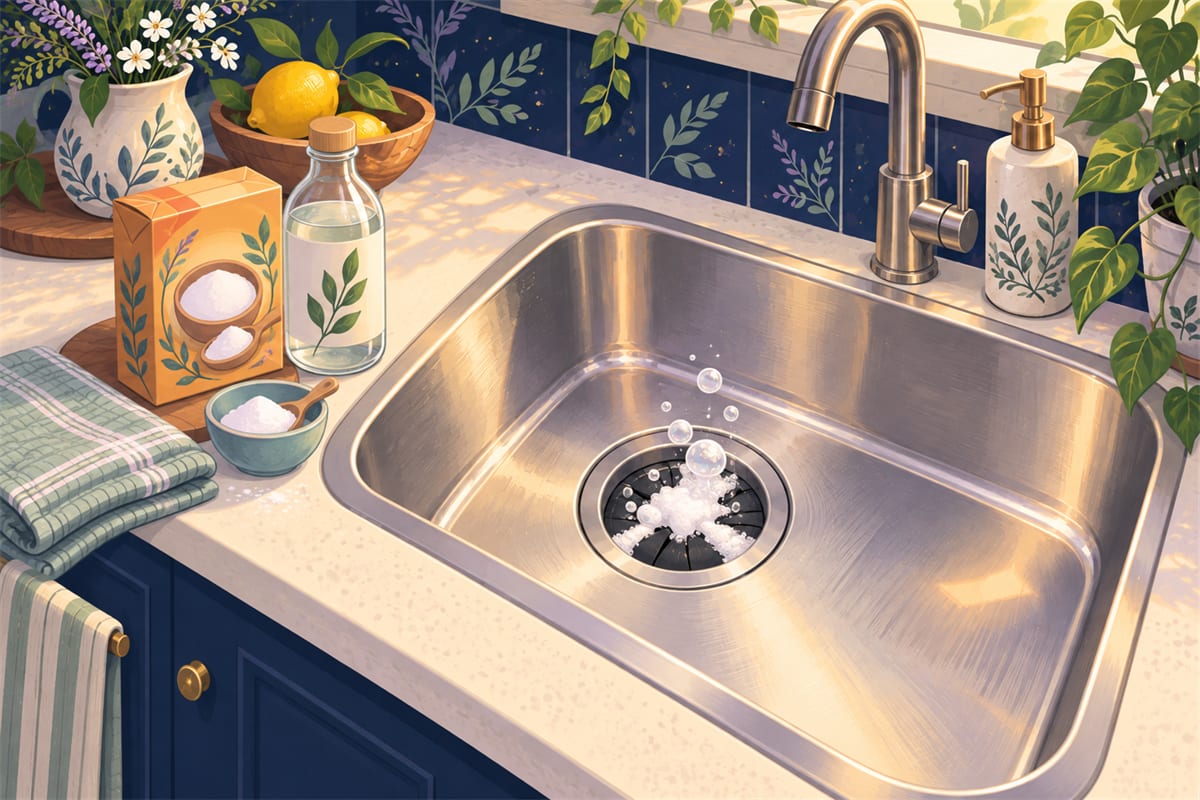
Pour 1/2 cup of baking soda into the drain. Then slowly pour in 1 cup of white vinegar. It will fizz and bubble, which is normal and safe.
Leave it for 10 to 15 minutes. There's nothing to do while it sits.
Short on energy?
Pour in the baking soda and vinegar, walk away, and come back later to flush it with cold water. That's enough for today.
Power back on, cold water first
When the time is up, plug the disposal back in or turn the breaker back on.
Cold water goes on first. Then switch on the disposal and let it run for about 30 seconds.
Cold water keeps any grease firm, so the disposal can chop it up and send it down. Hot water melts grease, and it can stick farther down the pipe.
Ice and salt for the inside
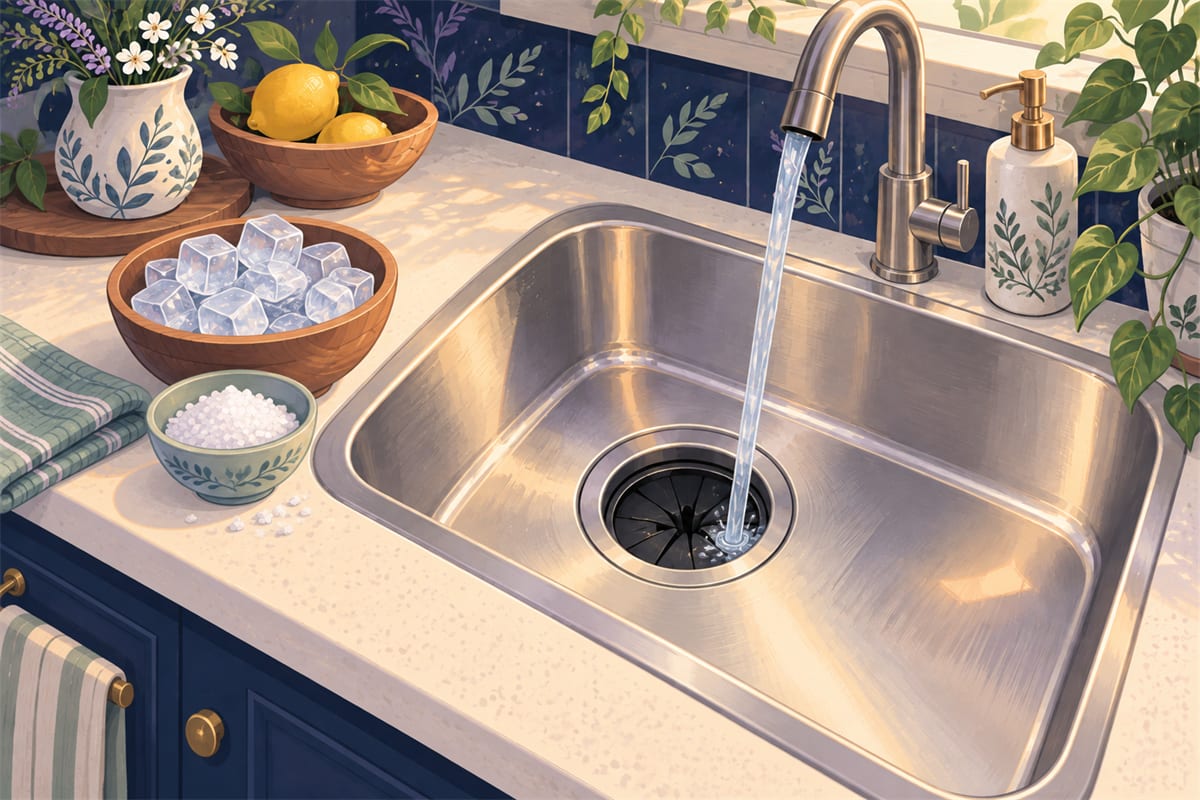
Keep the cold water running. Drop a handful of ice cubes into the drain, add about a tablespoon of coarse salt, and switch on the disposal. It will be loud for a moment. That's the ice at work: as it spins, the ice and salt scrape against the walls inside and knock loose grime you could never reach safely.
Let it run until the grinding sound stops. Then switch it off and let the water run for another 15 seconds.
Some people add a few small pieces of lemon for a fresh smell. If you try it, cut them small and use only a little. It's fine to skip it.
Rules that keep your hands safe
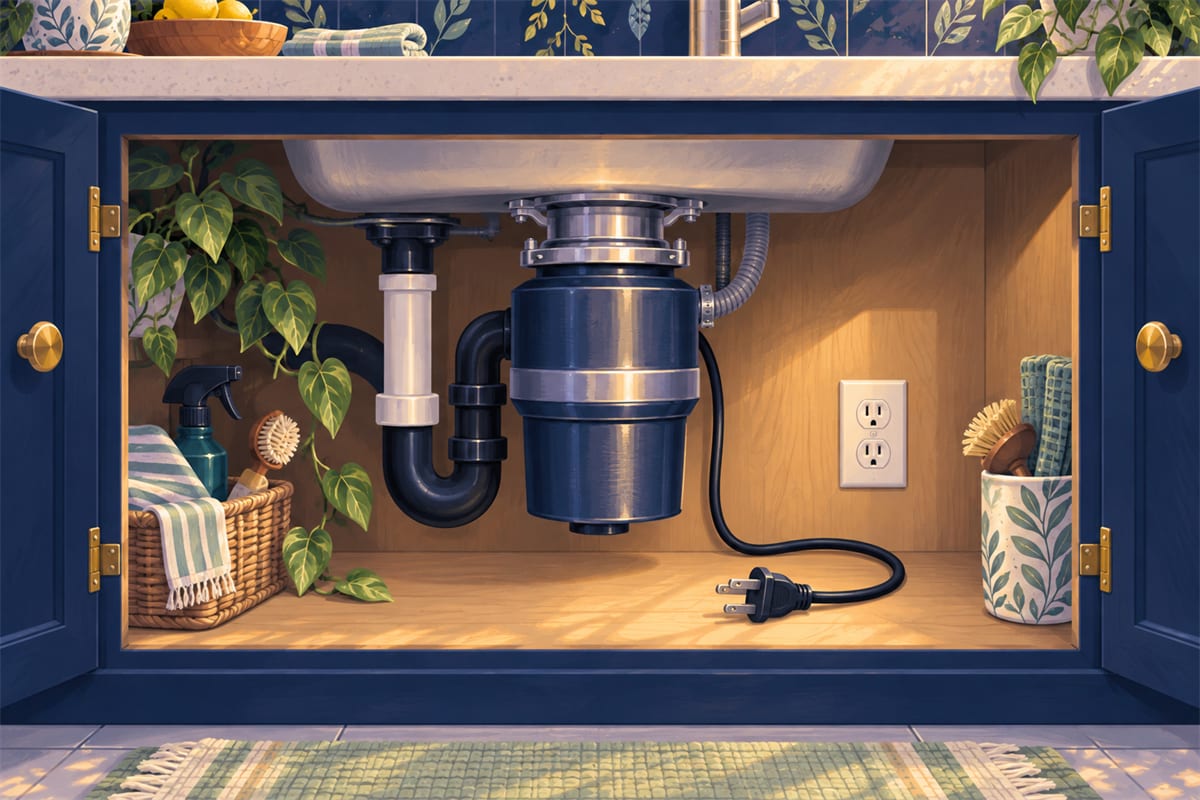
One minute a week
That's about how long the splash guard takes, and once a week or so is plenty. Save the baking soda, vinegar and ice for once a month, or whenever you notice a smell.
The rest happens every time you use it. Feed the disposal a little at a time, keep the cold water running, and let the water run a few seconds after it goes quiet. That clears the last bits away.
Right at the top
Some jobs feel harder than they are because of what we imagine is waiting for us. The smell that seems to come from somewhere deep and hard to reach is often sitting right at the top, under a flap of rubber. Lift the flap, let the fizz and the ice do the rest, and let the tools do the reaching.
Lift the flap, run the cold water. Your hands stay outside.