
An everyday lesson worth passing down
Before You Put Your Hands in That Sink
How to wash a very full sink of dishes — and the often-unspoken reasons the order matters.
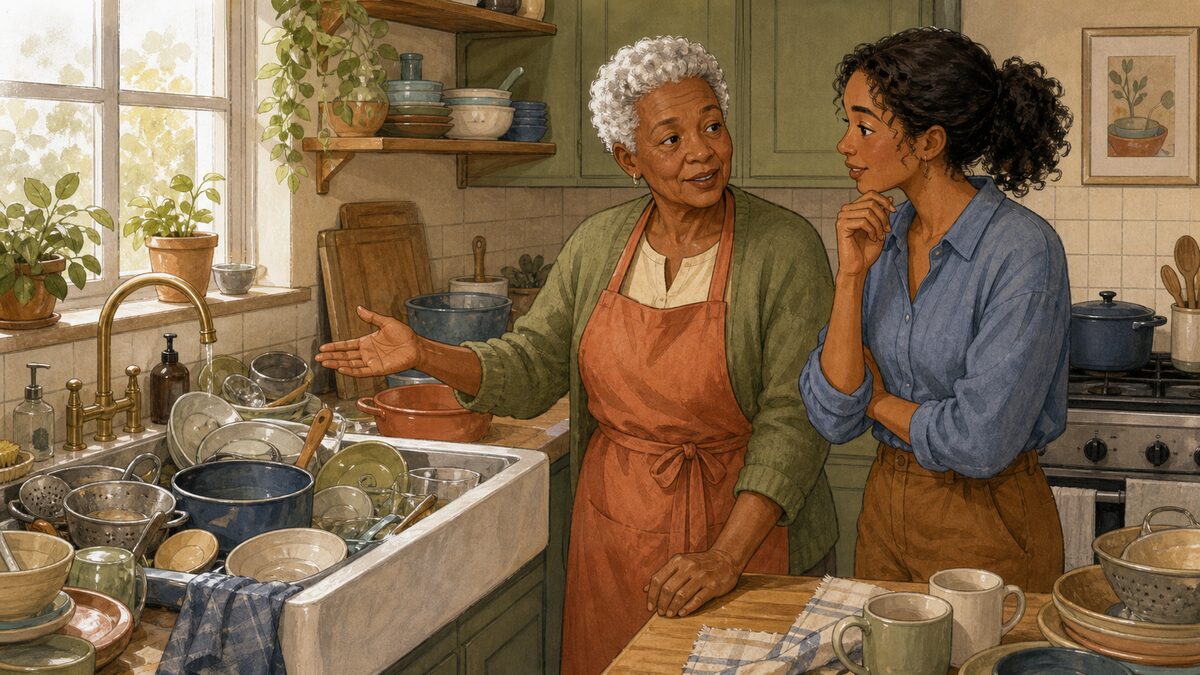
Come here a moment. Before you put your hands into that crowded sink, let me teach you something. A sink full of dishes is not one enormous job. It is a collection of small jobs waiting to be placed in the right order.
People often teach chores by showing the motions: add soap, scrub, rinse, repeat. But if the next generation is only taught what to do, the knowledge is incomplete. Understanding why each step matters is what turns a list of instructions into good judgment.
Washing dishes well is not about rushing or using the most force. It is about safety, order, patience, and knowing when the water — or the method — is no longer helping you.
Make the sink safe before you make anything clean
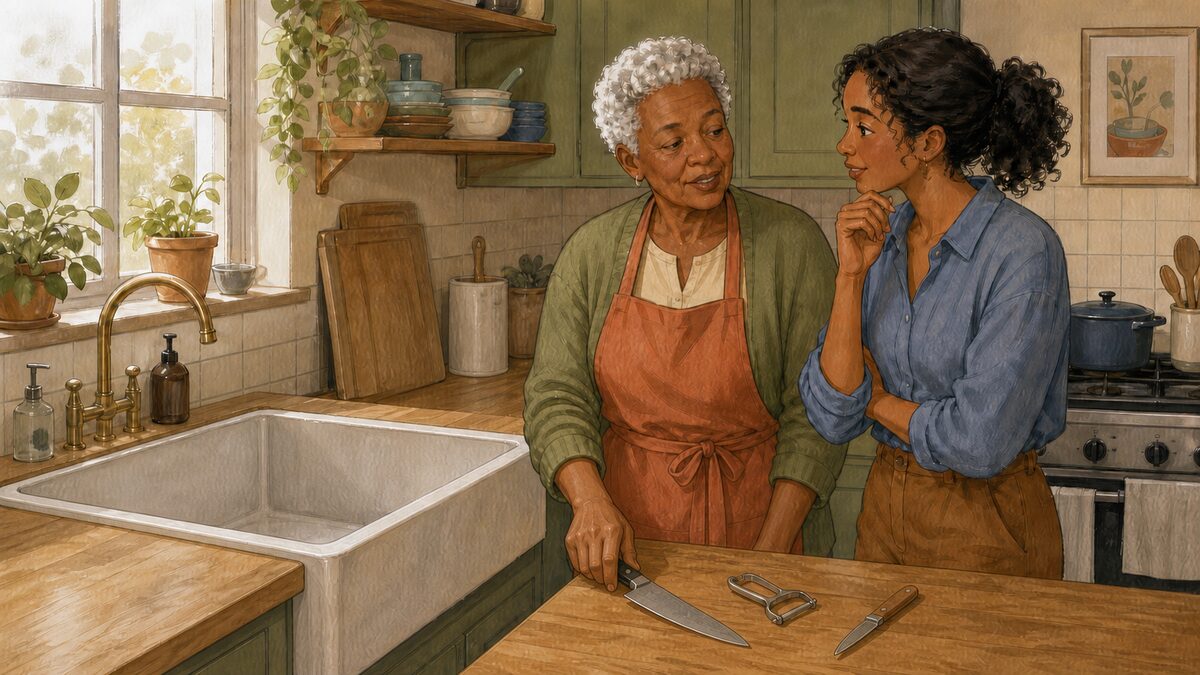
Never reach blindly into a full sink. A knife, broken glass, vegetable peeler, food-processor blade, or sharp can lid may be hidden underneath. Cloudy water makes danger harder to see, not less dangerous.
Remove sharp objects first. Place them flat on a clear part of the counter, with the blades pointed away from you. If there is broken glass, lift the large pieces carefully and collect tiny fragments with a brush or damp disposable cloth — never with bare fingers.
Knives and other blades do not belong in a soaking bowl. They should remain separate and visible until they can be washed one at a time.
Why? Because speed is never worth an injury. A safe workspace lets you pay attention to cleaning instead of wondering what may be hidden beneath your hand.
Create order before you turn on the water
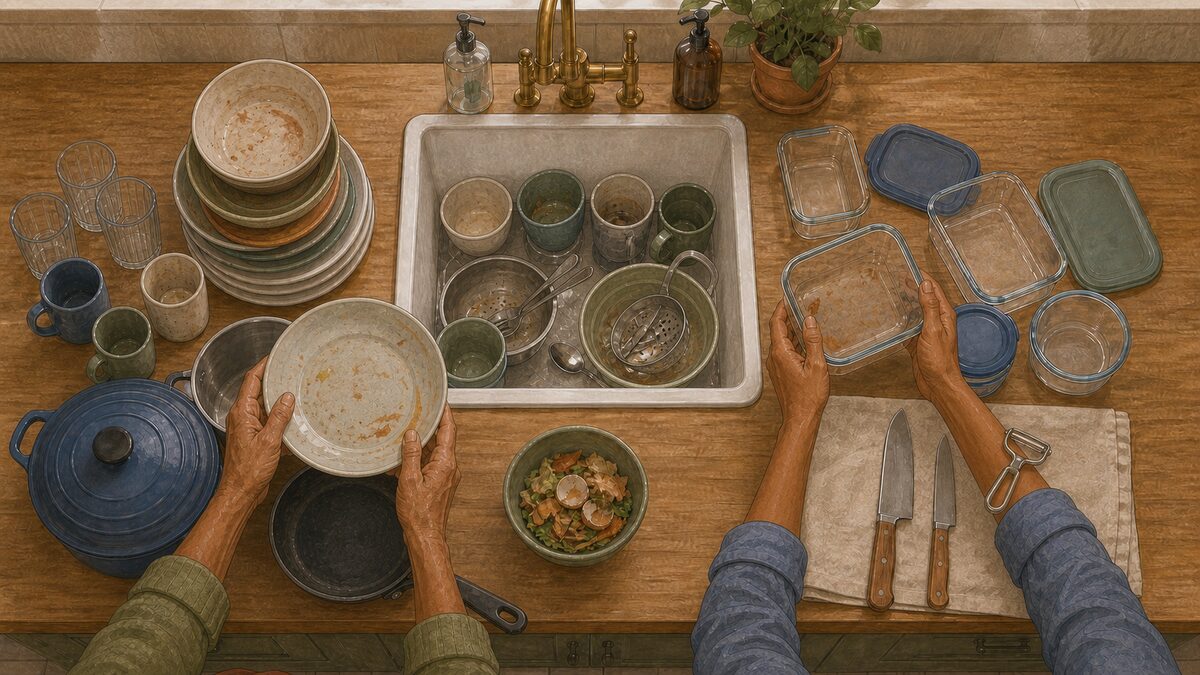
Take everything out of the sink, one piece at a time. Scrape solid food into the trash or compost. Pour ordinary liquids down the drain, but wipe heavy grease into the trash and dispose of cooking oil separately. Grease poured into plumbing can cool, harden, and cause a clog.
Then make groups: glasses and cups, ordinary silverware, plates and bowls, food-storage containers, cooking utensils, pots and pans, and sharp objects.
Why? Because order reduces both danger and effort. Delicate glasses are protected from heavy cookware. Sharp objects stay visible. Similar items can be washed together. The counter stops being a pile and becomes a workspace.
Once the sink is empty, clear the drain strainer and scrub the basin, rim, and drain area. You are about to use the sink as a cleaning tool, so give the work a clean beginning. Otherwise, your fresh water must fight yesterday's residue as well as today's dishes.
Let soaking do part of the work
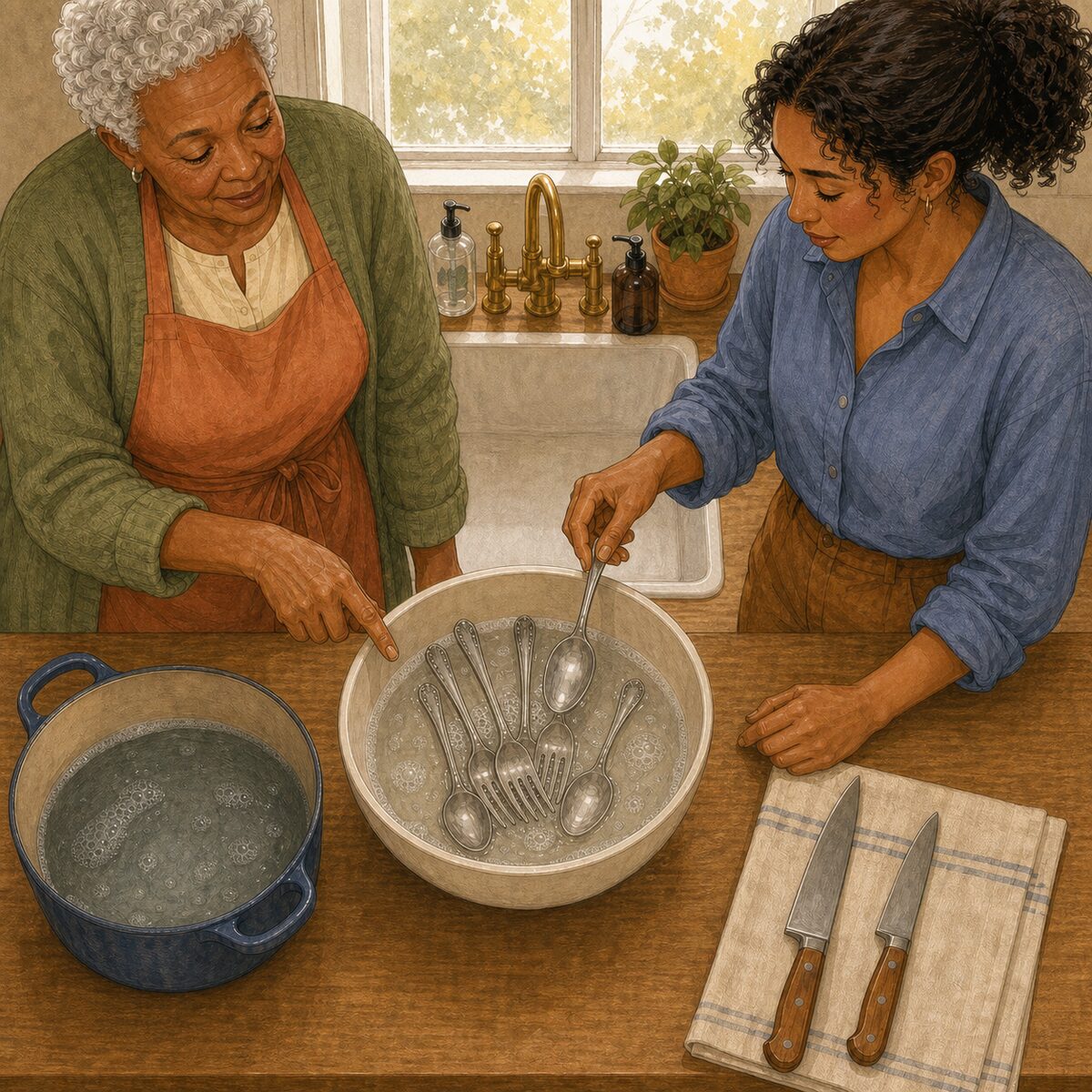
Fill a large pot, mixing bowl, or dishpan partway with warm water and a little dish soap. Put ordinary forks, spoons, and blunt table knives into it. Let them soak while you begin with the glasses.
This is a small habit with several benefits: it frees space near the sink, keeps loose silverware from covering the drain, and loosens food before you scrub. The same principle applies to sturdy pots, pans, and casserole dishes with dried-on food. Give them a little soap and warm water, then leave them for 10 to 20 minutes.
But know the limits. Do not soak electrical appliances, sharp blades, cast iron, or wooden boards for long periods. Cast iron can rust; wood can swell, split, or warp.
Why? Because patience can do what force cannot. Soaking prepares the work without damaging your hands or cookware.
Wash from cleanest to dirtiest
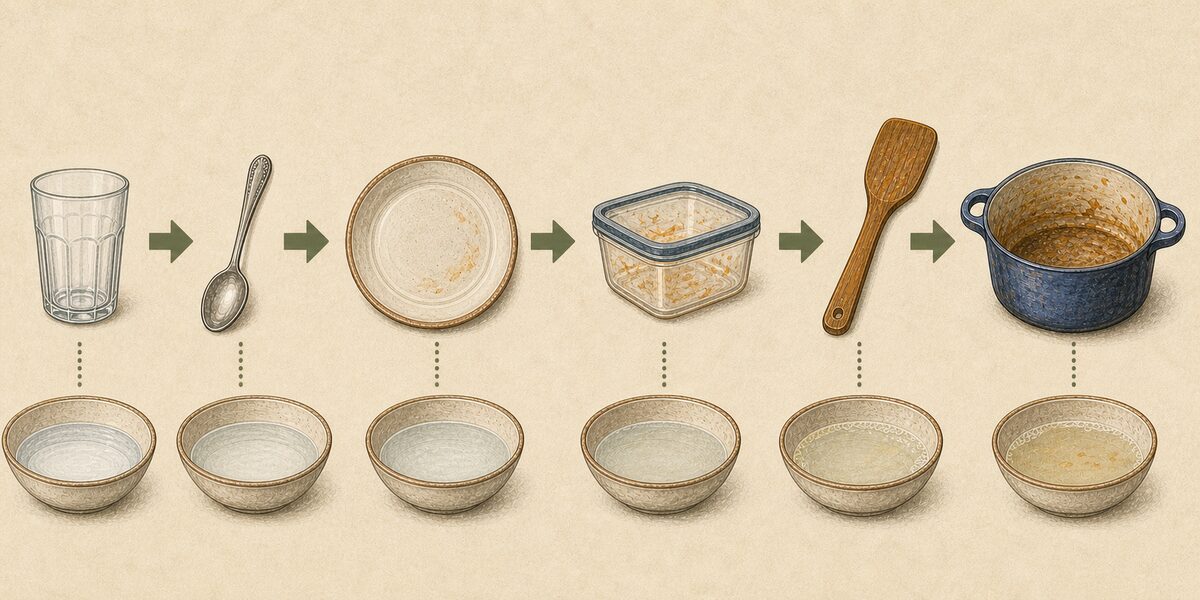
Prepare a basin of comfortably hot, soapy water — warm enough to loosen grease, but never hot enough to hurt your hands. Fill the basin only one-third to one-half full so dishes will not make it overflow.
The working order
- Glasses and cups
- Ordinary silverware
- Plates and bowls
- Food-storage containers
- Cooking utensils
- Pots and pans
- Very greasy items
- Sharp objects, washed separately
Why this order? Glasses usually carry less grease than cookware. If you wash a greasy frying pan first, the water becomes oily before a drinking glass ever reaches it. Beginning with lightly soiled items keeps the water useful longer and prevents one dirty object from spreading its mess across everything else.
Wash only a few glasses at a time so they cannot knock together. Clean the outside, rim, inside, and bottom. Use a bottle brush for narrow glasses rather than forcing your hand inside, where the glass could break around it.
Remove soaked silverware one piece at a time. Clean fork tines, spoon bowls, handles, and decorative grooves. Wash both sides of plates and bowls, including the bottom edge that touches the table. Separate food containers from their lids and clean corners, grooves, seals, and gaskets. Let containers and lids dry separately so trapped moisture does not turn stale.
The overlooked rule
Change the water when it is no longer helping
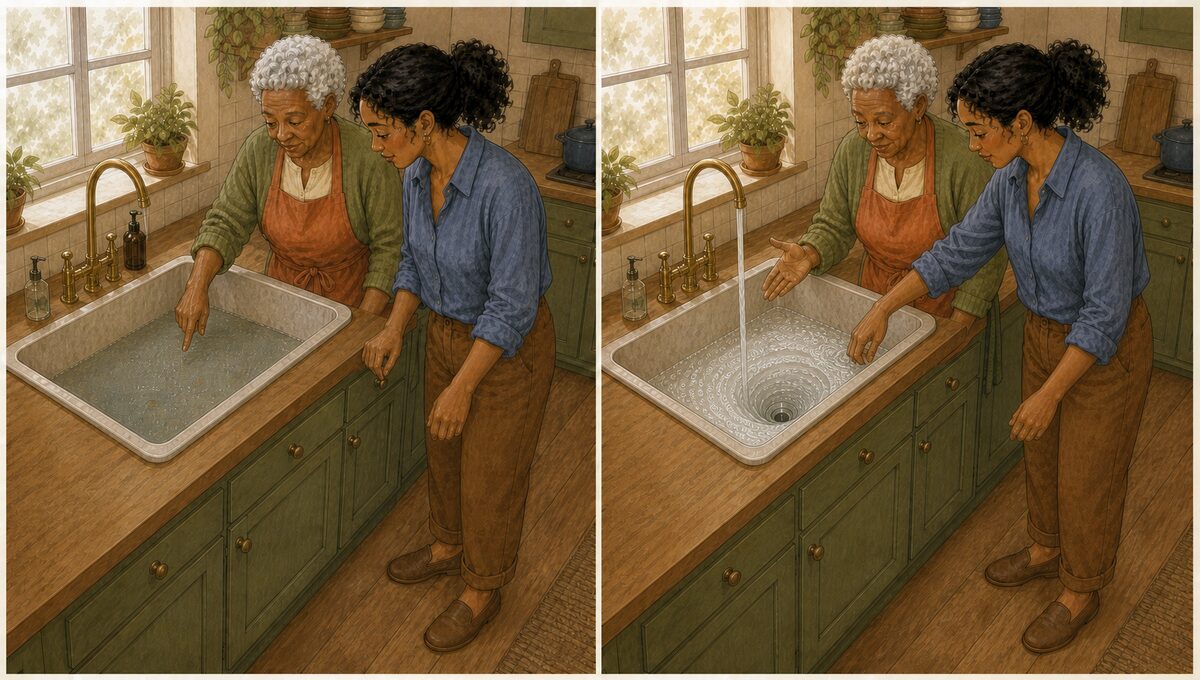
Here is something people rarely say when they teach dishwashing: wash water has a limited working life.
As dishes release food, grease, and residue, the water gradually becomes part of the mess. Drain and replace it when it becomes:
- Cold
- Cloudy
- Greasy
- Full of food particles
- Unpleasant-smelling
- Noticeably low on suds
For a very full sink, you may need several batches of fresh water. That is normal. It is not failure, and it is not needless waste. Once the water is carrying too much grease and food residue, it cannot clean effectively. Continuing simply moves the grime from one dish to another.
Stop. Remove the dishes. Drain the water. Empty the strainer. Rinse the basin. Prepare fresh warm, soapy water.
Do not become loyal to dirty water. Knowing when to begin again is part of doing a job well.
Clean the places people miss
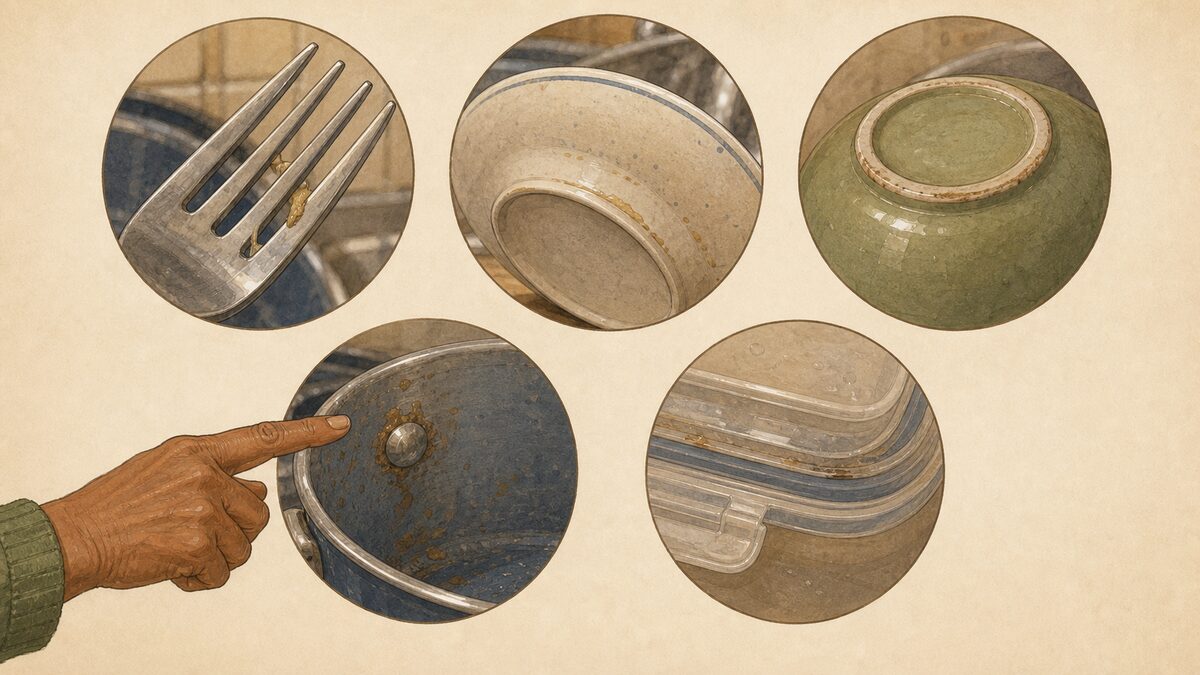
The broad surfaces are easy. Careful work reveals itself in the small places: between fork tines, beneath bowl rims, around pot rivets, under handles, inside lid grooves, along rubber seals, and in the hinges of tongs.
Open hinged tools while washing. Turn whisks so the brush reaches between the wires. Wash the outside and bottom of pots, where grease often collects unnoticed. Use a non-scratch sponge on nonstick cookware, and dry cast iron immediately.
A truly clean dish has no visible food, sticky patches, greasy feeling, remaining soap, or unpleasant smell. Use your eyes, fingers, and nose. If the evidence says the dish is not clean, wash it again.
Why? Because cleanliness is not an appearance. It is a condition. The hidden surfaces count just as much as the ones everyone can see.
Wash knives separately — and one at a time
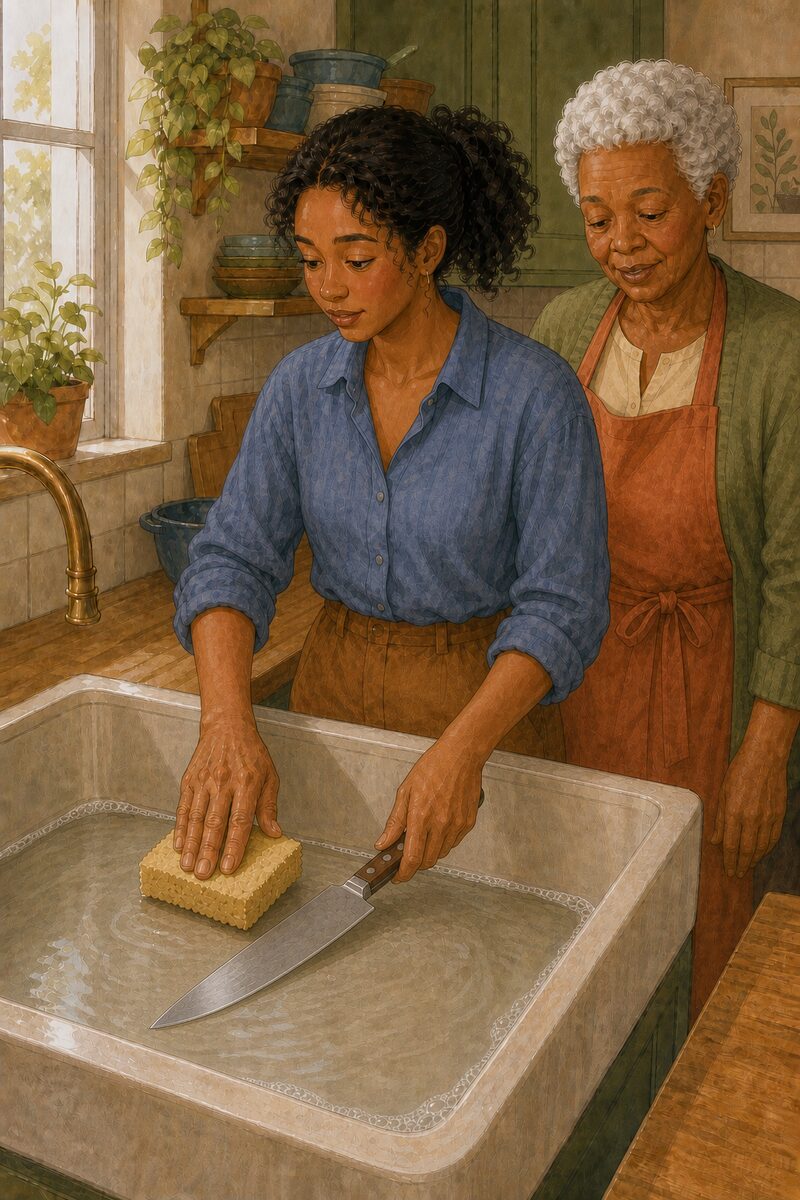
When the sink is no longer crowded, wash each knife, peeler, or blade separately. Keep hold of the handle. Keep the blade pointed away from your body. Clean from the dull spine toward the sharp edge — never slide your fingers along the edge.
Rinse the tool immediately and place it somewhere secure and visible to dry. Never leave it loose in the basin, even for a moment. The danger does not disappear because the blade is clean.
Why? Because a safe method must remain safe from beginning to end. Everyone using the kitchen should be able to see where the sharp objects are.
Finish by making the kitchen ready again

Arrange clean dishes so water can drain and air can circulate. Stand plates vertically with space between them. Tilt cups and bowls. Keep container lids separate. Put heavy cookware where it cannot fall onto delicate glassware, and keep sharp tools secure and visible.
Air-drying is simple and effective. If you use a towel, it must be clean and dry; a damp hand towel can transfer odors and grime back onto dishes you just washed.
Then drain the basin, empty the strainer, and clean the sink, faucet, handles, and counter. Rinse the sponge or brush, squeeze out excess water, and leave it where air can reach it. Dry any water on the floor. Replace a sponge that smells bad, remains slimy after rinsing, or begins to fall apart.
Why? Because the last plate in the rack is not the end of the responsibility. The work is complete when the space is safe, clean, and ready to serve the next person.
The larger lesson
A full sink teaches more than dishwashing.
It teaches us to pause before rushing. To create order before beginning. To protect delicate things, keep dangerous things visible, use the right tool, and let patience soften what force cannot.
Most of all, it teaches respect: for the people who will use those dishes, for the tools that prepare our food, and for the home that shelters us.
The younger generation does not need to inherit every old habit simply because it is old. But it should inherit the habits that still carry wisdom.
Begin safely. Work in order. Pay attention to what others overlook. Leave the space better than you found it.
That is how you wash a sink full of dishes — and that is why the way you do it matters.