
It cleans everything else. Once in a while, it needs a turn.
Who Washes the Dishwasher?
How to clean a dishwasher, from the filter to the door, and why the machine that cleans everything else needs a turn too.
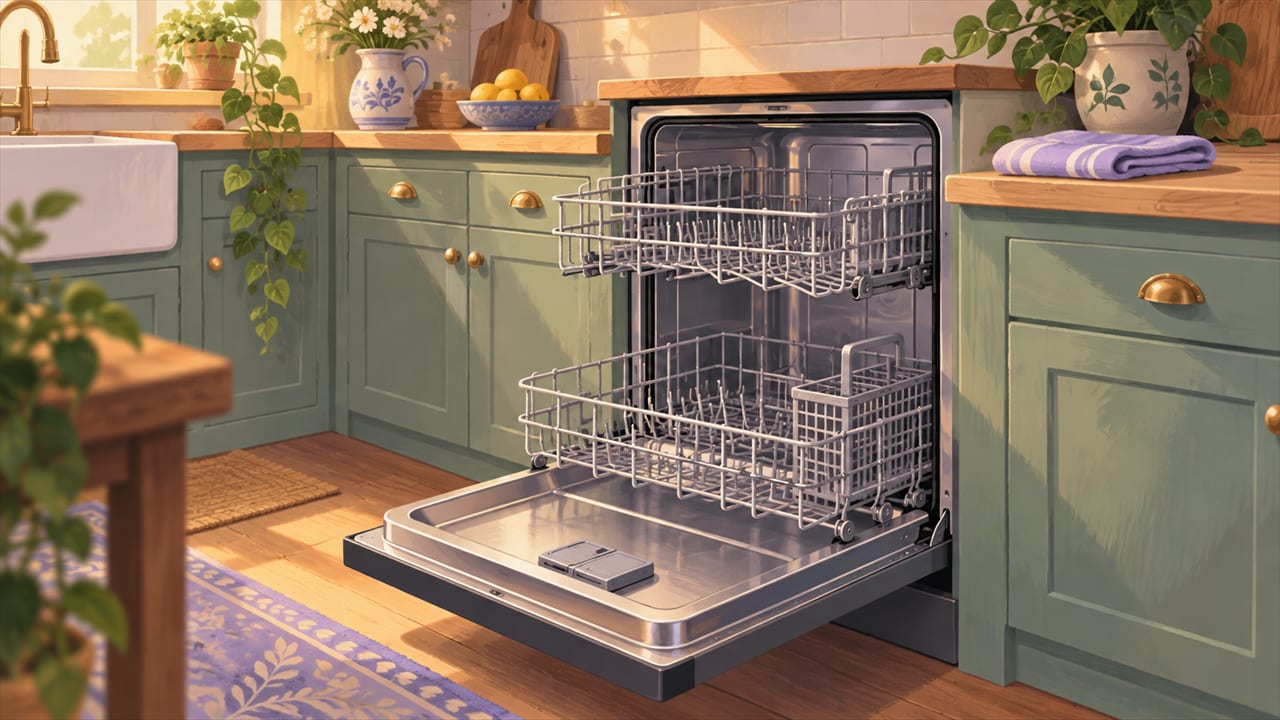
The dishwasher is the one machine in the kitchen that seems to clean itself. Water goes in, soap goes in, and everything comes out clean. So it's easy to never think about it at all.
Until the day you open the door and something smells a little off. Or a glass comes out with a gritty film you have to rinse by hand. That's when a strange thought arrives: wait, does the dishwasher need washing too? And right behind it, a small dread. Nobody really wants to reach down into the bottom of it and find out what's there.
That feeling makes sense. But it's usually worse in your head than it is in the machine.
What a dishwasher needs isn't a scrub. It's a clearing. Most of the trouble comes from one small part at the bottom that fills up with food. Rinse that and open the way for the water, and most of the work is done. Now and then, two hot cycles finish the job. The machine was built to clean. You're just helping it get back to work.
Full, not broken
A dishwasher sprays water up through the spray arms, then drains it through the filter at the bottom. The filter catches food so it doesn't go back onto your dishes.
When the filter fills up, the water can't drain as well. When the holes in the spray arms clog, some dishes don't get rinsed. And the food and grease left behind are what make that sour smell.
So a dishwasher that smells or leaves grit behind usually isn't broken. It isn't a sign you've done anything wrong, either. It's just full. Every machine that catches food will fill up in time, and a clean filter and clear spray arms let it do its job again.
Start with it empty and cool
Make sure the dishwasher is off and not running a cycle. If it just finished, give it some time. The heating element at the bottom of the tub, a thin metal loop, can stay hot after a cycle.
Then take everything out. Dishes, cutlery, the little basket. An empty machine is easier to see into, and easier to clean.
Clean the filter
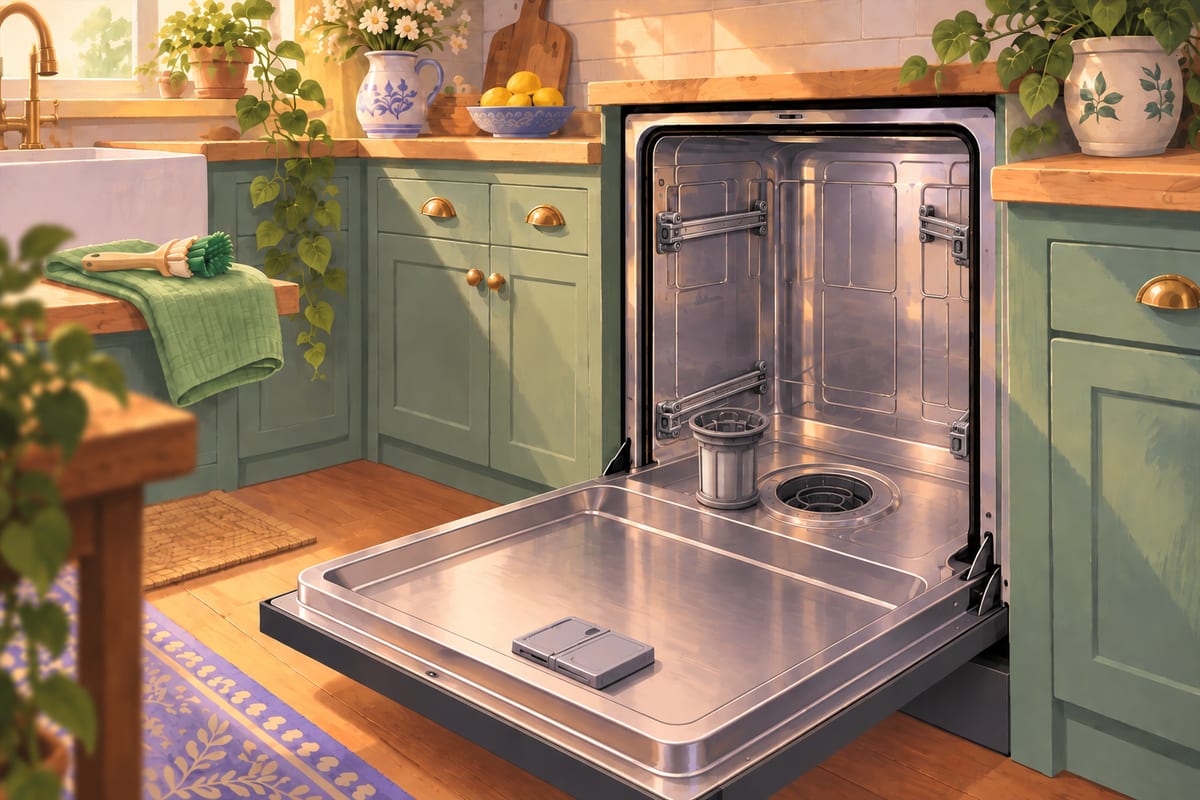
Slide the bottom rack all the way out, or lift it out. Now you can see the floor of the tub.
Look before you reach. Small pieces of broken glass sometimes end up around the drain and the filter. If you see any, put on rubber gloves and pick them up with tongs or a folded paper towel. Never feel around with bare fingers.
Most filters sit in the middle or back corner of the tub floor. Many twist a quarter turn and lift straight out. Some come in two parts, a round cup and a flat screen under it. If yours doesn't come out easily, check your manual. Some older dishwashers have a filter that stays in and cleans itself.
What you find may not be pretty. Soft bits of food, a little grease, maybe a seed or a scrap of label. That's normal. It's exactly what the filter is there to catch, and it means it's been working hard for you.
Rinse the filter under warm running water. Scrub it gently with a soft brush, like a dish brush or an old toothbrush, and a little dish soap. Rinse again, put it back, and turn it until it clicks or locks into place.
The filter is where most of the smell comes from. A few minutes at the sink clears out weeks of food.
Short on energy?
Take out the filter, rinse it under warm water and put it back. That one step does the most good; the rest can wait for another day.
Check the spray arms
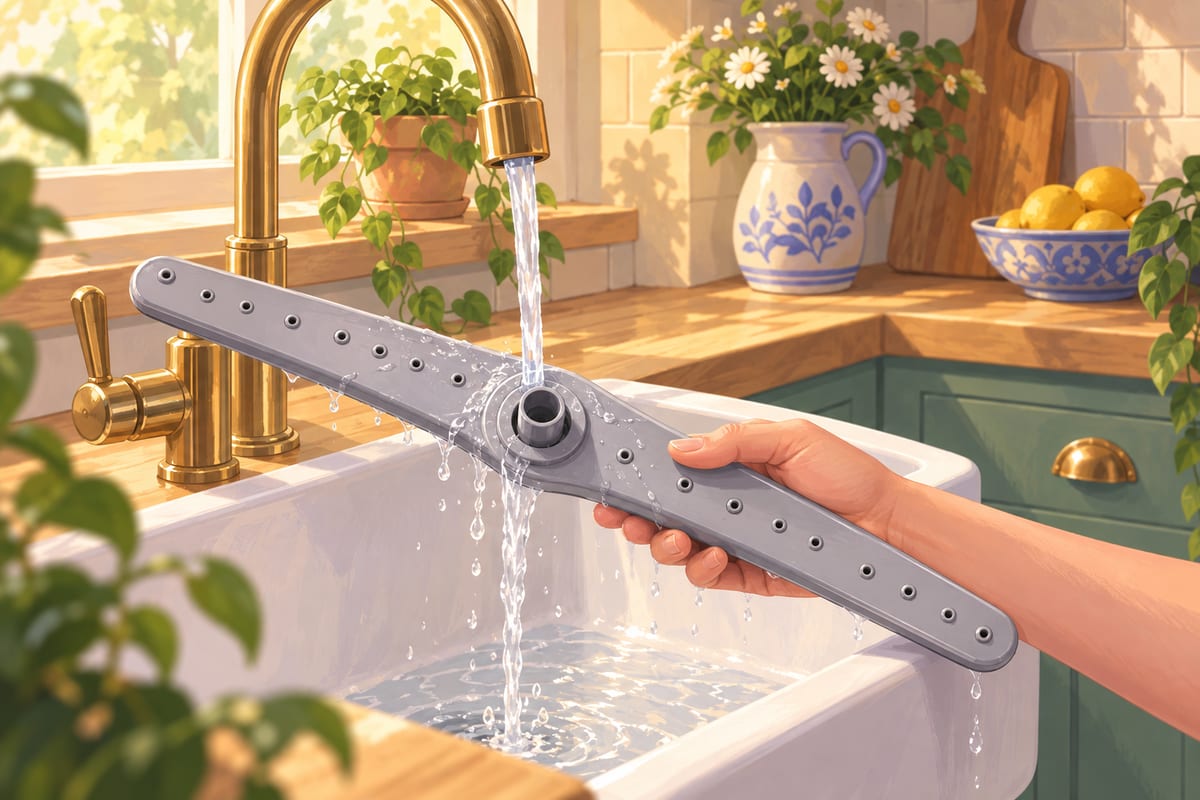
The spray arms are the flat bars that spin under each rack, with small holes along them where the water shoots out. Spin each one by hand. It should turn freely.
Now look at the holes. Clogged ones keep the water from reaching every dish, and clearing them means fewer dishes that need a second wash. If any look blocked with food or white build-up, push a straightened paper clip gently into each one.
Many spray arms come off for rinsing. The bottom one often lifts straight up; the upper one may unscrew or unclip. Check your manual. If yours come off, rinse them under warm running water, shake them out, and put them back. If they don't come off easily, clean them where they are.
Wipe the door edges and seal
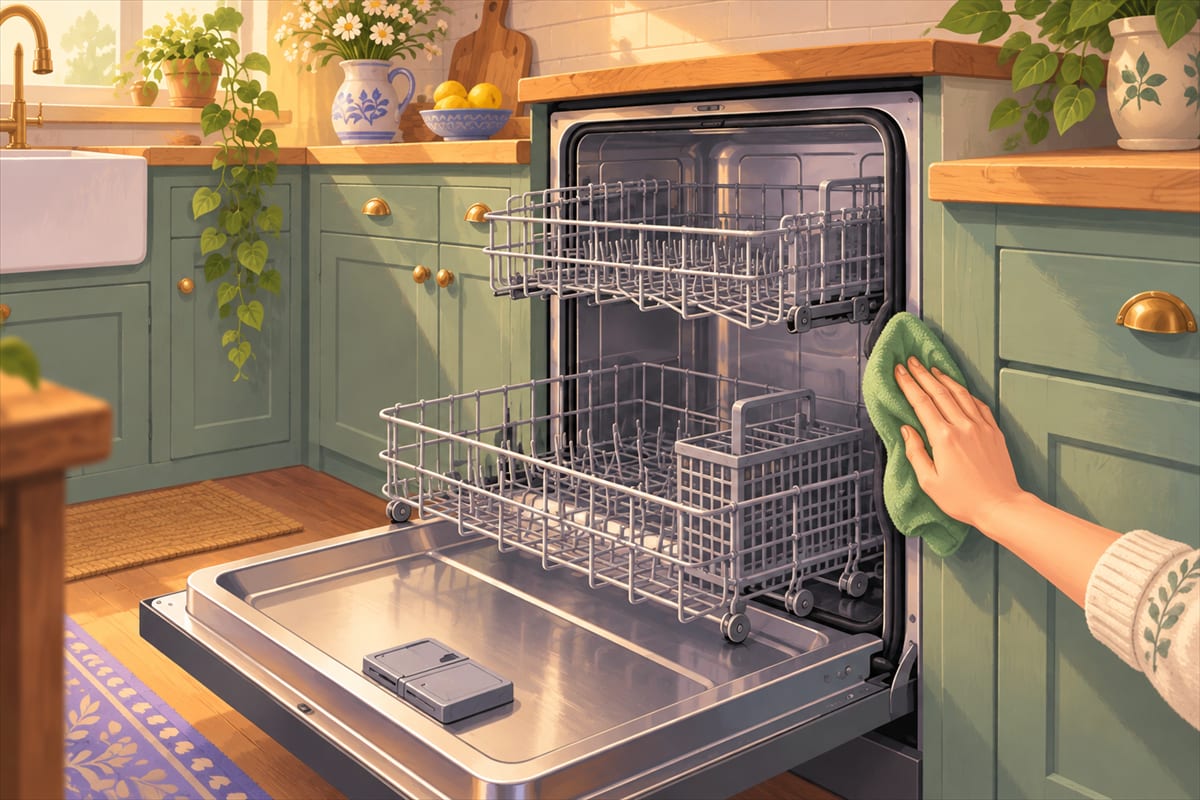
Open the door wide and look at its edges, and at the sides of the tub. This is the part that surprises people. The inside of the machine gets washed every load, but the edges sit just outside the spray. Grease and food drips collect here, because the water never quite reaches them.
Dip a soft cloth in warm, soapy water and wring it out well. Wipe the edges of the door, the sides of the tub around the opening, and the bottom edge of the door. That bottom edge is easy to miss, and it's often the dirtiest part.
Then the rubber seal that runs around the opening. Go gently here. The seal is soft, and scrubbing can tear it, and a torn seal can let water leak out. For a stubborn spot, an old toothbrush and a little soapy water work well.
Finish with a wipe of the buttons and the handle.
Before you press start
For a deeper clean now and then, the rest of the job is two hot cycles. A quick check first, and for any day you clean it:
- Never reach into the filter area with bare hands before looking for broken glass.
- Don't start while the dishwasher is running or still hot.
- Never put dish soap in the machine to run a cycle. It makes a flood of suds that can leak onto the floor.
- Never pour vinegar into the rinse-aid or detergent compartment. It goes in a cup.
- Don't scrub the rubber seal hard or use anything sharp on it.
- Keep steel wool and scouring pads out of the tub. They scratch.
Run a hot cycle with vinegar
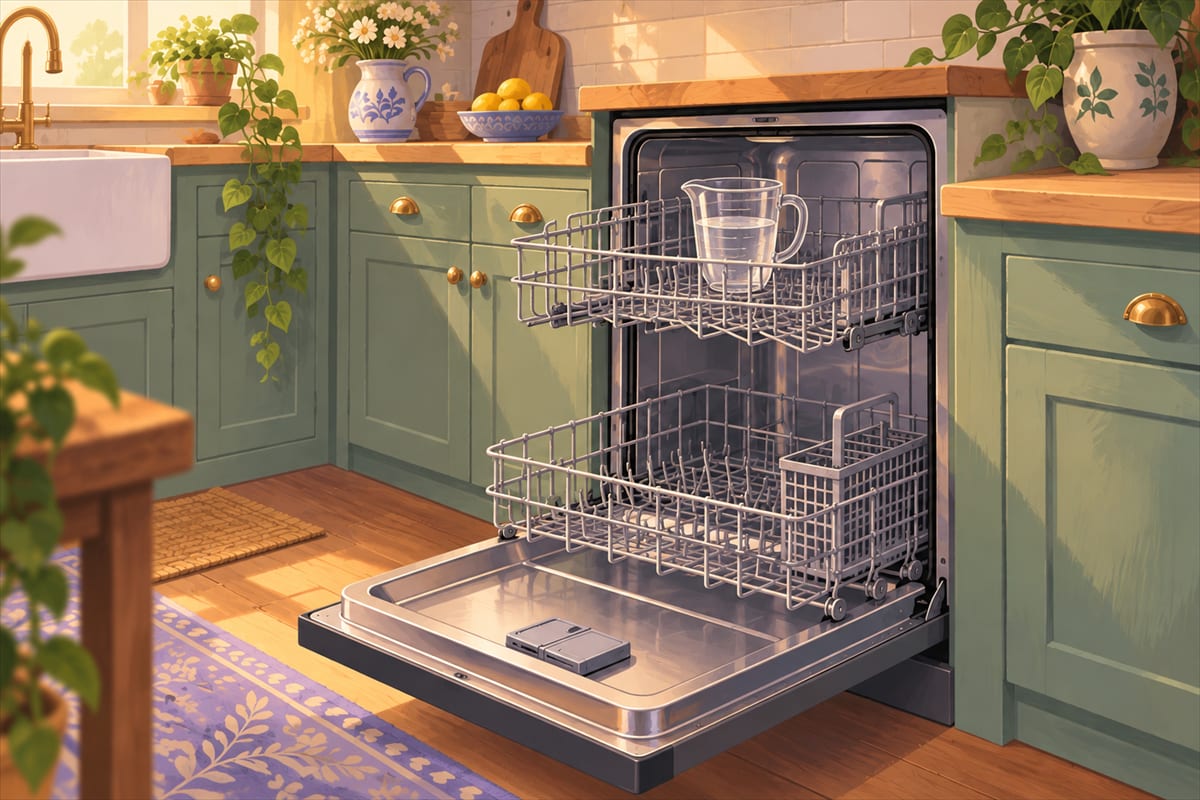
Vinegar is a deep-clean step, not a regular one. It's an acid, and dishwasher makers say that used too often, it can wear on the rubber seals and hoses. Now and then, it's fine. Save it for when you see a cloudy film or notice a smell that the filter didn't fix.
Check your manual first. Many makers sell their own dishwasher cleaner, and some give their own amount or say which rack the cup goes on. If your manual says anything about vinegar, follow it. If it warns against vinegar, use what it recommends instead and skip this step.
If your manual says nothing, pour 1 cup of plain white vinegar into a dishwasher-safe cup or bowl and stand it upright on the top rack. Close the door. Run the hottest cycle your machine has, with nothing else inside: no dishes, no detergent. The hot water and vinegar loosen grease and the cloudy film that hard water leaves behind.
Finish with baking soda
When the vinegar cycle is done, take out the cup. Sprinkle 1 cup of baking soda over the bottom of the tub and run a short, hot cycle.
Baking soda freshens the smell and lifts light stains. Running it on its own, after the vinegar, keeps the two from fizzing away before they can work.
When it's done, open the door a little and leave it for an hour so the inside can dry.
Every month or so
Most homes do well rinsing the filter about once a month, more often if you run a lot of loads or don't rinse plates first. The vinegar and baking soda cycles are for now and then, a few times a year at most, when the filter alone doesn't fix a smell or a film.
In between, it's the small habits. Scrape food off plates into the trash can before they go in. Give the door edge a quick wipe now and then, so grease doesn't build up. And leave the door open a little after a cycle, so the inside can dry and stay fresh.
A turn now and then
We tend to notice the things that look dirty. The things that do the cleaning slip past us, quietly filling up while they work. They don't ask for much. Just a turn now and then.
Clear the filter, open the way for the water, and let the machine do what it was made to do.
Clear the way, and the water does the rest.