
A gentle place to begin
You Are Not Lazy: Home Care Is a Skill You Deserved to Be Taught
People are often expected to know how to care for a home without ever being shown. This gentle guide separates household skills from personal worth and offers one manageable place to begin.
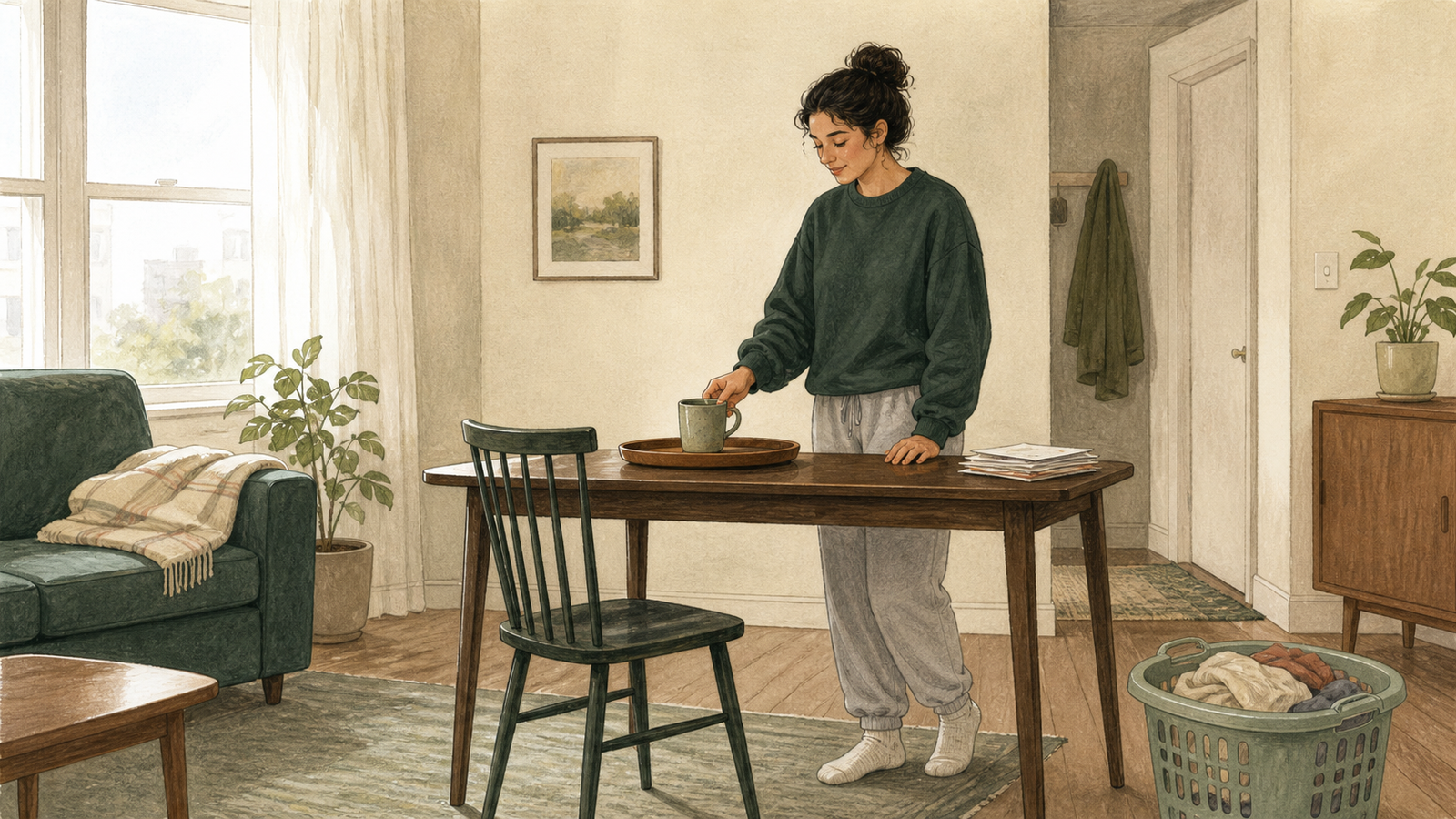
A home can become a place of embarrassment when nobody teaches you how to care for it. People are often expected to know things they were never shown. Then, when they struggle, they are treated as lazy or irresponsible.
If that has happened to you, let us begin somewhere kinder: home care is learned.
No one is born knowing how often to wash a towel, what products can be used safely together, how to make a realistic cleaning schedule, or what to do when an entire room feels impossible. These are skills. Skills require explanation, demonstration, practice, and time.
Needing those things is not a character flaw.

A cared-for home is not proof of a good person
Many of us were taught—directly or indirectly—to treat the condition of a home as evidence about the person living there. A neat room supposedly means someone is responsible. A cluttered room supposedly means someone does not care.
Real life is not that simple.
The condition of a home can be affected by time, money, health, grief, exhaustion, changing responsibilities, the number of people sharing the space, and whether anyone ever explained how to manage it. Two people can care equally deeply and still have very different homes.
A clean counter does not make someone morally better. A crowded sink does not make someone morally worse. Household work matters because it can support safety, comfort, and daily life—not because it proves that you deserve respect.
You already deserve respect.
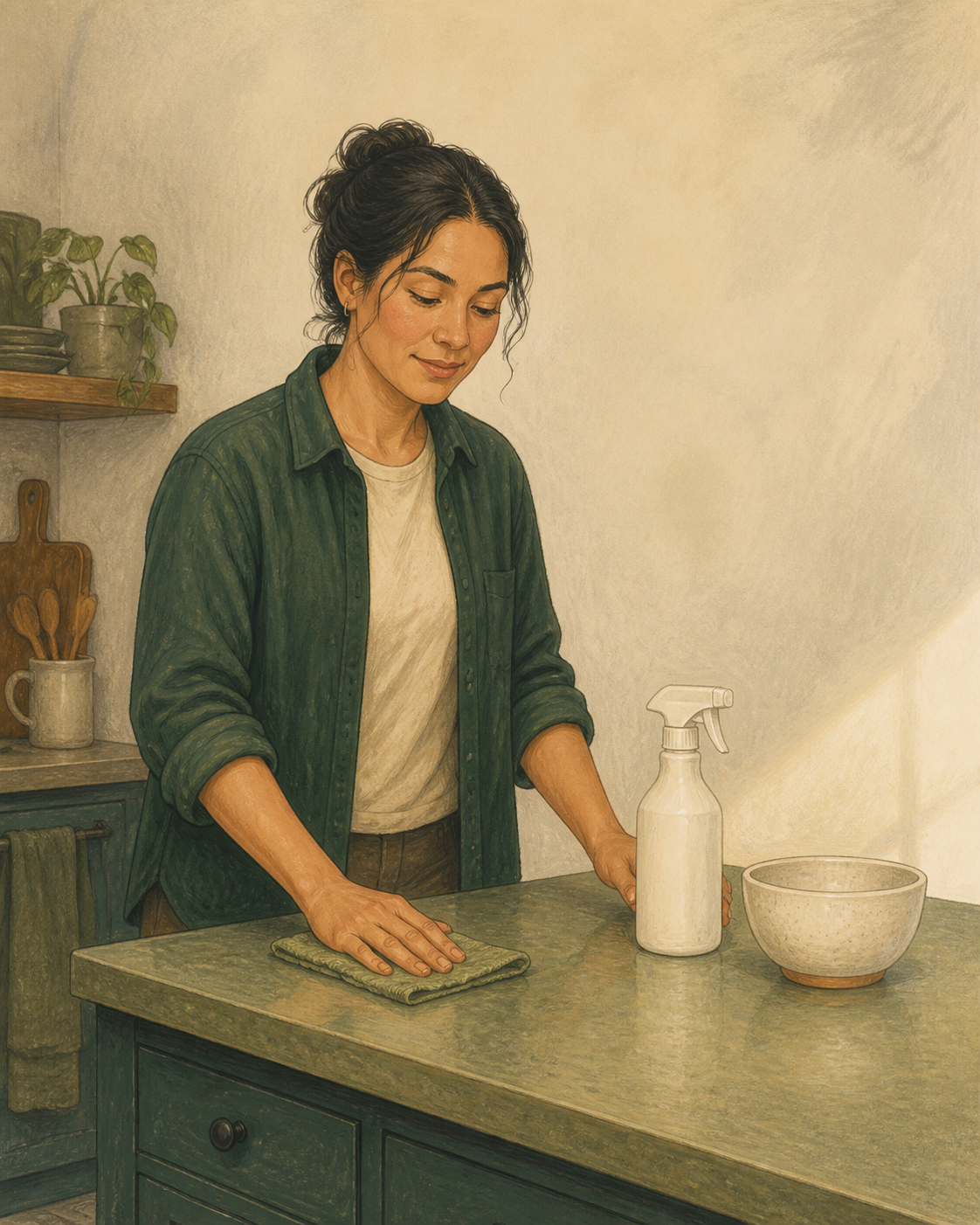
People cannot practice lessons they were never given
Some people learned household care slowly by watching a patient adult. They were shown how to sort laundry, wipe a surface, store food, change bedding, and notice when supplies were running low. They could ask questions. They could make mistakes while someone helped them understand why a task was done a certain way.
Other people received commands without instruction: “Clean this up.” “You should know better.” “Why is this so hard for you?”
That is not teaching.
Good teaching makes the invisible parts visible. It explains what “done” means. It breaks a large job into actions. It tells you what supplies to use, what dangers to avoid, and when you have done enough. It lets you repeat the process until it becomes familiar.
If you did not receive that kind of teaching, it makes sense that household work may feel confusing now. You are not behind in some permanent way. You are learning in the present what someone deserved to teach you earlier.

Shame makes a difficult task heavier
Shame rarely creates a calm place to learn. It makes us want to hide the problem, avoid the room, or finish everything in one punishing burst so nobody will see us struggle.
That burst may leave you exhausted. The task then becomes associated with panic and pain, making it harder to return the next time.
Patient instruction works differently. It says: this is the task; this is why it matters; this is the first action; this is where you may stop.
There is no humiliation in that process. There is information, practice, and permission to be new.
When you notice a harsh thought—“I should already know this”—try replacing it with a more accurate one: “I am learning a skill I was not properly taught.”
Accuracy is often kinder than shame.
Aim for safe and functional—not perfect
A functional home supports the people who live there. You can move through important pathways. You can find the items you need most often. Food is stored safely. Obvious hazards are handled. There is a usable place to sleep, wash, eat, or rest.
That standard leaves room for ordinary life. Laundry can be waiting without becoming a moral emergency. A table can hold mail. A bed can be unmade. A room can look lived in.
Perfection asks, “How would this home look to somebody judging it?”
Function asks, “What would make life a little safer or easier for the person living here?”
Function is a much better teacher.
A five-step way to begin
You do not have to repair your entire relationship with home care today. You only need one clear beginning.
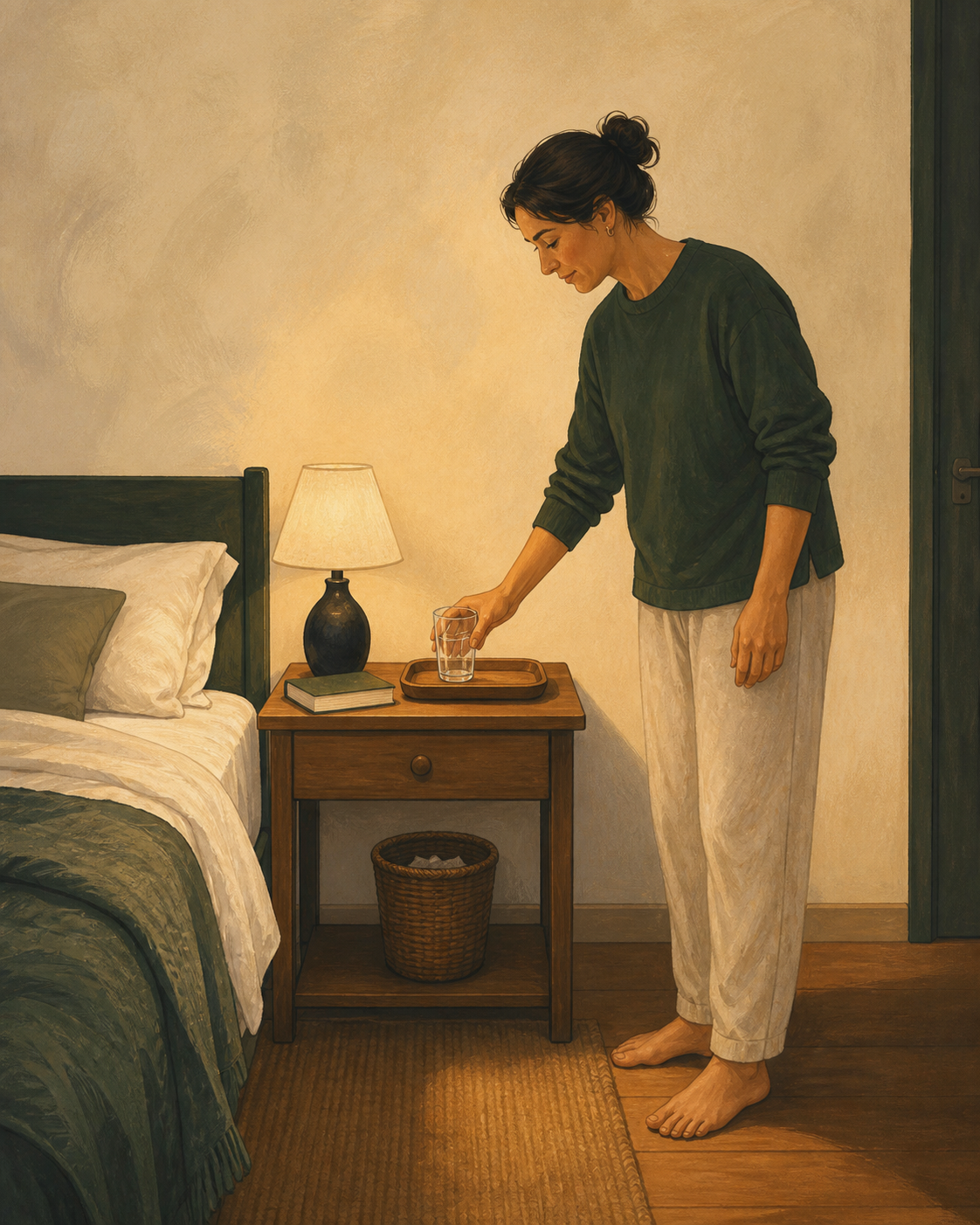
1. Pick one very small area
Choose something you can see all at once: one bedside table, one chair, one section of a counter, or the floor directly in front of a doorway.
Do not choose “the bedroom” or “the kitchen.” Those are collections of many tasks. Make the boundary small enough that your eyes and hands can understand it.
2. Name one functional result
Decide what would make this small area easier to use.
For example: “I want a safe place to set down a glass.” “I want to sit in this chair.” “I want this part of the counter available for making breakfast.” “I want a clear path through the doorway.”
You are not trying to make the area impressive. You are giving it one useful job.
3. Gather only what this task needs
Bring over the smallest set of supplies that fits the job. That might be a trash bag and a basket. It might be a cloth and one safe cleaner. It might simply be your hands and a place to put dishes.
Too many supplies can become a second project. Keep the tools as small as the task.
If you are using a cleaning product, read its label and follow its safety directions. Never mix cleaning products unless the label specifically says it is safe to do so.
4. Work for five or ten minutes
Set a gentle stopping point before you begin. Five minutes counts. Ten minutes counts. Moving one object counts if that object restores the function you chose.
A timer is not a demand to race. It is a promise that the task has an edge.
When the timer ends, you may stop—even if you can see more work. Stopping where you planned helps teach your body that household care does not have to consume all available energy.
5. Notice what changed, then rest
Look at the specific function you restored. Perhaps the chair is usable. The glass has a safe place. The walking path is clearer. The dishes are gathered in one location.
Name that change without adding “but.” Try: “The doorway is safer now.” Not: “The doorway is safer, but the rest of the room is still awful.”
The unfinished work can exist beside the work you completed. Rest is part of learning a repeatable routine.
If today is a low-energy day
Choose the option that protects basic function with the least effort:
- Put obvious trash into one bag.
- Gather dishes in or beside the sink without washing them yet.
- Move objects out of one important walking path.
Pick only one. Sit down afterward. A low-energy action is not a failed version of a bigger clean. It is a complete response to the energy available today.
The lesson you should have received
You deserved teaching that was calm, specific, and free from ridicule. You deserved to hear why a task mattered. You deserved to see it demonstrated. You deserved room to ask questions and permission to need reminders.
You can still learn that way now.
Your home does not need to become a performance. It can become a place that supports you, one learned skill and one manageable action at a time.
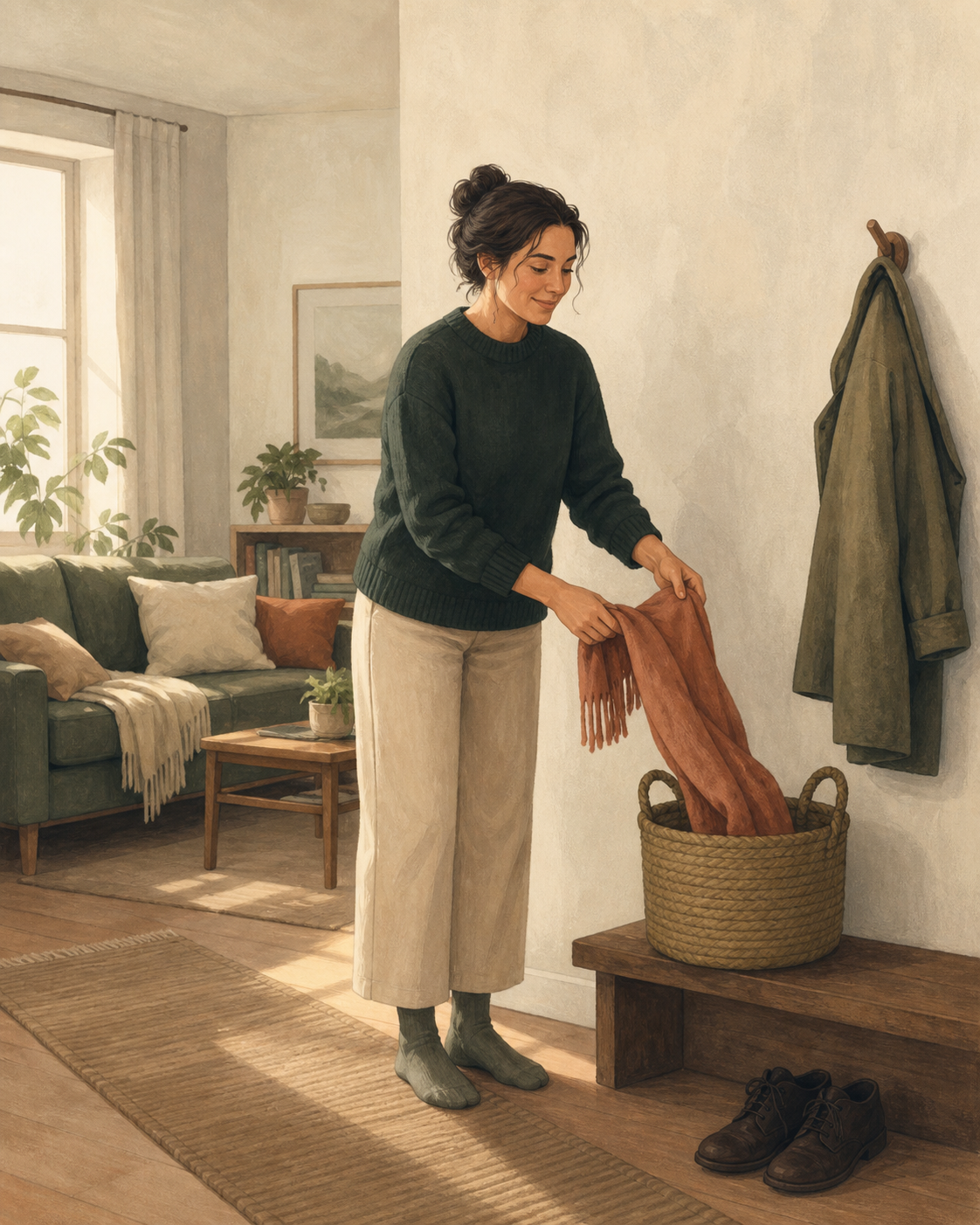
Choose one tiny area. Give it one useful job. Take one small step today—and let that be enough.