
A gas stove shows you how it's doing every time you cook.
Read the Flame
How to clean a gas stove top, and what the flame can tell you about it.
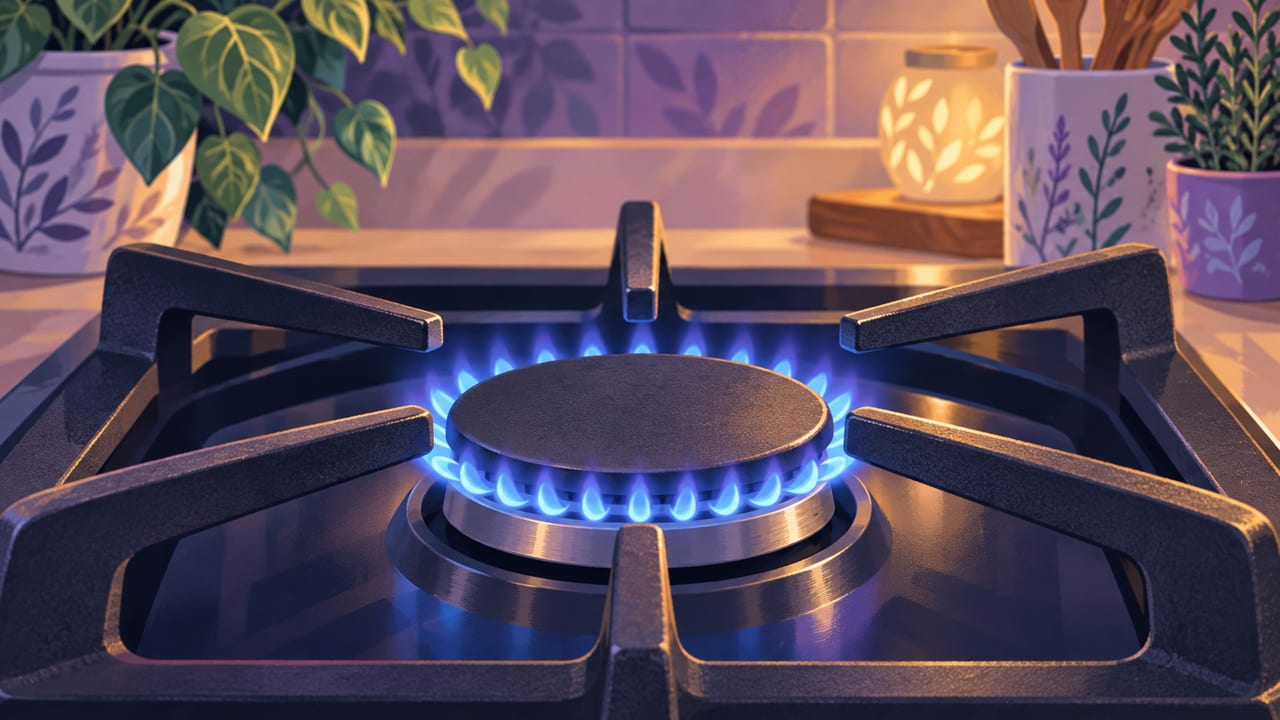
A gas stove shows you how it's doing every time you cook. Turn a knob, and there it is: a ring of little flames. When the burner is clean, that ring is blue, steady, and even. When it isn't, the flame starts to change. It may flicker, turn yellow at the tips, or skip spots in the ring.
Most people clean a gas stove for how it looks: the grease on the grates and the rings around the burners. That matters. But the real work happens in a row of holes so small you might never have noticed them.
This article covers both. You'll soak the big, greasy parts and clear the tiny ones. And when you're done, the flame itself will show you whether it worked.
Gas safety comes first
Gas companies add a smell to natural gas so you can notice a leak. It smells like rotten eggs or sulfur. If you smell it, stop cleaning. Don't light a match, don't turn the stove on, and don't flip any light switches. Leave your home and call your gas company or 911 once you're outside.
If there's no smell, you're ready to begin. Turn every knob to off and wait until the grates are cool to the touch. Cast-iron grates are heavy and hold heat for a long time, often 30 minutes or more after cooking.
A few other safety points come up as you go, and each one is marked in its step.
Reading the flame
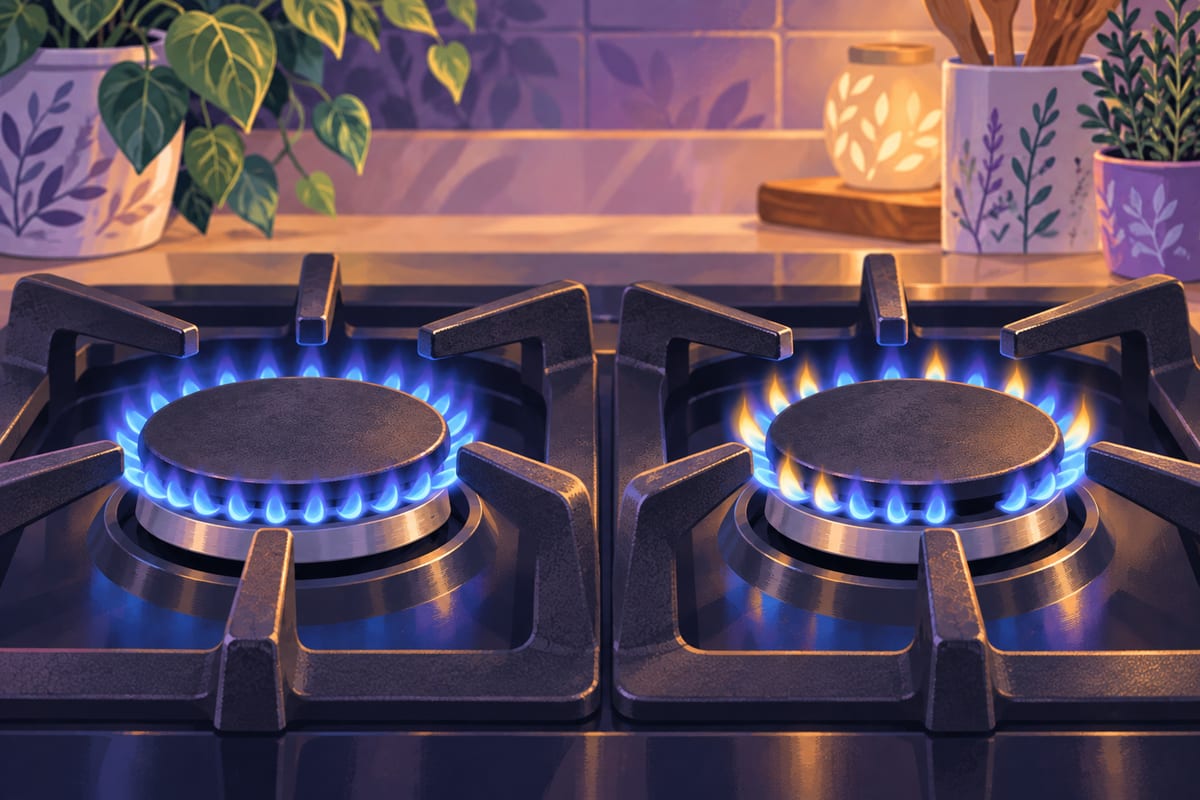
The best time to check is the next time you cook, before you clean. Light each burner for a few seconds and look closely. Then turn it off. What you see tells you where to focus later.
What you see, and what it usually means
- Blue, steady, even all the way around: the burner is clean and working well.
- Gaps where no flame comes out: some of the tiny burner holes are blocked.
- Yellow or orange flames: food or grease is blocking the holes, or the cap is sitting crooked.
- Flames that lift, flutter, or look lopsided: the cap may be out of place.
- Clicking, but no flame: the igniter or burner is wet or dirty.
A small flash of orange now and then is normal. It's usually dust burning off. A flame that stays yellow is the one to pay attention to.
Start with the heavy pieces
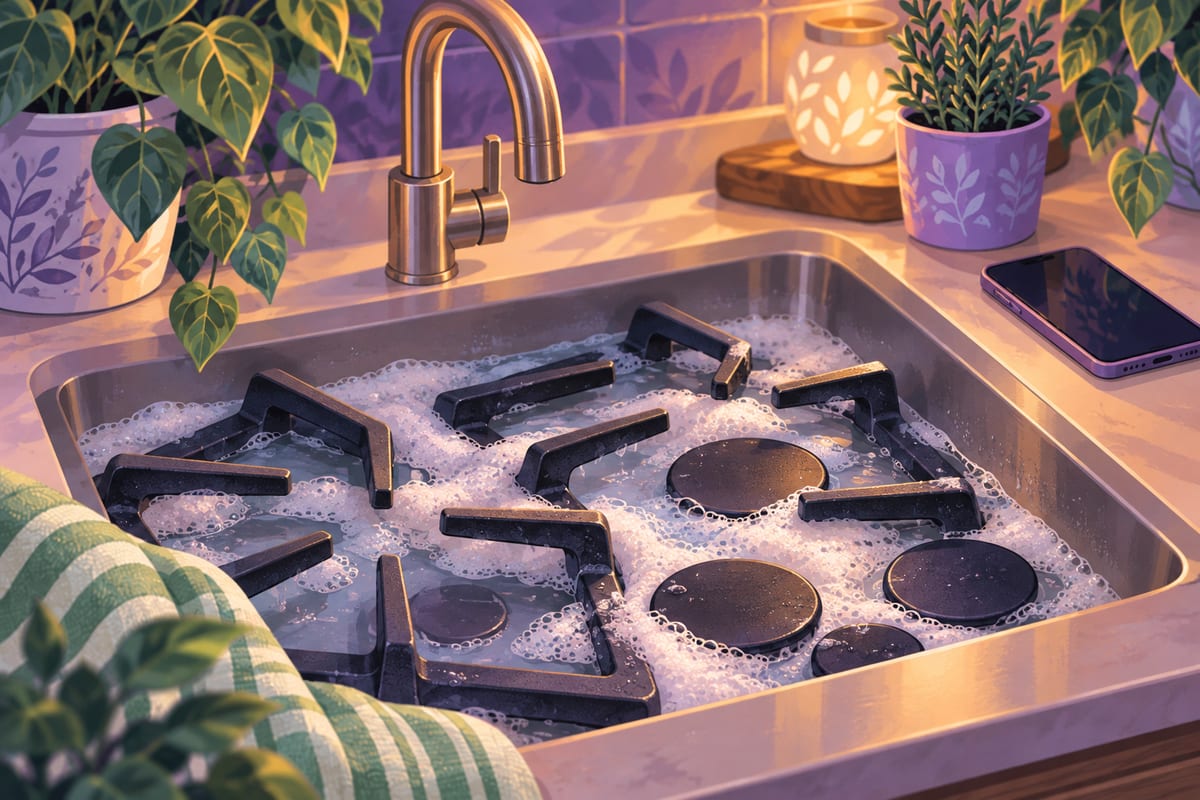
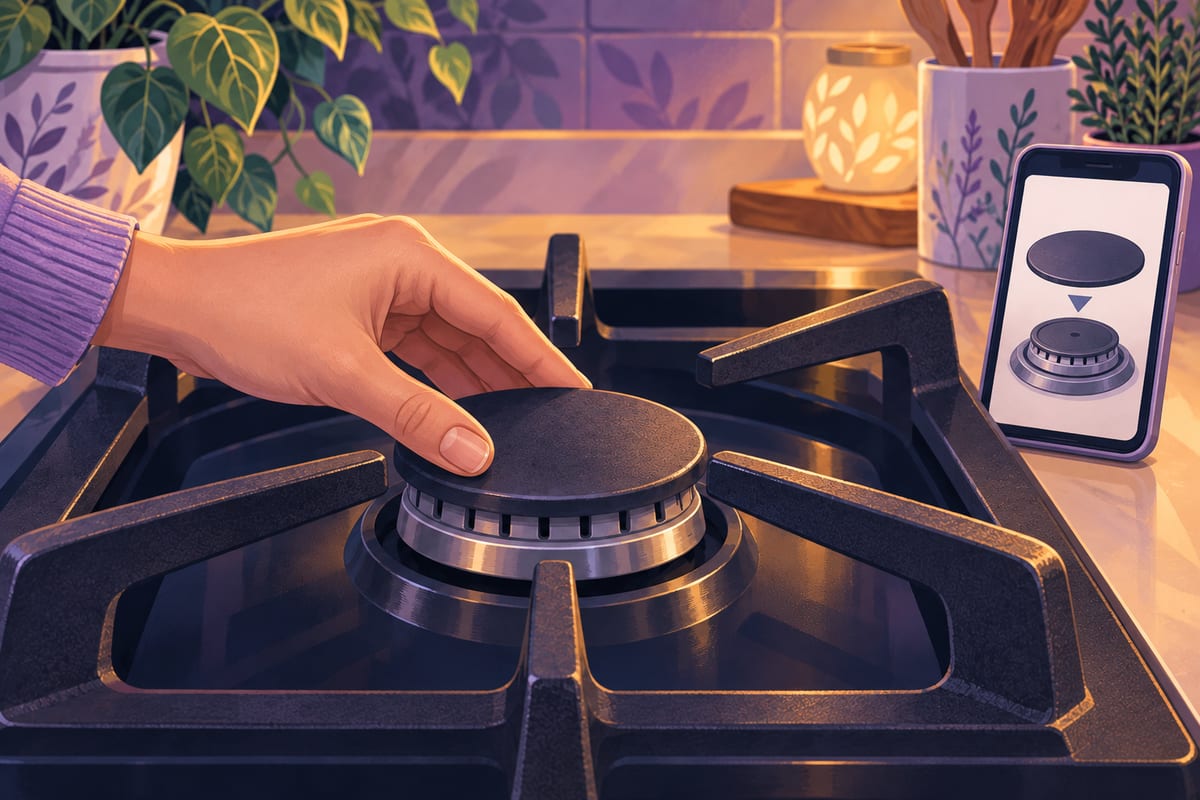
Once everything is cool, lift the grates off and set them on a towel. Then lift off the burner caps, the flat metal discs in the middle of each burner. Take a quick photo with your phone first. Caps can come in different sizes, and the photo shows which one goes where.
Fill the sink with hot water and a good squeeze of dish soap. Put the grates and caps in and let them soak for 15 to 20 minutes. Grease softens a lot faster in hot water than it does under a scrub brush.
One thing to check first: most grates have a smooth, glossy coating, and those can soak. Bare cast iron looks dull and gray, and it can rust if it sits in water too long. If yours look bare, check your manual. You may need to wash them quickly and dry them right away instead.
While they soak: knobs and the stove top
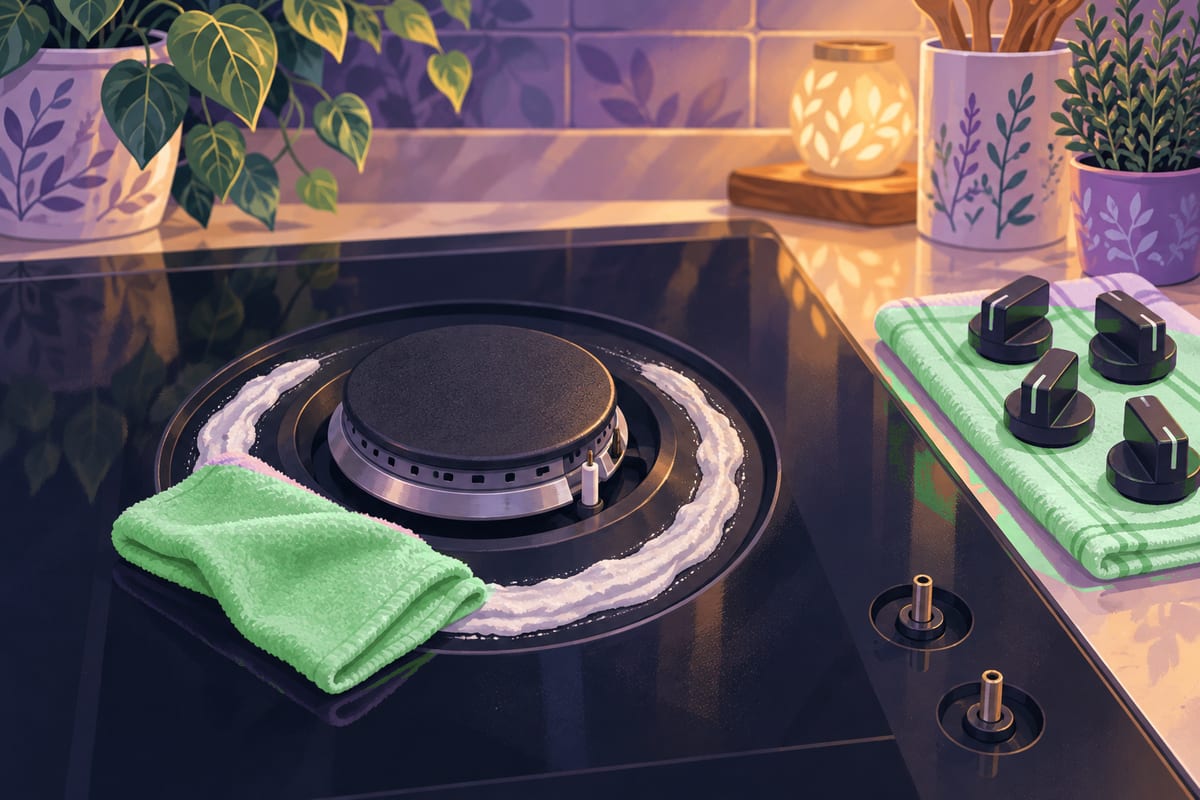
Most knobs pull straight off toward you. Grip one firmly and pull. If it won't budge, leave it on and wipe around it instead. Wash the loose knobs in warm, soapy water and set them aside to dry.
For the front of the stove, spray cleaner onto your cloth, never onto the stove. Liquid that runs down behind the knobs can reach the gas controls and wiring.
Now the stove top. Sweep up the crumbs first. Then wipe the surface with a warm, soapy cloth, wrung out until it's barely damp. Work around each burner instead of over it.
The dark rings around each burner are cooked-on spills. Cover them with a paste of baking soda and a little water. Lay a warm, damp cloth over the paste to keep it moist, and leave it for 15 minutes. Then wipe it all away. Keep the cloth off the burners themselves while it sits.
The part most people skip
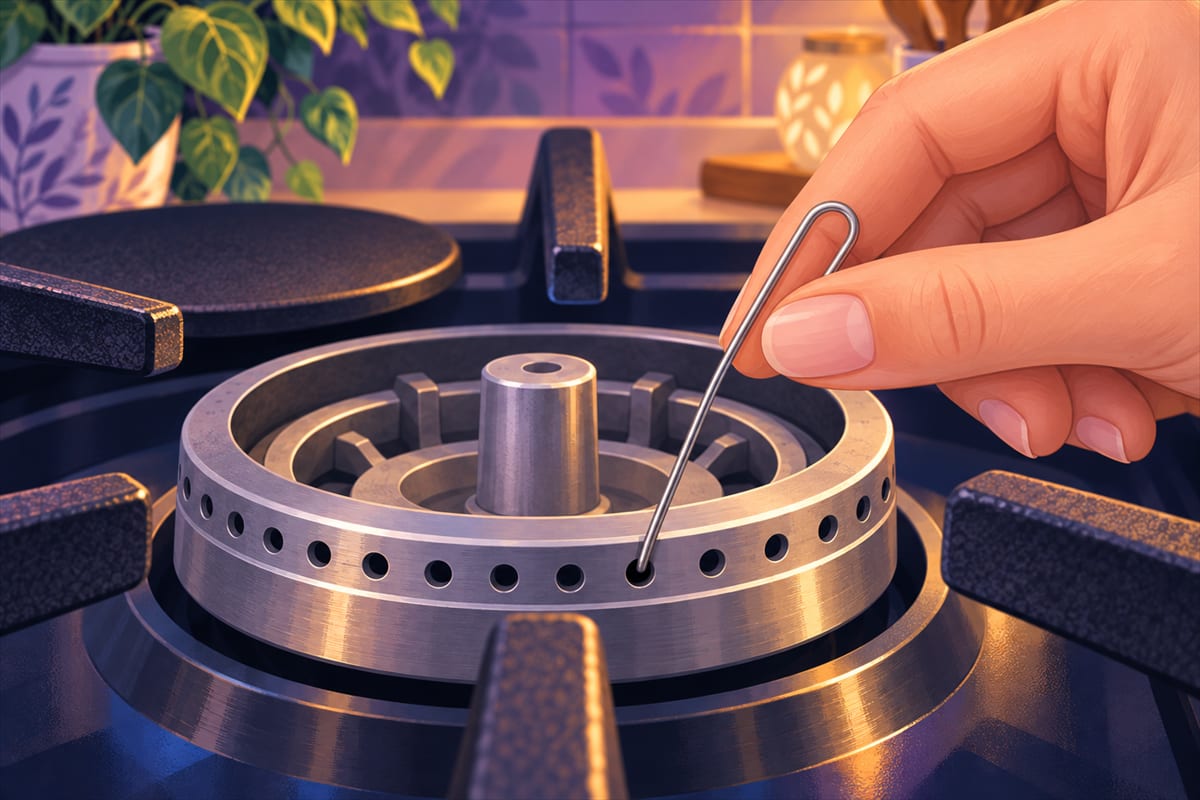
With the cap off, look at the burner head underneath. Around its edge is a ring of tiny holes, or thin slots on some stoves. Gas flows out of those holes, and each one makes one small flame. When food, grease, or boiled-over water blocks a hole, that part of the flame goes out or turns yellow.
Start dry. Brush around the burner head with a dry toothbrush to knock loose any crumbs and burnt bits.
Then clear the holes one by one. Straighten a paper clip, or use a sewing needle, and push it gently straight into each hole and back out. Don't wiggle it around, which can widen the hole. Never use a toothpick. Wood can snap off inside the hole and block it for good.
Finish with a cloth that's barely damp, just enough to pick up the loosened grime. Never pour water on a burner head or soak it.
Next to each burner is the igniter, a small white or gray nub. It makes the clicking spark that lights the gas. Wipe it gently with a dry cloth or the dry toothbrush. Keep it dry. A wet igniter just clicks and clicks without lighting.
Back together, then watch the flame
By now the grates and caps have soaked. Scrub them with a soft sponge or a non-scratch pad. For stubborn burnt spots, add baking soda paste, wait 15 minutes, and scrub with the toothbrush. Grates with thick, old grease may need a second soak in fresh hot, soapy water for 30 minutes. Rinse everything well.
Dry every piece with a towel. Then give the caps extra time to air-dry, since a damp cap can keep a burner from lighting. If you're not sure, wait an hour.
Use your photo to put each cap back on its burner head. It should sit flat and centered, with no rocking. Then set the grates on top and push the knobs back on. Never light a burner while its cap is off. Without a cap, the flame is uneven and unsafe.
Now light each burner and read the flame again. You want blue, steady, and even all the way around. If a burner clicks but won't light, turn it off. There's probably still water inside, so wait an hour and try again. If a flame stays yellow after you've cleared the holes and checked the cap, call a technician to look at it.
Keeping it easy
A gas stove doesn't need this full clean every week. Every 1 to 2 weeks is plenty for most homes. Let the flame be your guide: when it starts to look yellow or patchy, the burners are ready for attention.
In between, wipe up spills once the grates are cool, before they have a chance to cook on the next time you use the stove.
On a low-energy day
Do just one thing. Once the grates are cool, put them in the sink with hot, soapy water and walk away. Let them soak overnight if they have a glossy coating. Tomorrow, the grease will wipe off easily. Getting them into the sink is enough for today.
The takeaway
You don't have to guess whether your stove is clean. Just look at the flame. Soak the big parts, clear the tiny holes, and the stove will show you it worked.
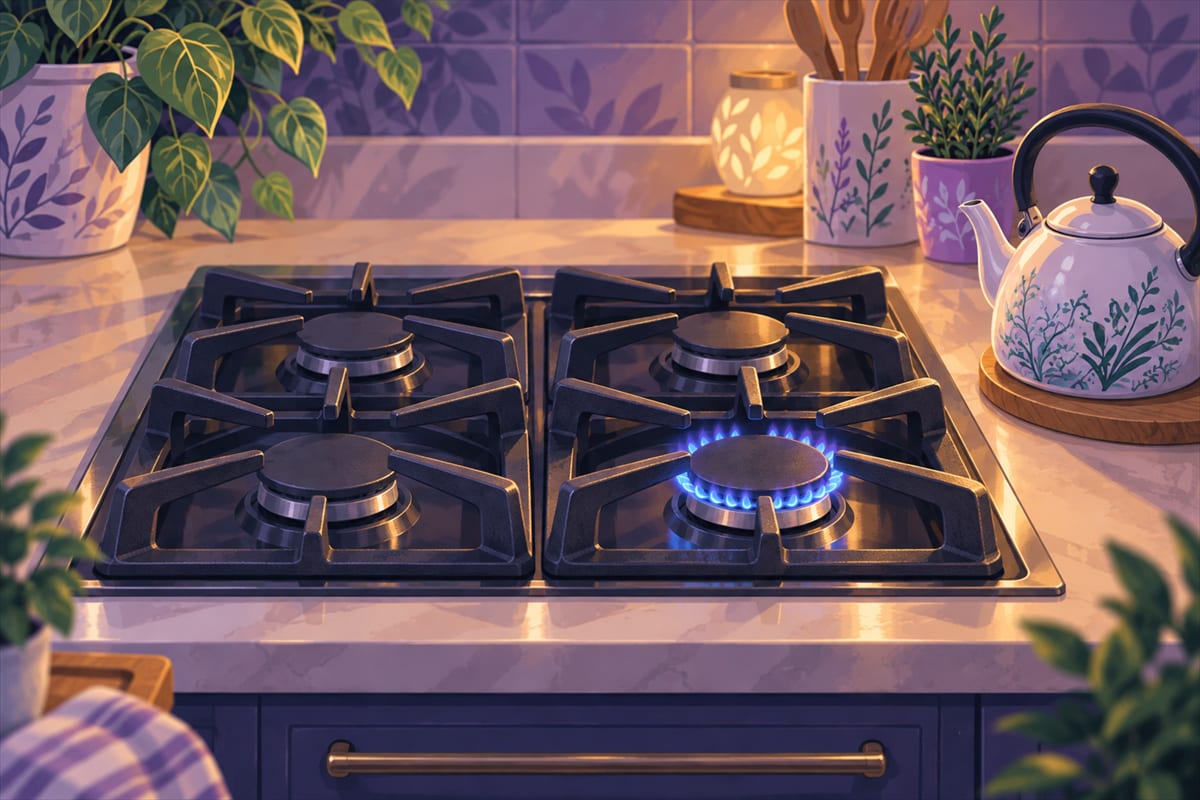
Blue, steady, and even. That's a clean burner.