
One small tag decides what's safe to use on it.
The Little Tag That Decides Everything
How to clean a sofa or upholstered chair safely, and why the tag comes first.

A sofa holds up to more sitting, spilling, and stretching than almost anything else in the house, and it shows. Crumbs work into the seams, a glass tips over, and a stain that looked simple in the moment can turn into a permanent mark.
None of that calls for guesswork. It calls for one small tag, usually hidden under a cushion, that tells you exactly what your fabric can handle.
Find the tag first
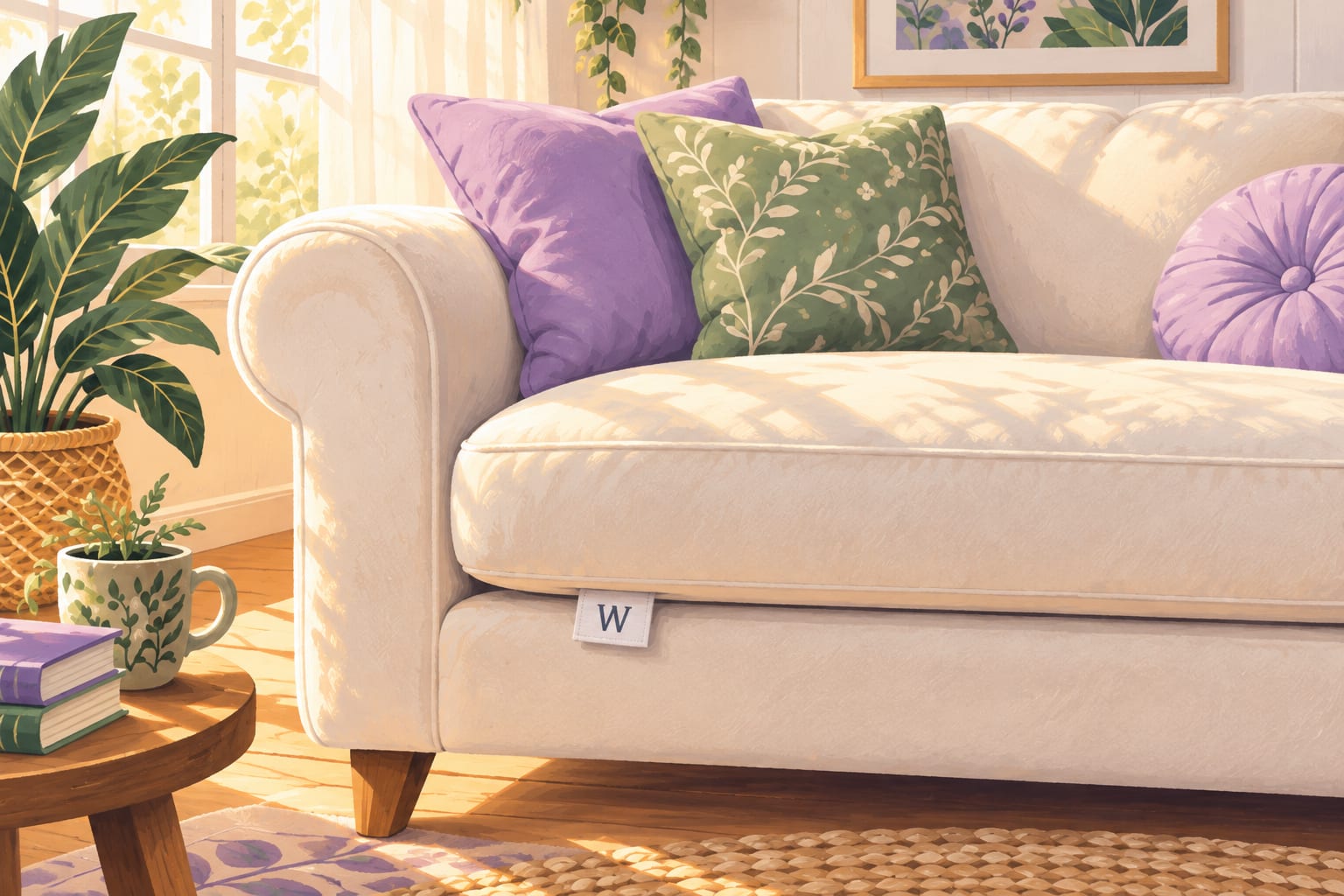
Look under a seat cushion or along the underside of the frame for a small tag with a letter code: W, S, WS, or X.
Why? The tag names the exact cleaning method the manufacturer tested this fabric with. Skipping it means guessing, and the wrong guess can leave a permanent stain, a ring, or shrink the fabric.
Know what each letter allows
W means water-based cleaners only. S means a solvent-based cleaner, and no water at all. WS means either one is fine. X means vacuum only, no liquid of any kind.
Why? Water on an S-coded fabric can leave a permanent ring or shrink it. A solvent on a W-coded fabric can do the same kind of damage in reverse. The letter isn't a suggestion.
Vacuum before anything wet touches it
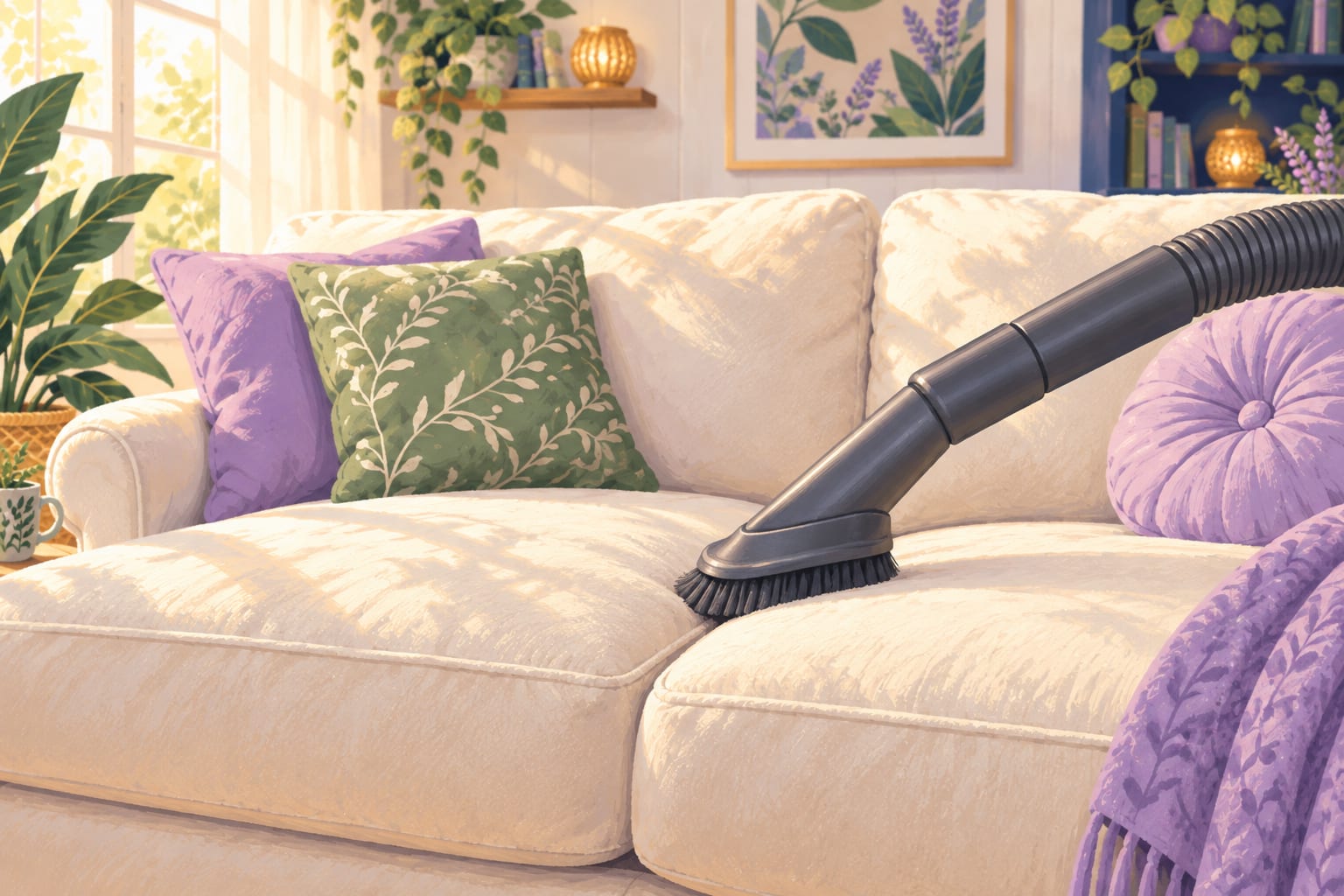
Vacuum the cushions, seams, and crevices with a soft brush attachment before you clean anything.
Why? Grit and crumbs act like sandpaper once a damp cloth pushes them around. Clearing them first keeps the next step from grinding dirt deeper into the fibers.
Spot test in a hidden spot

Dab a small amount of the cleaner your tag allows onto a hidden spot, like the underside of a cushion. Wait a few minutes and check for any color change.
Why? Some cleaners react with certain dyes even when the code says they should be safe. A hidden test catches that before it happens somewhere visible.
Blot spills, never rub
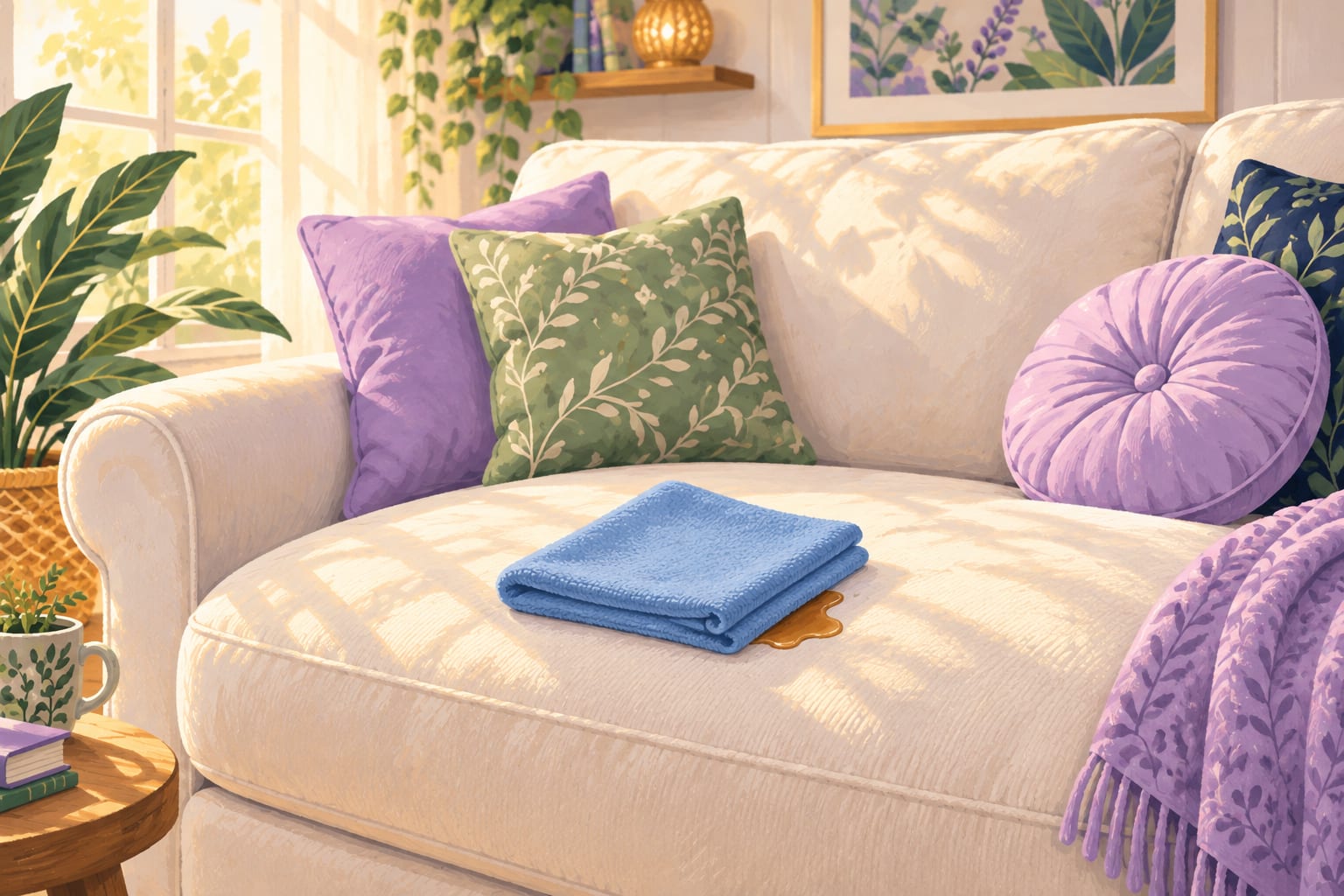
Press a clean, dry cloth straight down onto a fresh spill and lift it away. Repeat with a clean section of cloth until nothing more transfers.
Why? Rubbing pushes a spill deeper into the fibers and spreads it wider. Blotting lifts it out instead of grinding it in.
Clean in small sections and let it dry

Using only the cleaner your tag allows, work in small sections and let each one dry before moving to the next.
Why? Oversaturating a cushion traps moisture inside the foam, where it can turn musty or grow mildew long before the surface looks wet.
If today's a low-energy day
Just vacuum the cushions and blot any fresh spot you see. That's enough for now.
The larger lesson
A sofa teaches the same lesson as almost every room in the house: the answer was on a small label the whole time. The letter on that tag decides more about the outcome than any cleaner you could buy.

One small tag, one quick test, and a couch that stays looking new far longer than a heavy scrub ever could.