
Water is what turns a stain into a bigger stain.
The Rule That Saves a Rug: Blot, Don't Pour
How to clean a carpet or area rug safely, and why water is the one thing to go easy on.
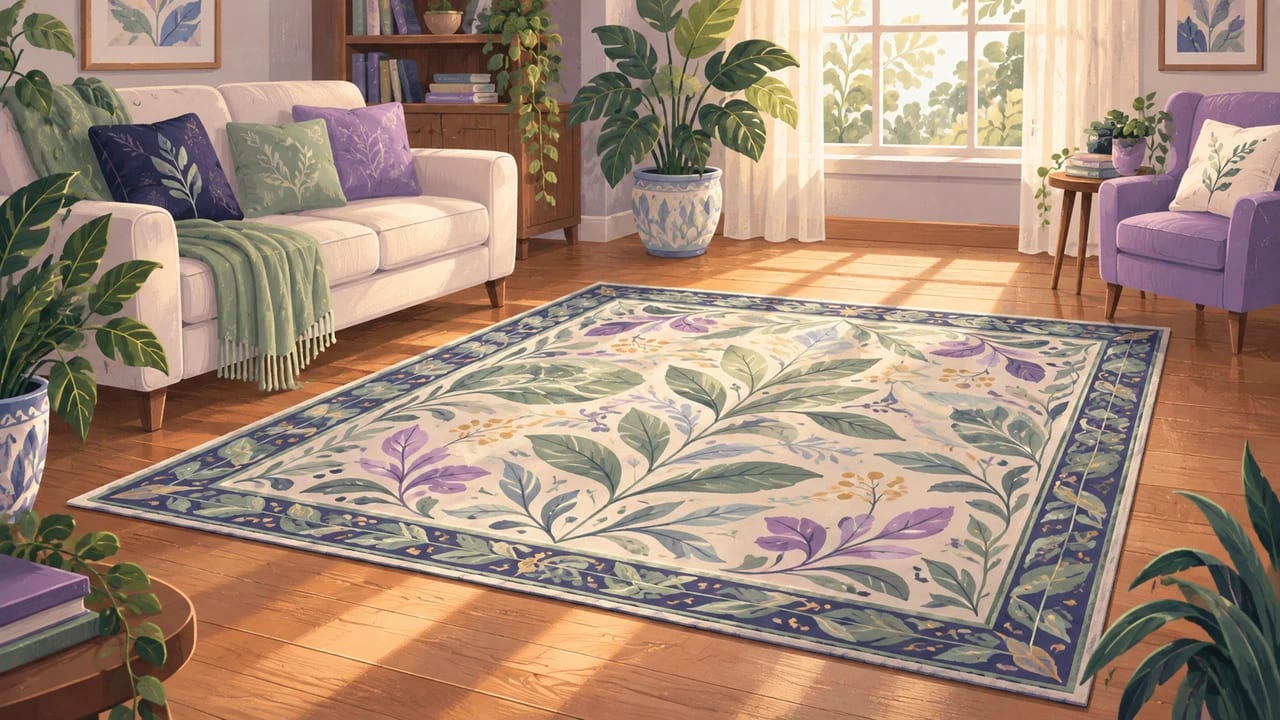
A rug takes on more foot traffic, spills, and pet hair than almost any other surface in the room, and grit works its way down into the fibers where you can't see it.
None of that needs a deep scrub every time. It needs the dirt out first, and the right amount of water.
Vacuum both sides first
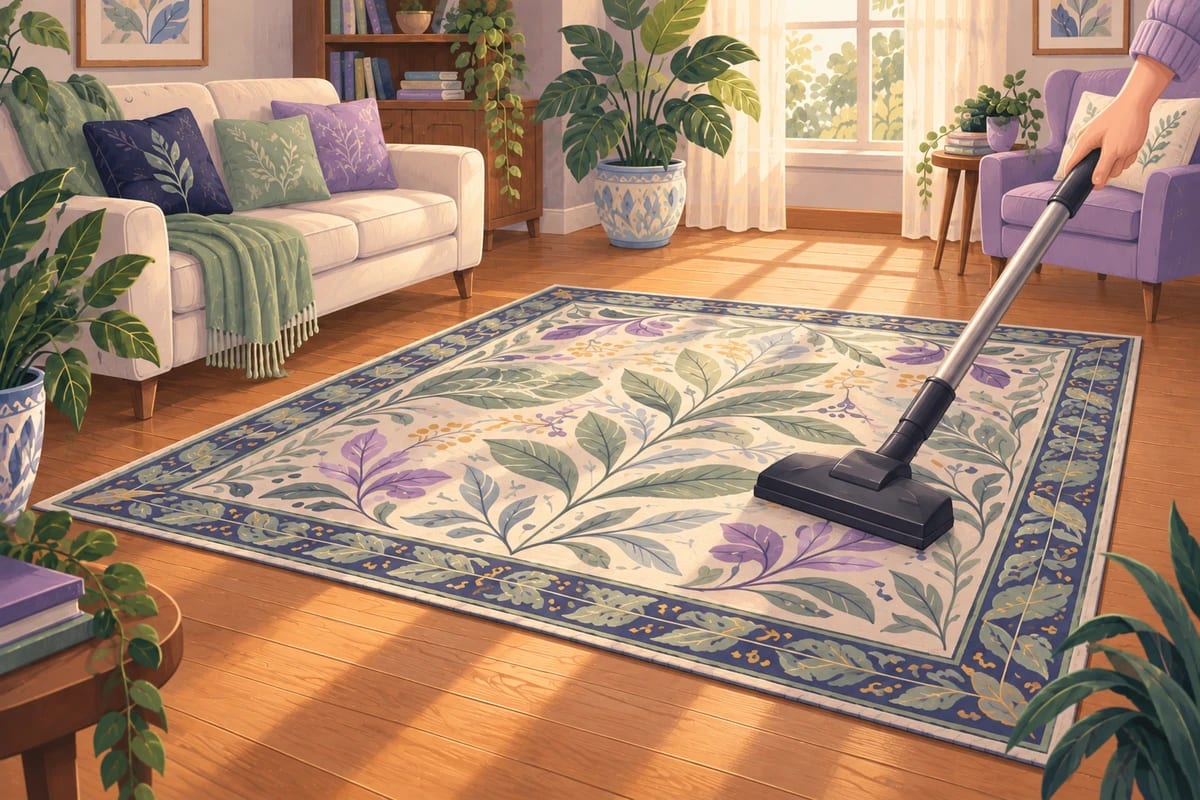
Vacuum the top of the rug, then flip it over and vacuum the back too.
Why? Sand and grit settle at the base of the fibers and cut them like tiny blades every time the rug is stepped on. Vacuuming both sides clears grit before any liquid touches it.
Check what the rug is made of
Look at the tag or ask the seller whether the rug is wool, synthetic, or a blend, since wool needs a gentler cleaner and less water than synthetic fibers.
Why? Wool fibers can felt or shrink with too much heat or agitation, while most synthetic rugs tolerate a stronger clean. Knowing the material first keeps you from damaging it by accident.
Blot a spill, don't pour water on it
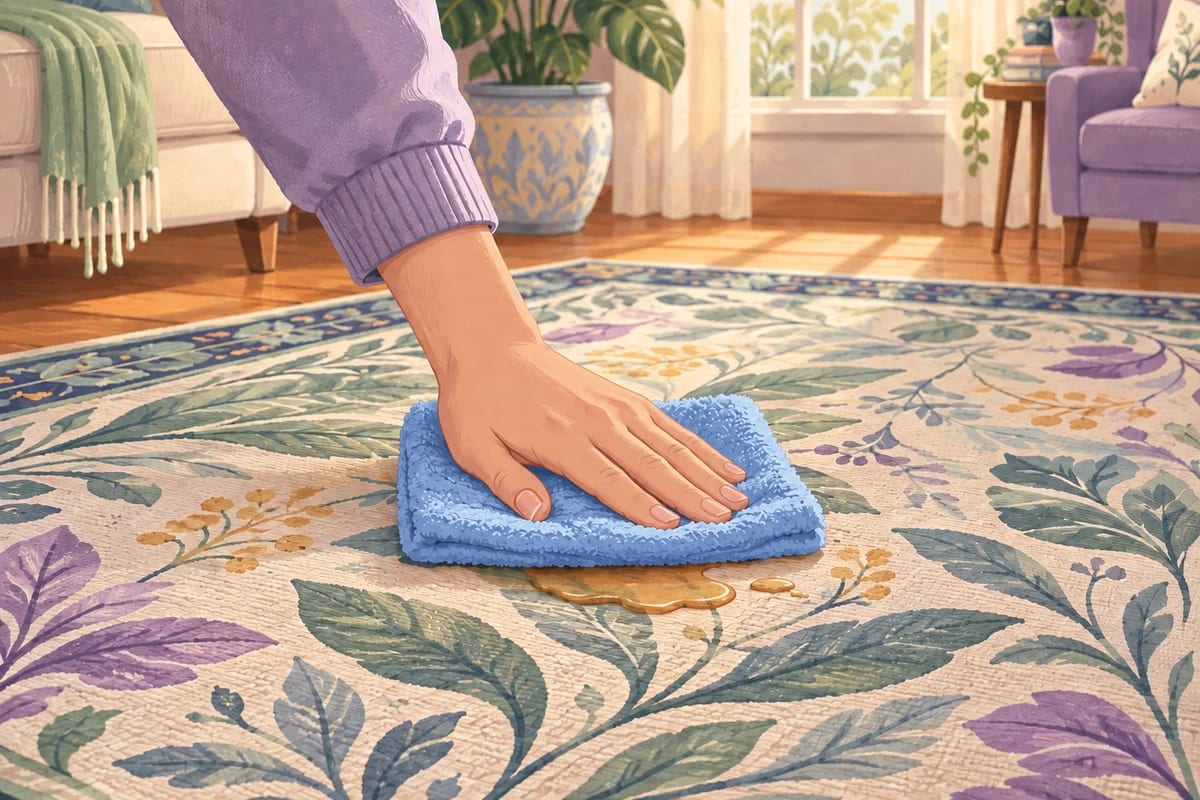
Press a clean, dry cloth straight down onto a fresh spill and lift it away, working from the outside edge in.
Why? Pouring water or scrubbing pushes the spill deeper into the padding underneath, where it's much harder to reach. Blotting lifts liquid out instead of driving it further in.
Spot test any cleaner
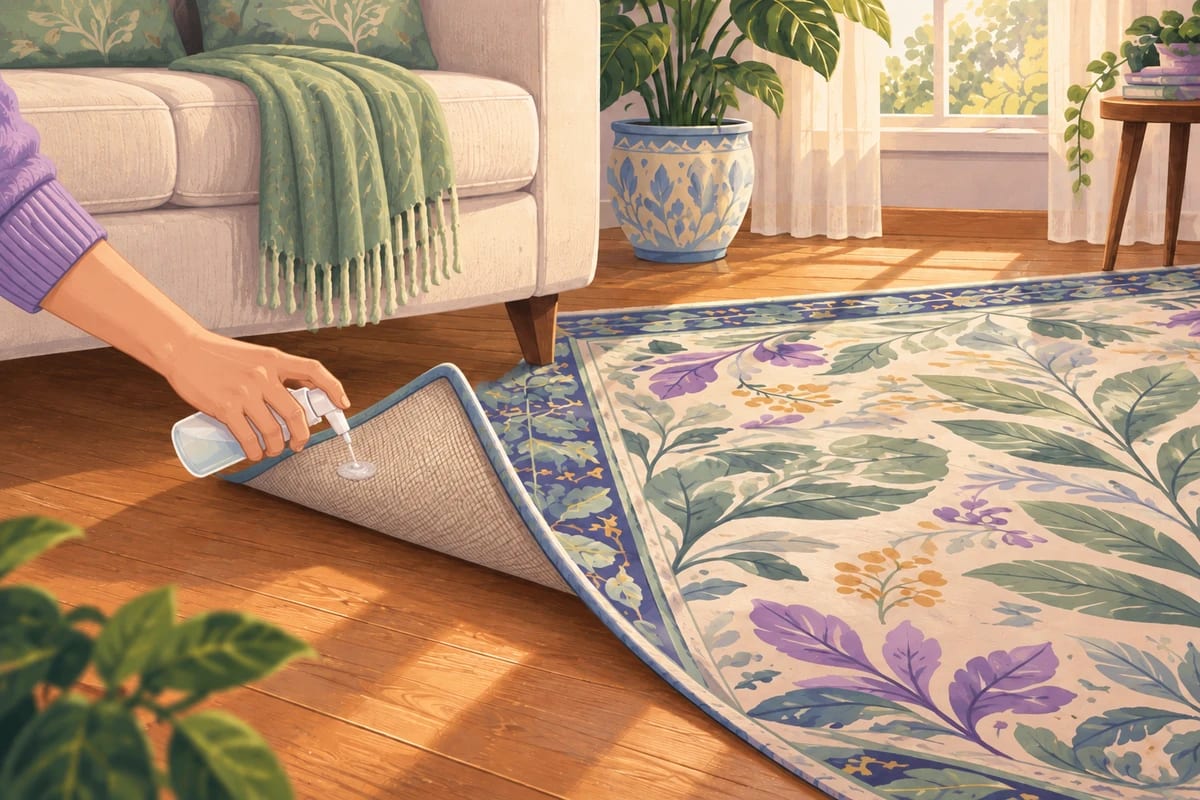
Test any carpet cleaner on a hidden corner or edge of the rug first, and wait a few minutes to check for color change.
Why? Some dyes react to cleaners that are safe on other rugs. A small test catches that before the stain treatment becomes the bigger problem.
Let it dry completely before walking on it
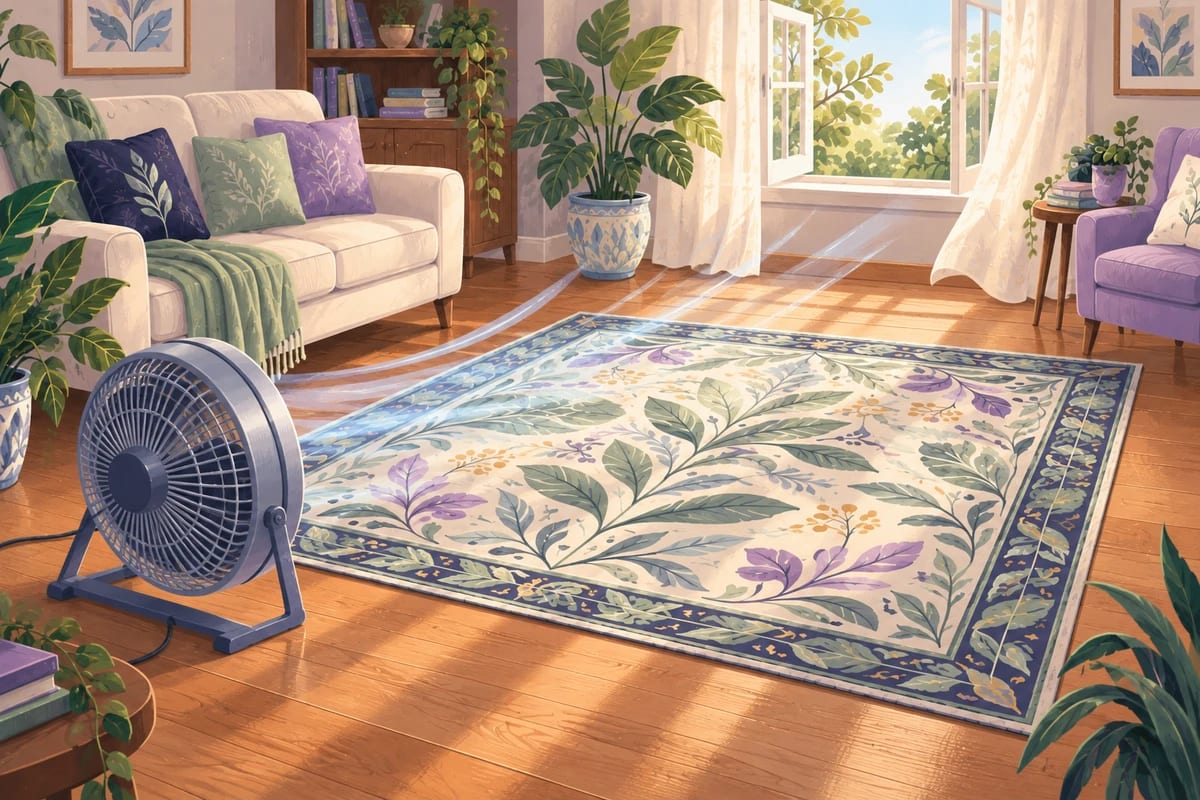
Point a fan at the damp area or open a window, and keep foot traffic off it until it's fully dry.
Why? A rug that stays damp against a wood or vinyl floor traps moisture underneath, where mold and mildew can start without ever showing on the surface.
If today's a low-energy day
Just vacuum today and blot any spot you see. That's enough for now.
The larger lesson
A rug rewards the same habit as almost everything else in this house: clear the grit first, and let the fibers dry all the way before you ask them to do anything else.
A little air and a little patience do more for a rug than any amount of scrubbing.