
An induction cooktop heats the pan, not the glass.
The Stove That Heats the Pan
How to clean an induction cooktop, and why it's the easiest stove in the house to keep clean.
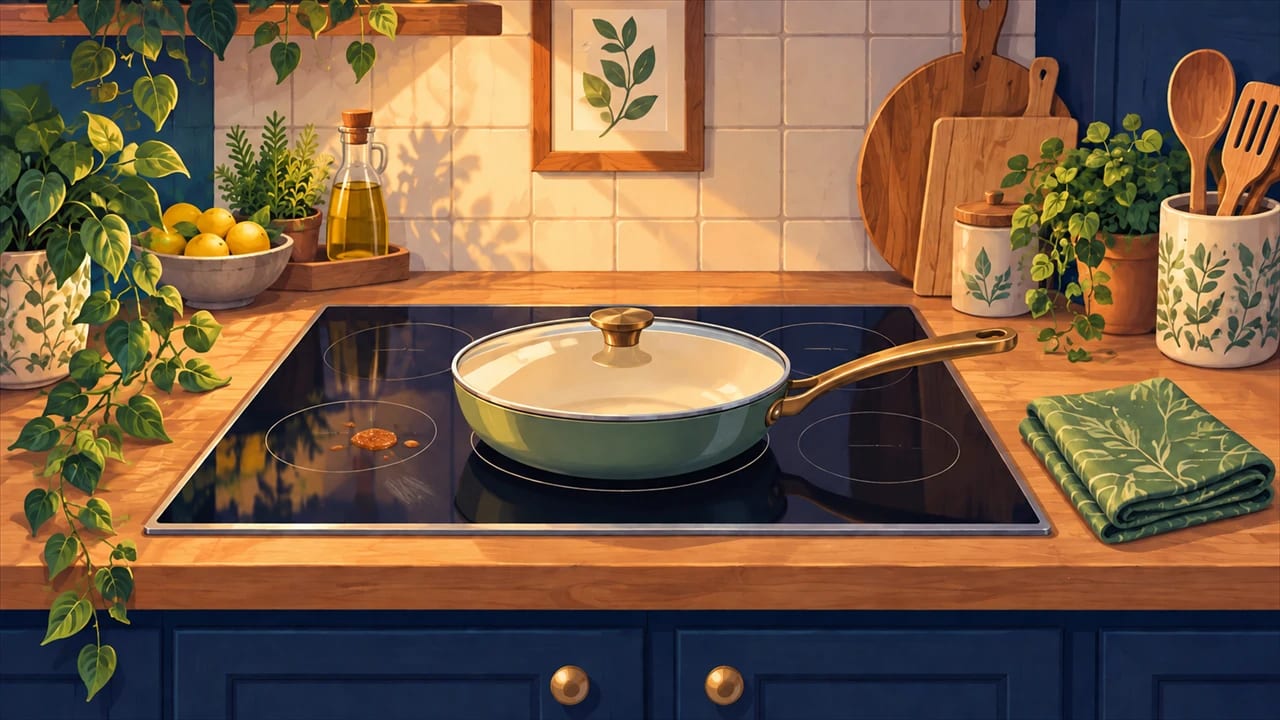
At first glance, an induction cooktop could pass for any glass-top stove. The same smooth black glass. The same circles showing you where to cook. The difference is hidden underneath, and it's the reason this one is so easy to clean.
A glass-top stove heats the glass, and then the glass heats the pan. Induction skips that middle step and heats the pan itself. The glass only gets warm where a hot pan has been sitting. So a boil-over lands on glass that isn't glowing hot, and it doesn't bake on nearly as fast.
Which means that on most days, all it needs from you is a warm, soapy cloth.
Start cool, and lock the controls
Turn off every zone first. The pan can leave the glass hot, so wait until the "H" or hot-surface light goes out and the glass feels cool under your hand.
Then lock the controls. On most induction cooktops, the touch buttons sit right on the glass, and a wet cloth sliding across them can switch a zone on or change the setting. The cooktop will beep at you. Look for a key or padlock symbol and hold it for a few seconds, until its light comes on. If you can't find it, your manual will show you where it is.
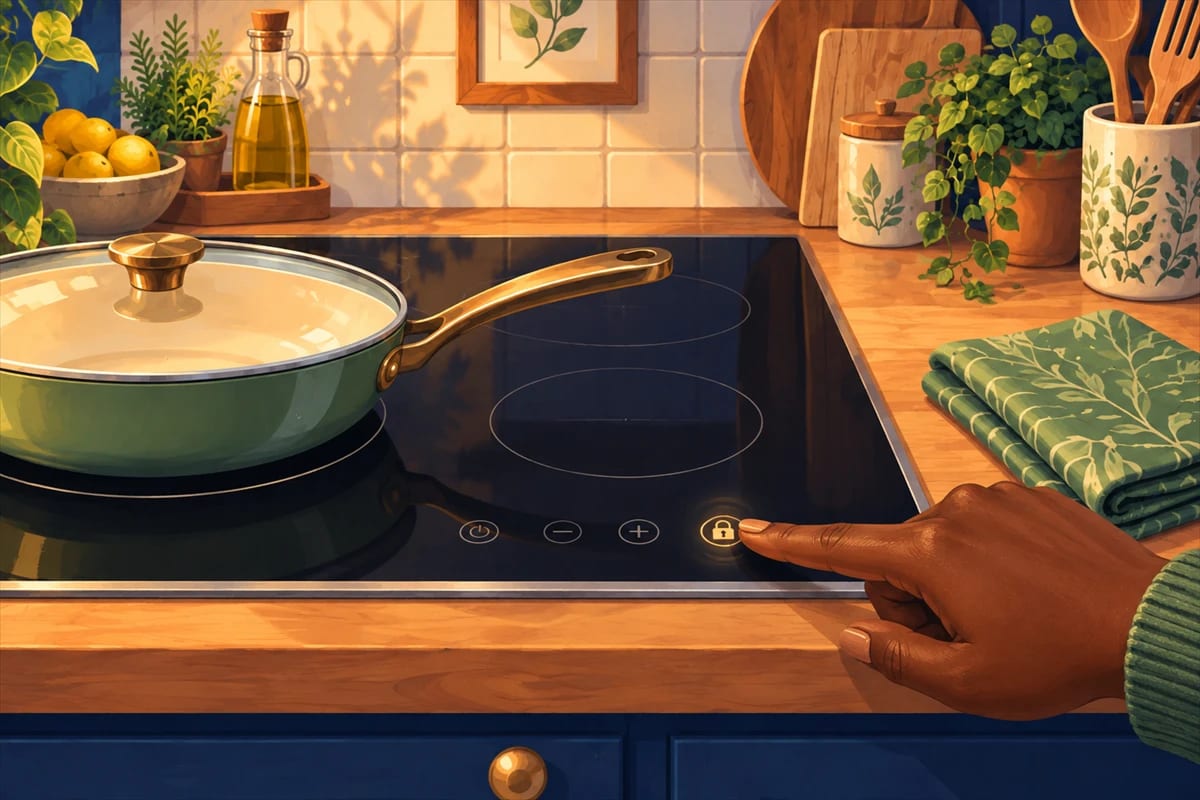
With the lock on, the cooktop turns into a plain sheet of glass for a few minutes. You can wipe anywhere without worrying about what you're pressing.
The everyday wipe
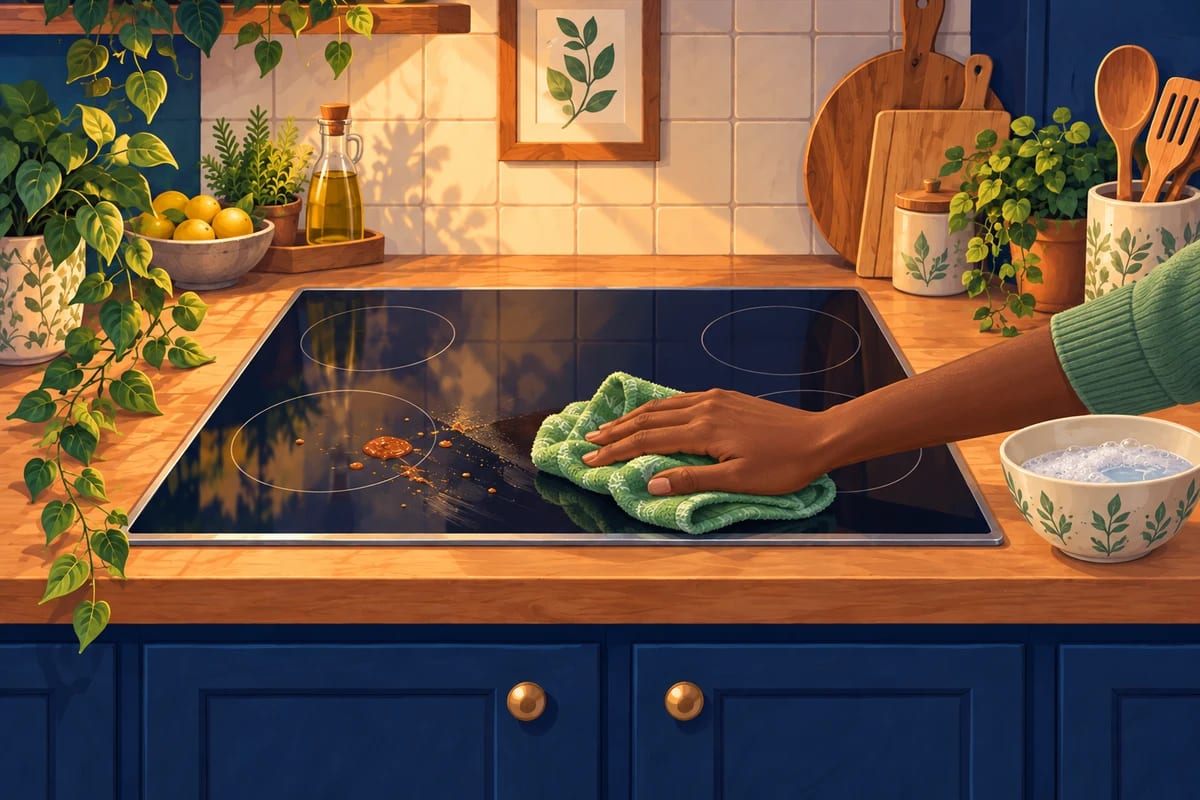
Brush the loose crumbs away with a dry cloth before anything else. Crumbs act like sandpaper, and wiping over them can scratch the glass.
Next, dip a soft cloth in warm water with a little dish soap and wring it out well. Damp, not dripping. Wipe the whole surface, controls and all, and keep the water from running to the edges. Many induction cooktops have air vents underneath or along the back, and those should stay dry.
On most days, that's the whole job.
When something is stuck
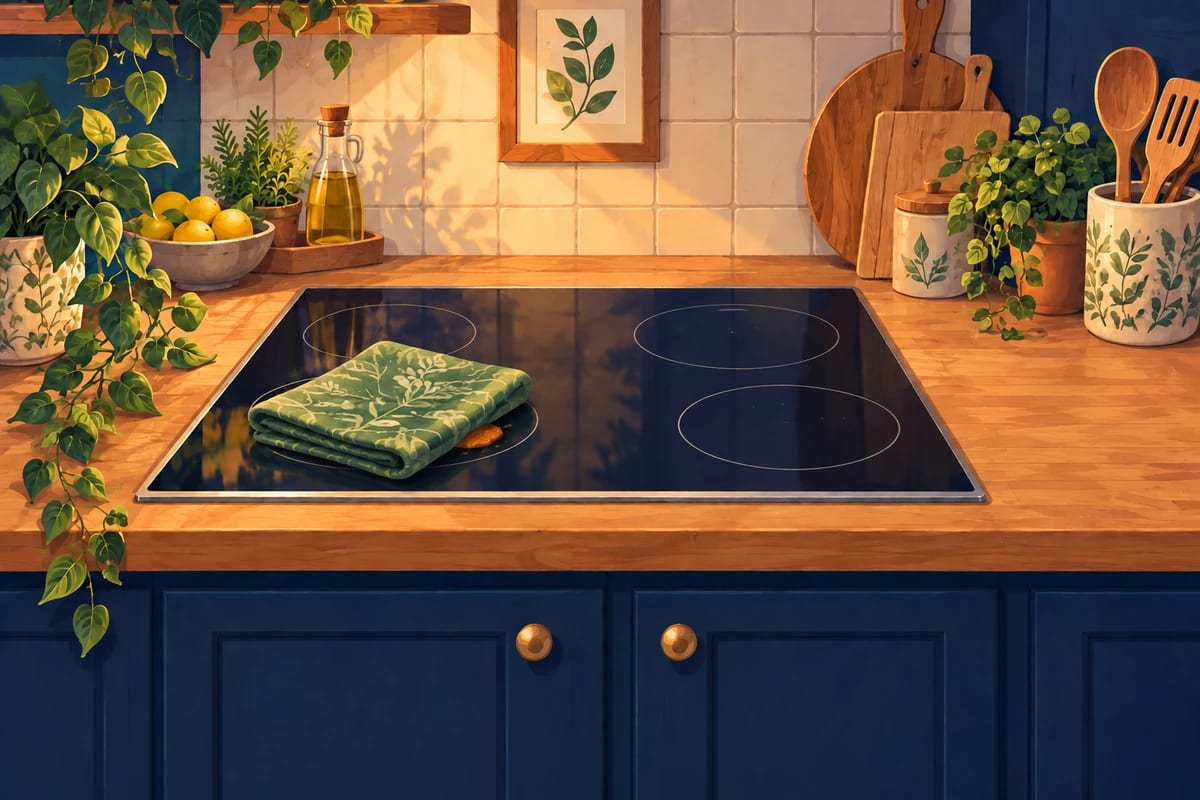
Now and then a sauce sits too long, or a spill slips past you. Those spots just need a little more time.
Soak an old towel in warm, soapy water and wring it out until it's damp but not dripping. Lay it over the stuck spots and leave it for 15 minutes. When you come back, wipe in small circles with the same towel. Most of it will lift right up.
Warm water softens the spill so you don't have to scrub. Scrubbing is what scratches glass.
Anything still hanging on gets a razor scraper made for glass cooktops. Keep the glass damp, hold the scraper low, almost flat, and push it gently across. Held low, it slides under the spot. Held too steep, it can dig in.
White marks and rainbow stains
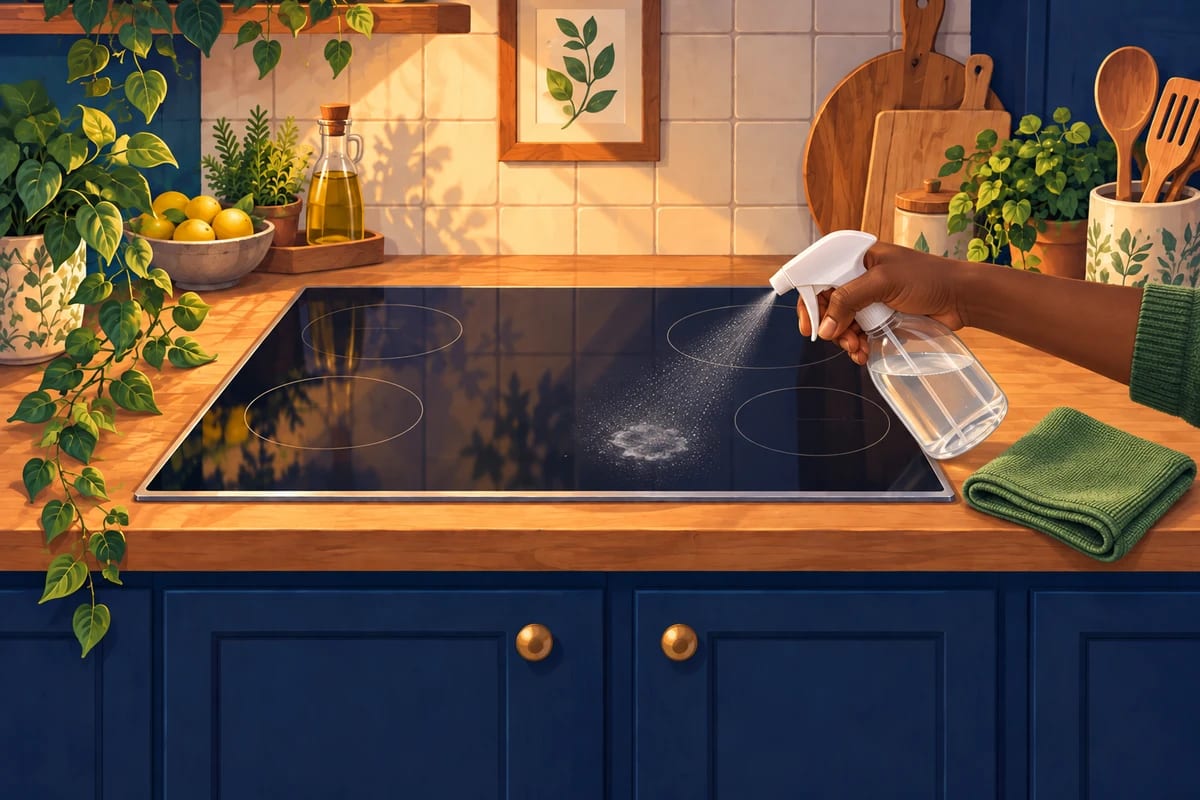
Cloudy white marks usually mean water boiled over and left its minerals drying on the glass. Spray a little white vinegar on them, wait 1 minute, and wipe.
Rainbow-colored or gray marks are a different story. They often come from the bottom of a pan that got very hot, or from a pan sliding across the glass. They look like damage, but most of the time they sit on top. A cooktop cleaner made for glass, on a soft cloth, takes them off.
Sugar is the one to hurry for. Jam, syrup or anything sweet can pit the glass if it hardens there, so wipe it up as soon as the glass is cool enough to touch safely.
Finish with a dry cloth
Go over the glass once more with a clean, damp cloth to pick up any soap or vinegar. Then buff it dry with a microfiber cloth. The shine comes from drying, not from scrubbing.
When you're done, unlock the controls.
Short on energy?
Lock the controls, give the glass one wipe with a warm, soapy cloth, and dry it. That's enough for today.
What to skip, every time
- Lift your pans. Don't slide them. Sliding leaves marks and can scratch.
One minute after dinner
The easiest spill to clean is the one that never gets a chance to sit. Once the glass cools after cooking, give it a quick wipe with a warm, soapy cloth. It takes about a minute.
The towel and the scraper can wait until you actually see stuck spots. Some weeks, you won't need them at all.
Heat where the food is
Some things are built to make life a little easier. An induction cooktop keeps the heat where the food is, so the mess stays small. A quick wipe is all it asks.
The heat stays in the pan. The mess stays small.