
That shiny black glass doesn’t hide a thing.
The Stove Top That Shows Every Spill
How to clean a glass-top electric stove, and why soaking works better than scrubbing.
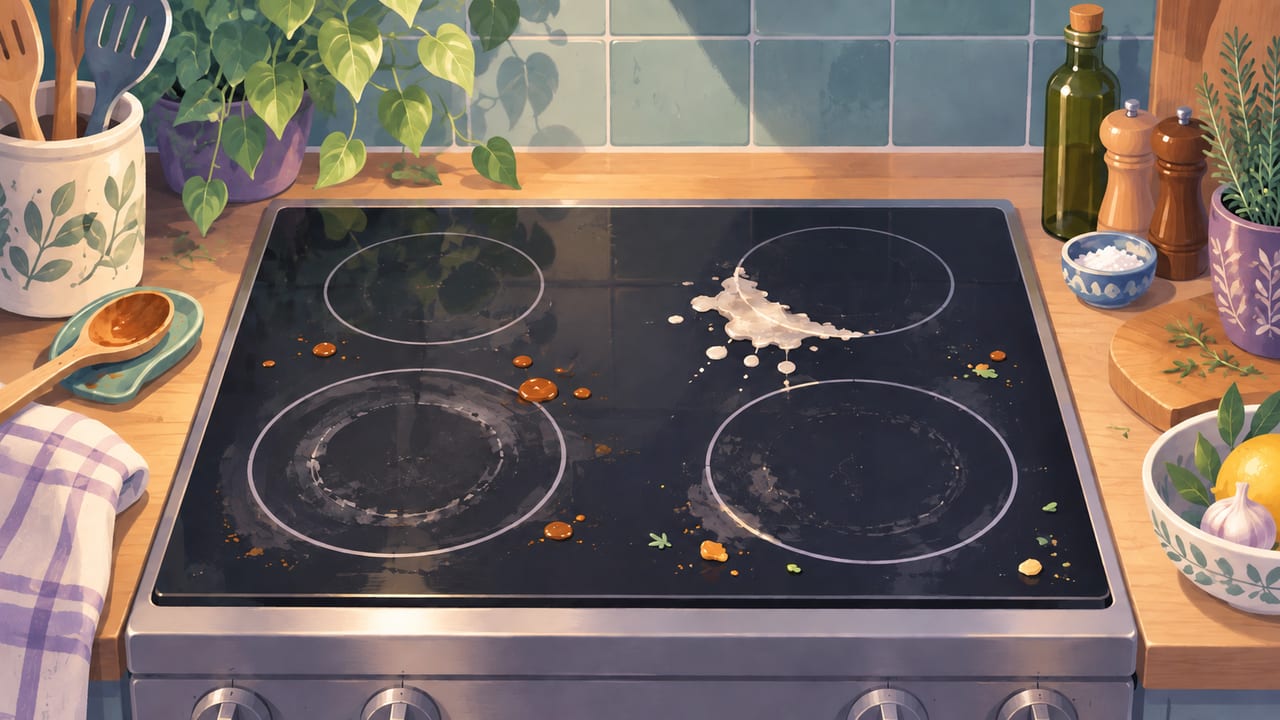
Take a good look at a glass-top stove after a week of cooking. Every drip of sauce, every pot that boiled over, every little ring from the bottom of a pan. That shiny black glass doesn’t hide a thing.
It’s easy to see those baked-on spots and think, “That’s going to take all afternoon and both my arms.” So you wipe the easy parts and tell yourself you’ll get to the rest another day. Almost everyone does.
Both arms can stay where they are. Glass doesn’t need a fight. It needs a little warm water and a little patience. You let things soak, you go put the kettle on, and when you come back, most of the work has done itself.
Why glass needs a gentle hand
Older coil stoves could take all the scrubbing you gave them. Glass is different. It’s one flat sheet, and the burners hide underneath it. Those circles on top just show you where they are. Nothing lifts out, so every spill sits right where you cook.
Now, this glass can take all the heat you give it. But it scratches easy. Steel wool, scouring pads, and those gritty powders leave little lines that never come out. And once it’s scratched, food likes to grab onto those lines next time.
So the whole approach is gentle. You don’t force the mess off. You soften it up and coax it off.
What to gather first
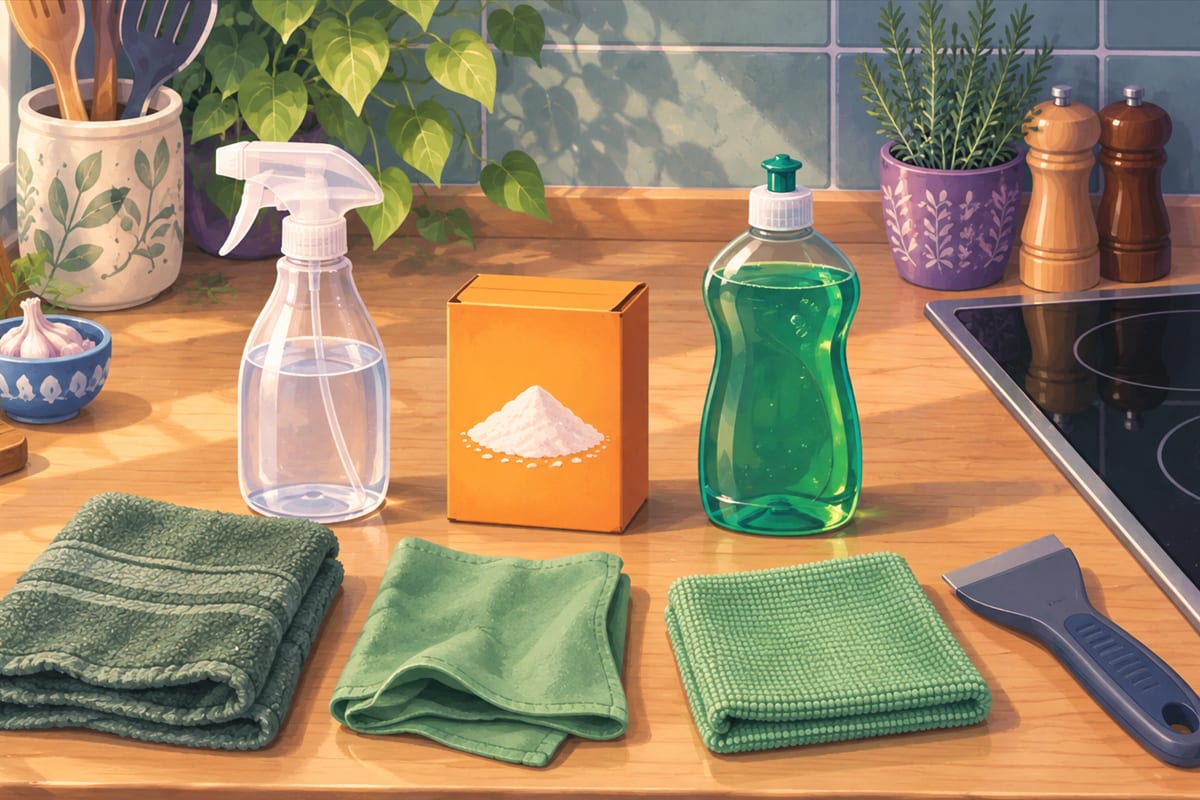
Gather these first. Most of them are already in your kitchen.
- White vinegar in a spray bottle
- Baking soda (the same box you bake with)
- Dish soap and warm water
- An old towel you don’t mind getting wet
- 2 soft cloths, one of them microfiber
- A plastic scraper, or a razor scraper made for glass-top stoves
- Glass-top stove cleaner, if you have some (you don’t need it)
Step by step
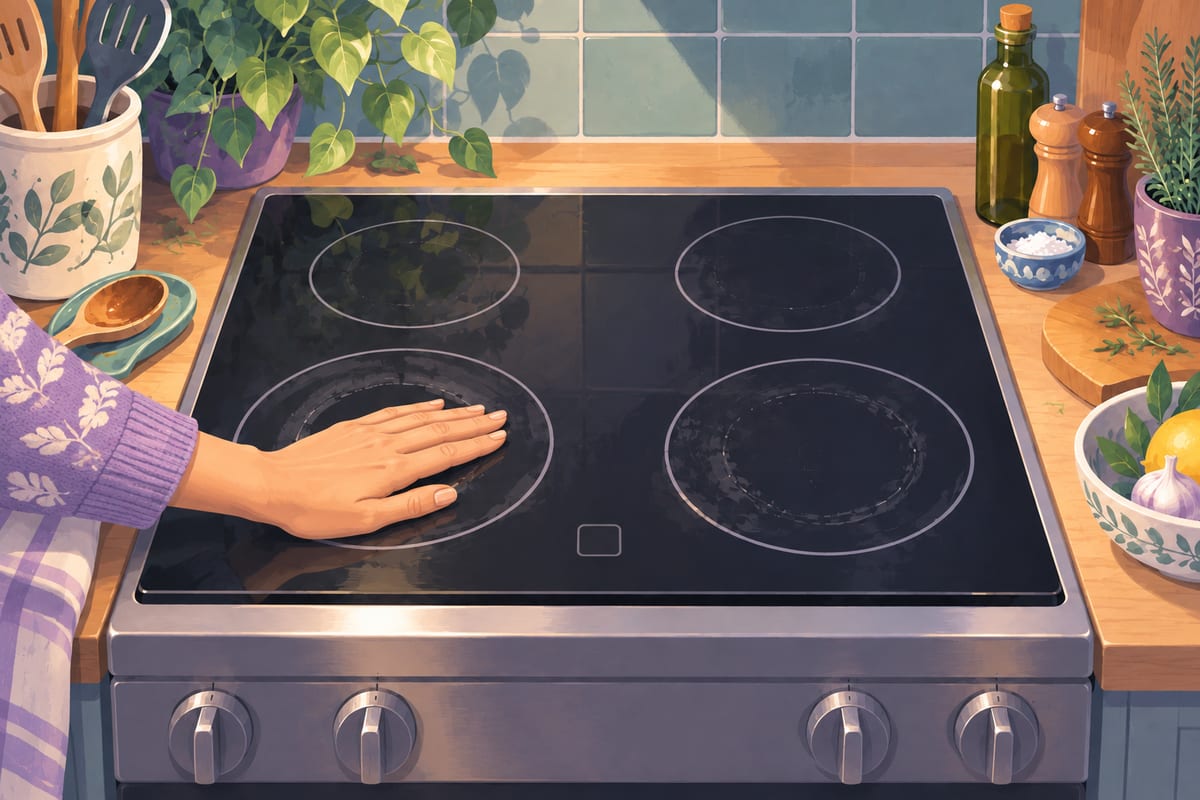
Let it cool all the way.
Turn off every burner. Then wait until that little “hot surface” light goes out and the glass feels cool when you touch it. That glass holds heat long after the red glow is gone. And if you spray cleaner on warm glass, it dries in streaks before you can wipe it.
Sweep off the crumbs.
Take a dry cloth and brush up the loose bits. Crumbs are like sandpaper. If you scrub over them, they scratch the glass.
Vinegar, then baking soda.
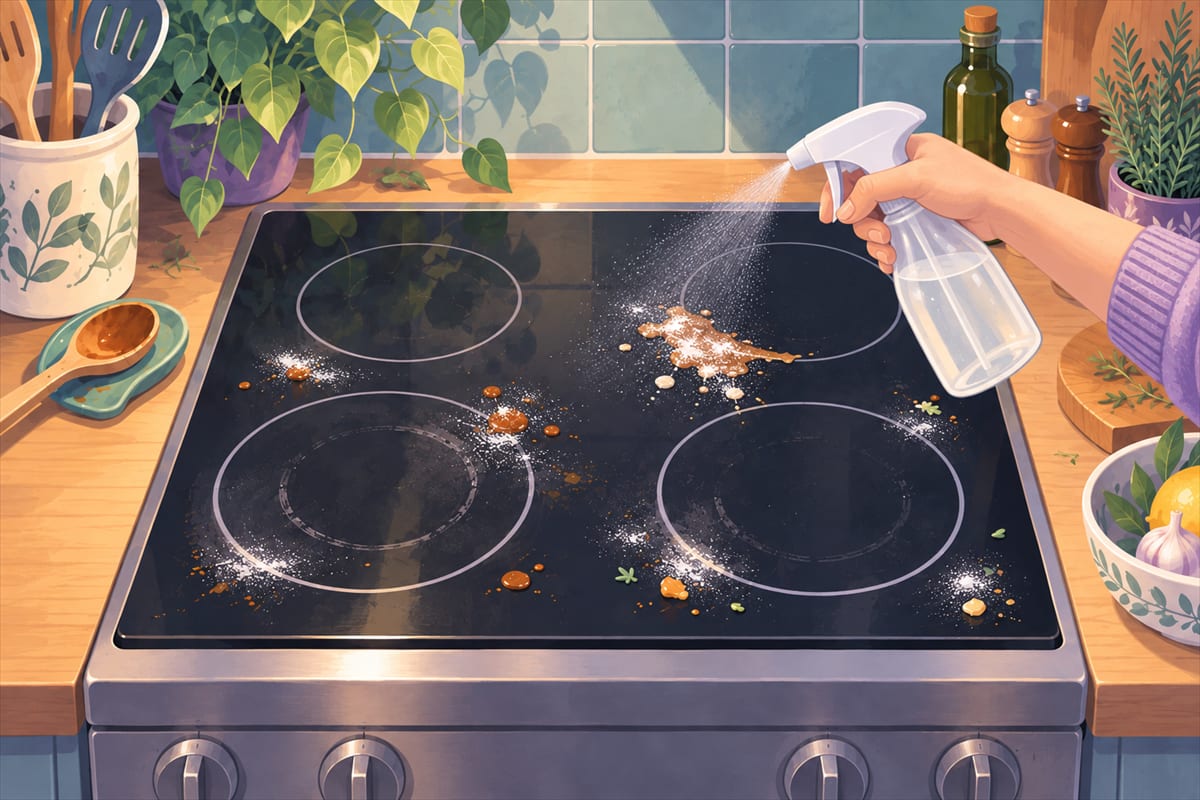
Give the glass a light mist of white vinegar. Then sprinkle baking soda over the dirty spots, like you’re dusting a cake with sugar. The vinegar cuts the grease. The baking soda is gentle on the glass but just rough enough to lift what’s stuck.
Cover it with a warm towel.
Soak your towel in warm, soapy water. Wring it out a little, so it’s damp but not dripping. Lay it flat over the glass and leave it for 15 minutes. This is the step that does the real work. That warm towel keeps the baking soda wet and softens up everything that looked baked on.
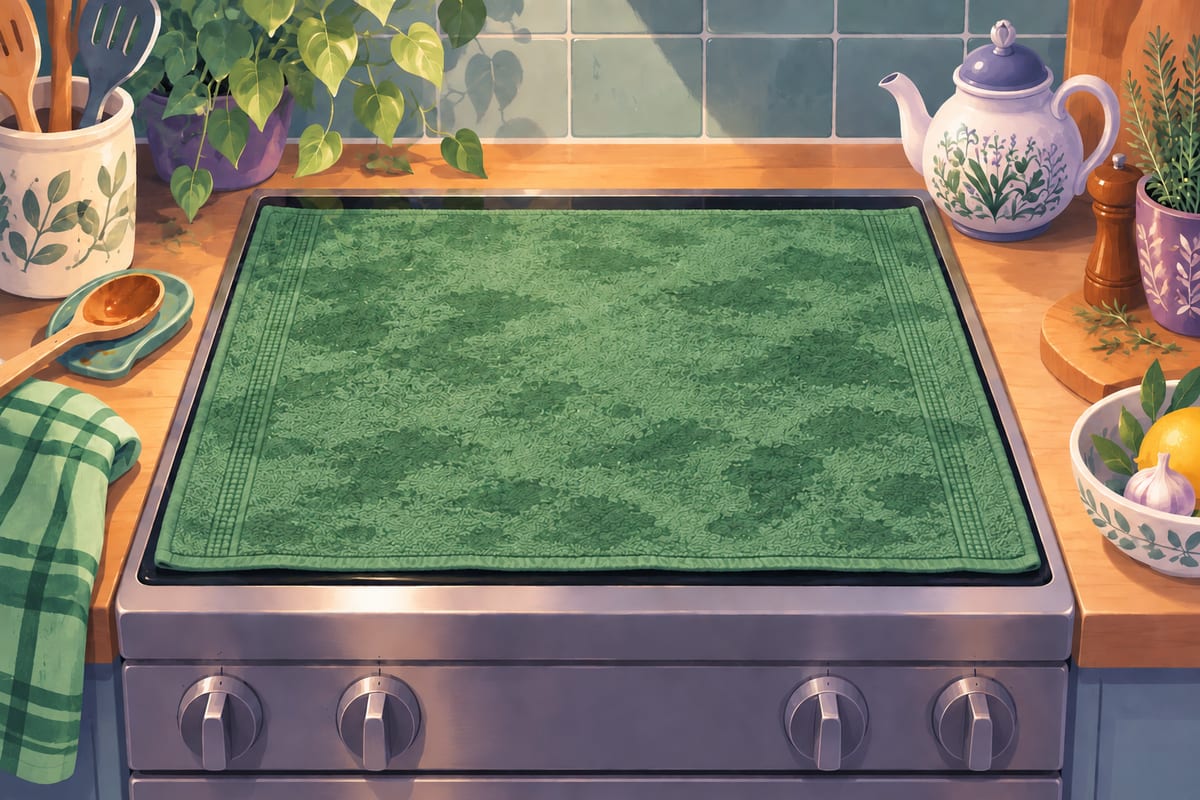
Wipe in little circles.
Lift the towel off and use it to wipe the glass in small circles. You’ll see most of the mess come right up.
Scrape what’s still hanging on.
For a stubborn spot, hold your scraper low, about 45 degrees, and push it gently across. Keep the glass damp while you work. Hold it low and it lifts the spot right off. Hold it too steep and it can dig in.
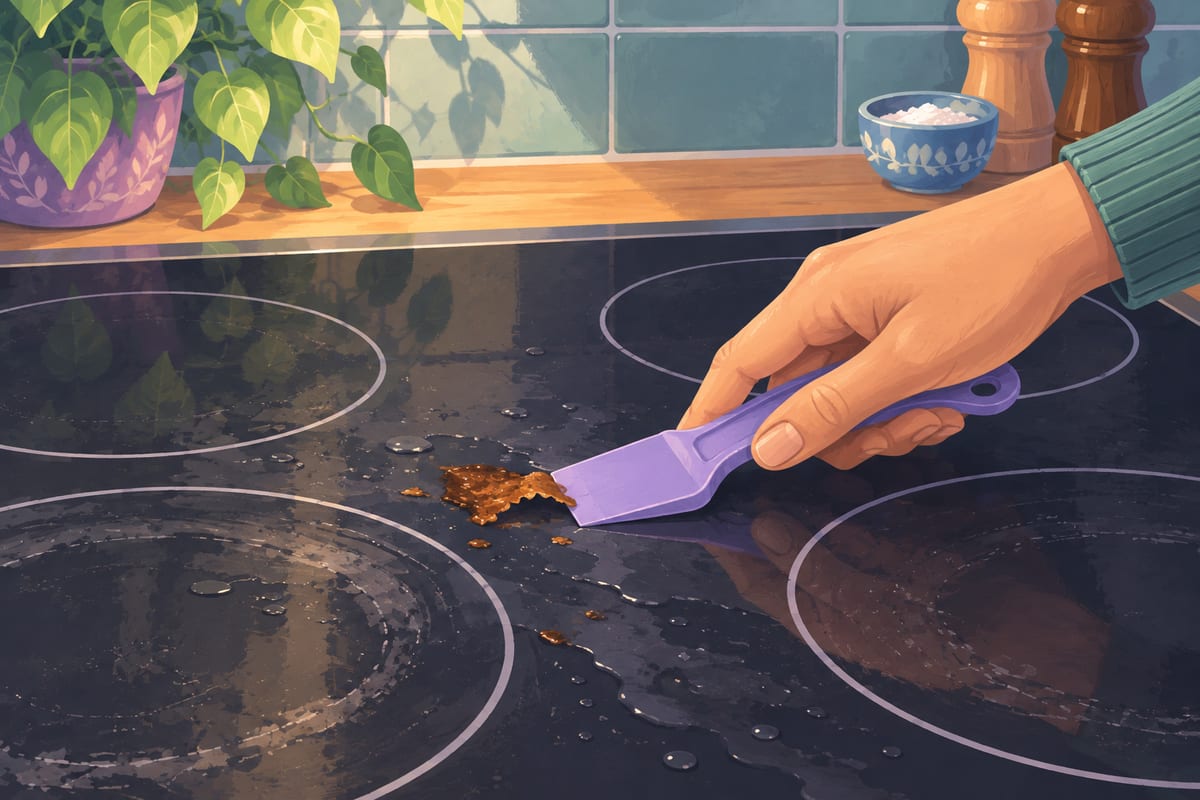
Wipe it clean and buff it dry.
Wipe off every bit of baking soda with a clean, damp cloth, or it’ll dry into a white film. Then buff the glass with your dry microfiber cloth until there’s not a streak left. That shine comes from drying, not from scrubbing.
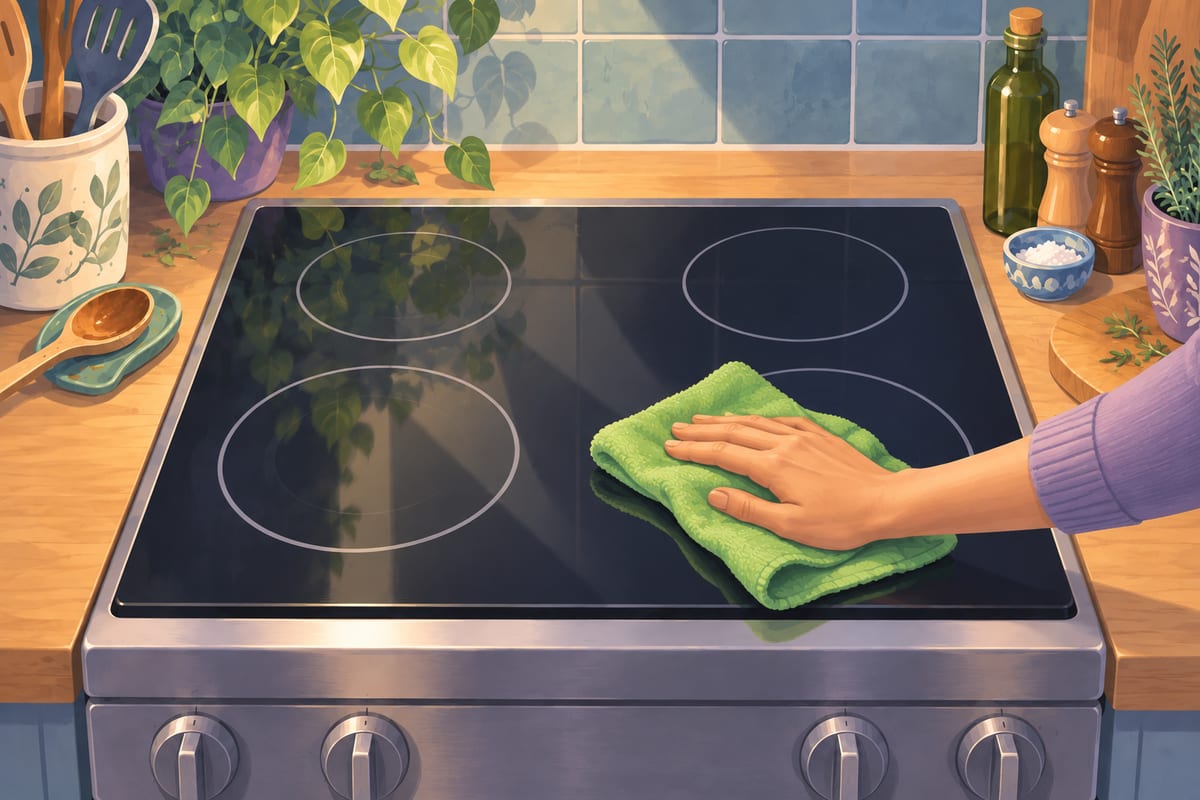
When a spot won’t budge
Dark burnt rings.
Those are old spills that got cooked over and over. Don’t worry. Just do it again: more baking soda, a fresh warm towel, 15 more minutes, then the scraper.
A cloudy white film.
That’s usually minerals from water that boiled over, or a little baking soda you missed. Spray it with white vinegar, wait 1 minute, and buff it dry.
Gray or silver marks.
Those usually come from metal pans sliding across the glass. They look like scratches, but most of the time they’re just sitting on top. A little glass-top cleaner on a soft cloth takes them right off.
Sugary spills.
Be careful with this one. Melted sugar, like jam or syrup, can pit the glass if it hardens. Some stove makers say to scrape it off right away with an oven mitt on. Check your stove’s manual before you do that. If you’re not sure, turn off the burner and clean it as soon as the glass is cool.
Mistakes worth avoiding
These aren’t tips. They’re rules. They keep you safe.
- Never clean glass that is still hot. Wait for the “hot surface” light to go out.
- Keep scratchy things off the glass. No steel wool, scouring pads, or powder cleansers.
- Never mix bleach with vinegar or ammonia. Together they make a toxic gas. If you’ve used a bleach cleaner, rinse with plain water before you use vinegar.
- Use a razor scraper on the glass only. Never on the painted edges or the knobs.
- Lift your pans. Don’t slide them. Sliding heavy pans leaves marks and can scratch.
A little every day, a little more now and then
Here’s the secret. The easiest stove to clean is one where a spill never gets cooked twice. Once the glass cools after supper, give it a quick wipe with a warm, soapy cloth. Today’s little drip never turns into next week’s burnt ring.
Save the big clean for every 1 to 2 weeks, or whenever you see rings or stuck spots. There’s no perfect schedule. Nobody’s grading you. You’re just keeping the mess from piling up.
On a low-energy day
Once the glass is cool, wipe it with a warm, soapy cloth and dry it. Skip the soaking and the scraper. That’s enough for today.
The larger lesson
Not every mess needs elbow grease. Some just need time and something warm to sit on them. Letting that towel do the work isn’t lazy. It’s wise.
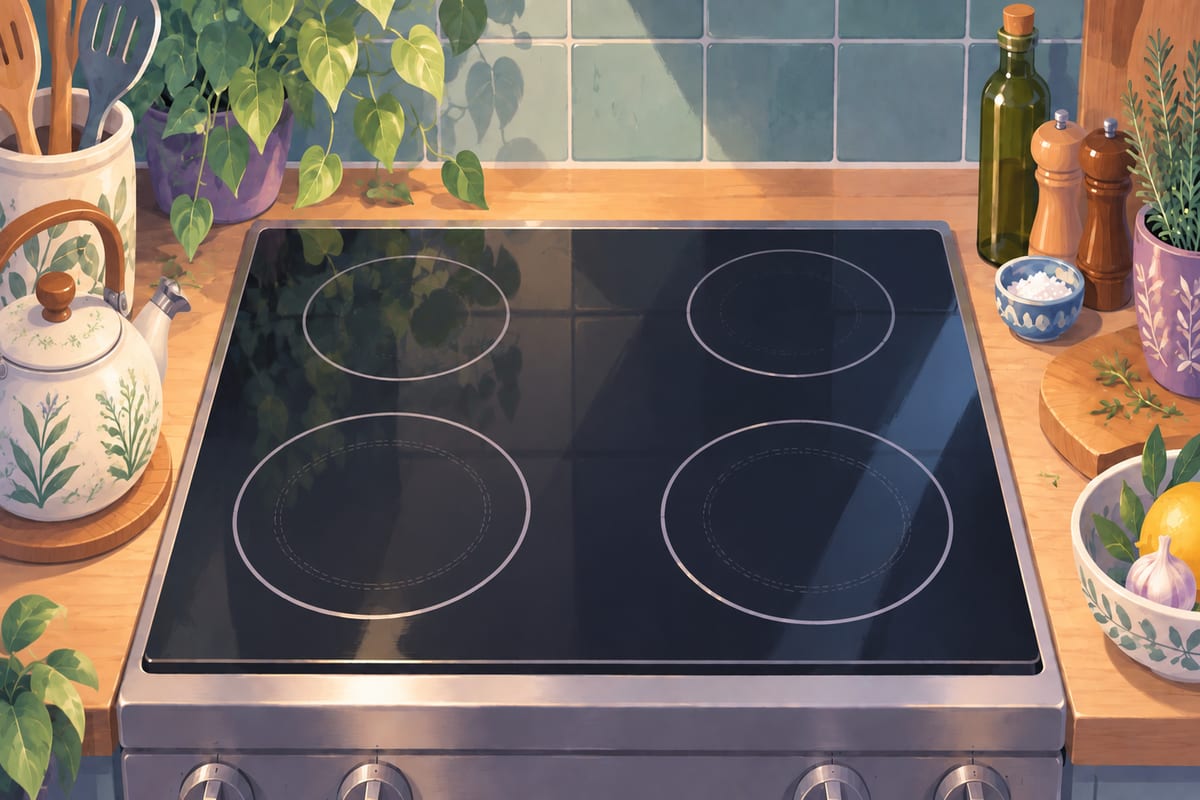
Let it soak. Wipe it clean. The glass does the rest.