
Your coffee maker can look clean and still need cleaning.
What the Water Leaves Behind
How to clean and descale a drip coffee maker, and why the inside matters more than the outside.
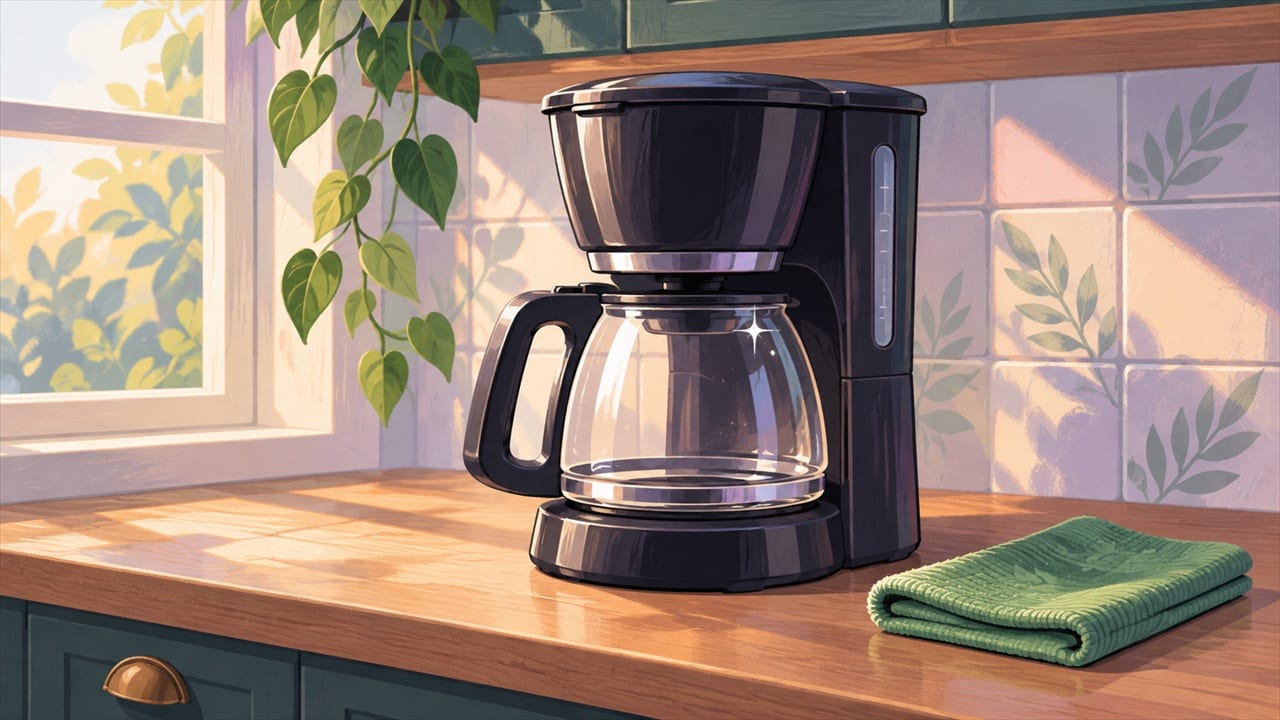
The coffee maker might be the hardest-working thing in your kitchen. For many of us it runs every morning, before we're fully awake. Rinse the pot, add fresh grounds, press the button. It's easy to never think about the rest. And if you've ever spotted the word "descale" in a manual, it probably sounded like a job for someone with tools and a free afternoon.
Still, every pot leaves something behind. Faucet water carries tiny bits of minerals, and they settle inside the machine as a chalky layer called scale. Coffee leaves its oils, too. Little by little, the coffee starts to taste bitter or flat, and the machine takes longer to brew.
The inside is the one part you'll never reach with a sponge. It's also the one part you don't have to. White vinegar cleans it while the machine runs, and your job is mostly to wait.
Slow, gurgling, not quite hot
Scale builds up in the parts that heat the water and carry it to the basket. The thicker it gets, the more slowly the water heats and the less freely it flows. That's often why an older coffee maker gurgles, drips slowly, or makes coffee that isn't quite hot.
Meanwhile, old coffee oils cling to the basket and the carafe. They go stale, and that stale taste ends up in your next cup.
A clean machine makes coffee that tastes like coffee.
A cool plate and an empty basket
First, turn the coffee maker off and unplug it. Then wait for the warming plate, the flat metal plate the pot sits on, to cool to the touch. It stays hot for a while after brewing.
Throw away any old grounds and paper filters, and pour out whatever coffee is left in the pot.
One note before you go on: this is for a standard drip coffee maker. Pod machines and espresso machines are built differently. Their manuals have their own descaling steps, and some need a special solution.
Wash the parts that come off
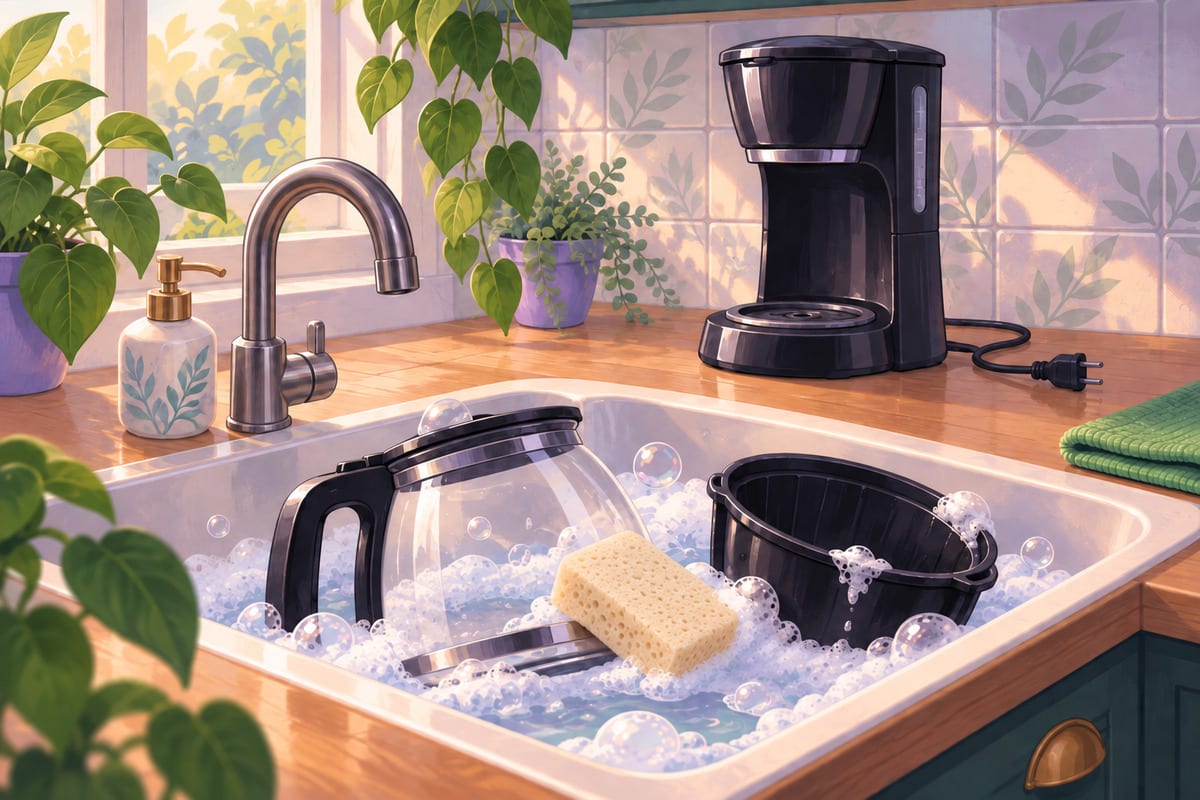
Lift out the carafe, the filter basket, and anything else that comes loose, like a permanent mesh filter or the lid of the carafe.
Wash them in the sink with warm water, a little dish soap, and a soft sponge. A bottle brush reaches the bottom of the carafe. This is where the stale taste goes: warm, soapy water lifts the old coffee oils that would otherwise flavor the next pot. Rinse everything well and set it on a towel to dry.
Some parts can go in the dishwasher, and some can't. Check your manual first. If you're not sure, wash them by hand.
Descale with vinegar and water
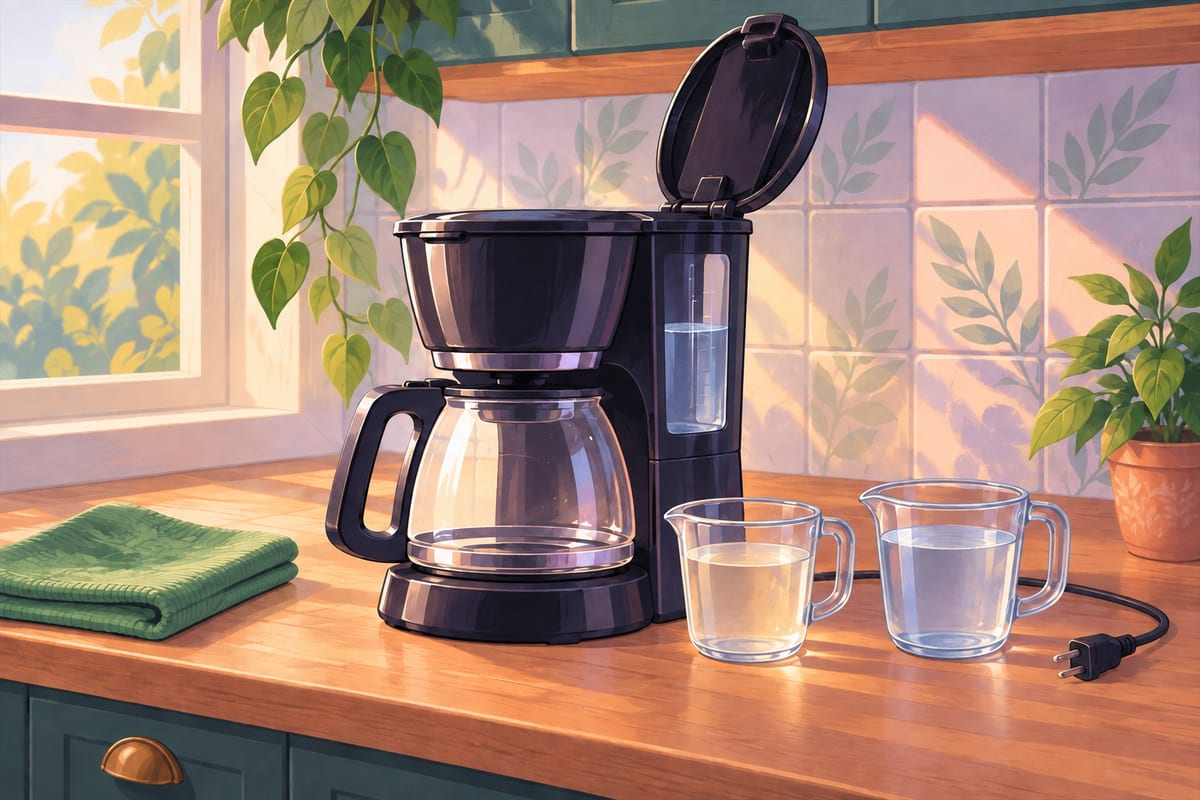
Fill the water tank with equal parts white vinegar and water. For a full tank, that's about half and half. If you like, put a paper filter in the basket to catch any loose bits of scale. Set the empty carafe back on the warming plate.
If your manual names its own descaling solution instead of vinegar, use that.
Plug the machine in and start a brew cycle.
Pause halfway and let it sit
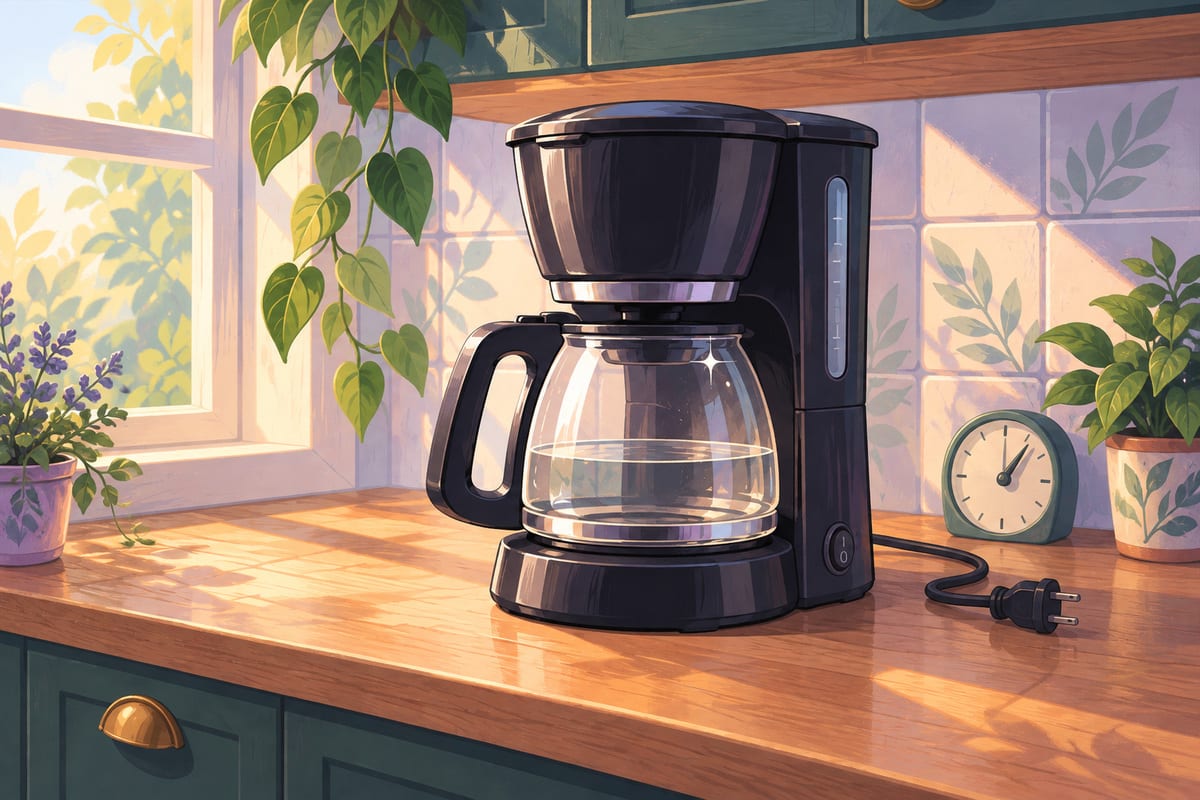
When about half the tank has run through, turn the coffee maker off. Leave it for 30 minutes to an hour.
The warm vinegar is now sitting inside the machine, right where the scale is. Given time, it softens the scale so the rest of the cycle can wash it out.
Then turn it back on and let the cycle finish. Pour the vinegar water down the sink, and throw away the paper filter if you used one.
Short on energy?
Fill the tank with vinegar and water and start the cycle. The plain-water rinses can wait until later, and the washing until another day. Just remember to rinse before your next cup.
Rinse it with plain water
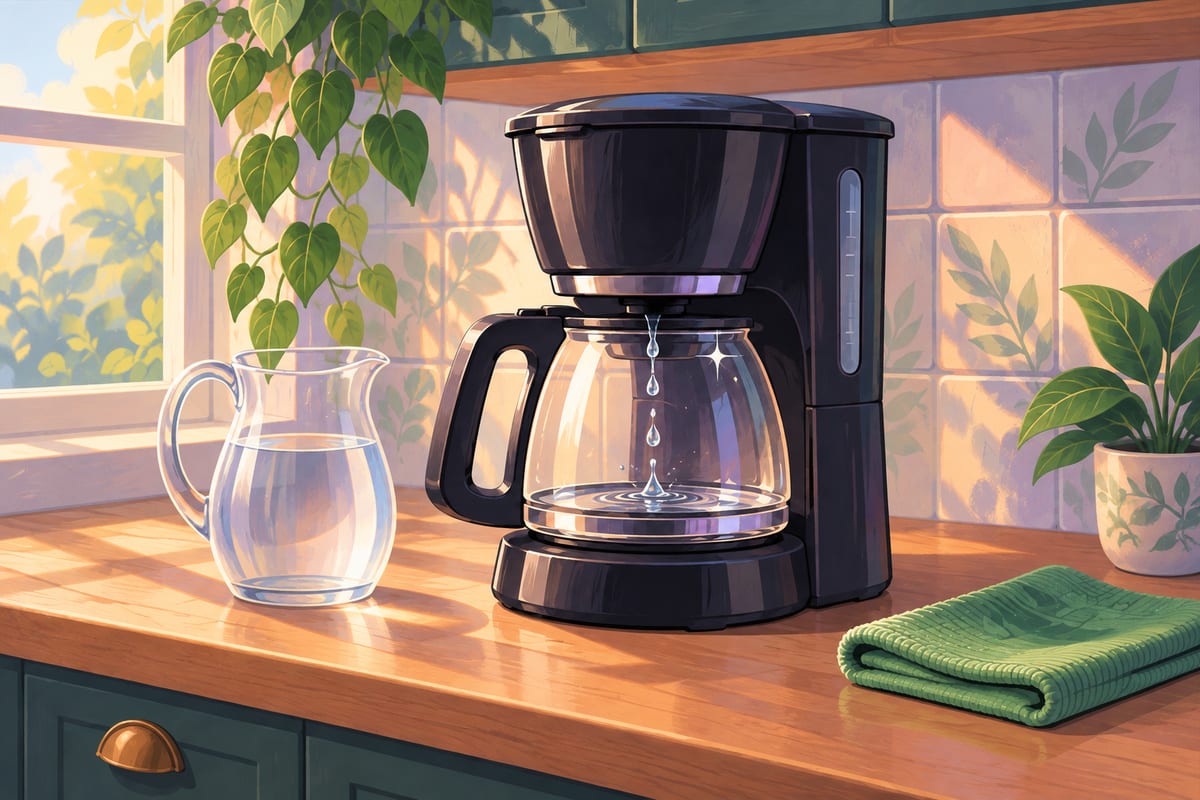
Now fill the tank with fresh, plain water and run a full cycle. Pour it out and do it again, 2 or 3 times in all. Each round carries away more of the vinegar and the loosened scale, so your next cup tastes only like coffee.
After the last one, smell the water in the carafe. Still smells like vinegar? Run one more cycle.
Wipe the outside and the warming plate
Unplug the machine again and wait until the warming plate is cool. Wipe it with a damp cloth. Brown rings, where coffee spilled and cooked on, come off with a little baking soda and water on the cloth. Rub gently, then wipe it clean.
For the outside of the machine, use a cloth that's damp, not wet, and keep water away from the cord, the plug, and the switch. The base has electrical parts inside. It never goes in water, and it never goes under the faucet.
Let it dry open
Leave the lid and the water tank open for a few hours, or overnight. Put the dry basket and carafe back when you're ready.
A closed, damp machine can grow mold. Open air lets it dry all the way.
Six things to skip
- Never clean the coffee maker while it's plugged in or still hot.
- Never put the base in water or run it under the faucet.
- Don't skip the plain-water rinses. One cycle usually isn't enough to clear the vinegar.
- Don't put parts in the dishwasher unless your manual says they're dishwasher safe.
- Keep steel wool and scouring pads away from the carafe and the warming plate. They scratch.
Once a month, or when it tastes off
Descale about once a month to every few months. If your water is hard, meaning it leaves white spots on your faucet or glasses, you'll need to do it more often. When the coffee starts to taste off or the brewing slows down, the machine is ready for its vinegar.
Between descalings, rinse the carafe and the basket after each use, and leave the lid open so the inside can dry. That alone keeps most of the stale taste away.
Mess you can't see
Some mess builds up out of sight, where no brush will ever reach. You don't have to go after it. Give it the right thing, give it a little time, and let it rinse away.
A little vinegar, a little time, and your coffee tastes like coffee again.