
The bowl gets washed. The rest of the mixer waits.
Where the Flour Hides
How to clean a stand mixer, including the small spots where flour and batter like to hide.
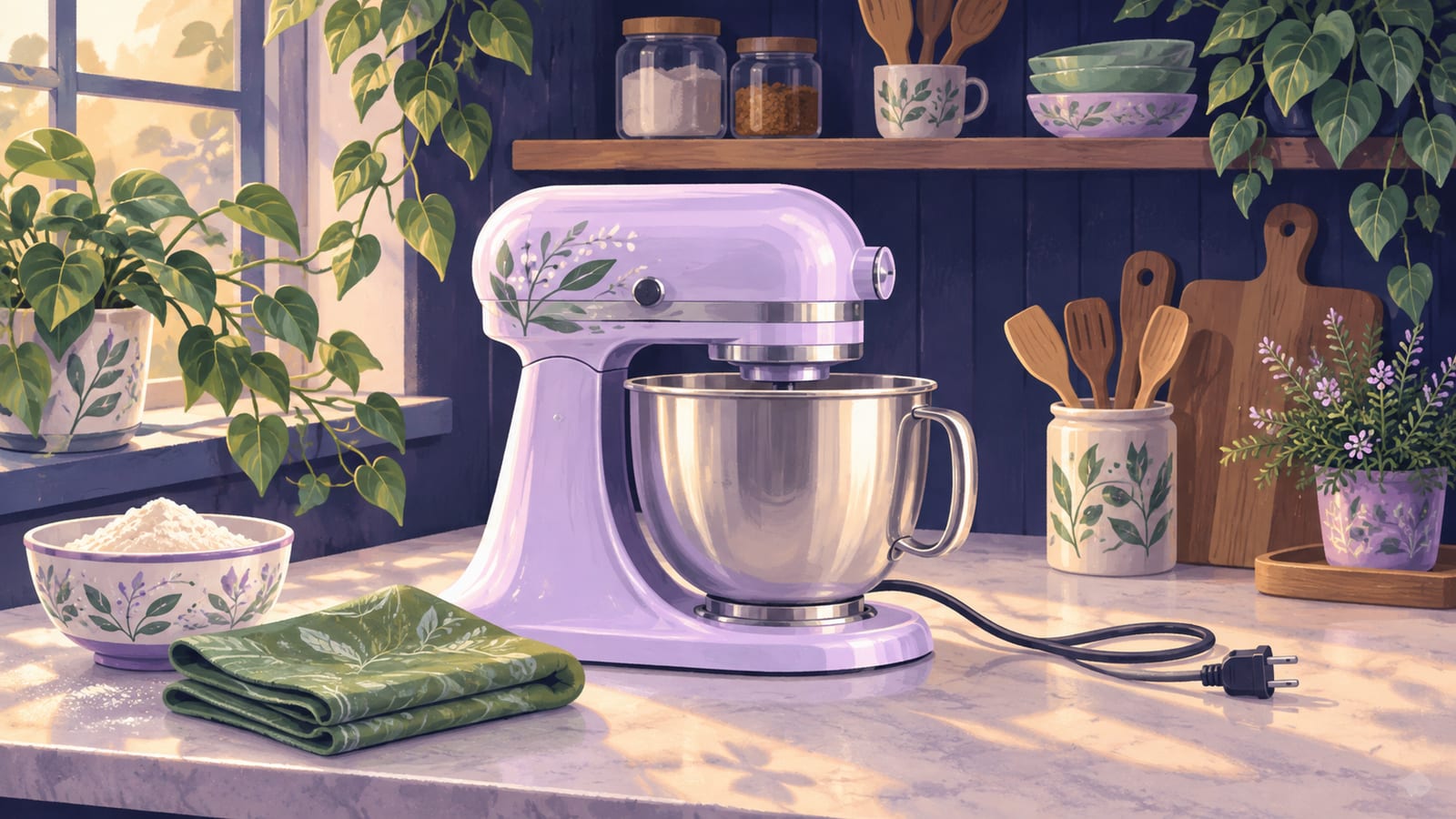
Tilt the head of a stand mixer back after a few months of baking, and you may find a small surprise. A crust of old batter on the underside. A line of flour packed in around the beater shaft. It can feel like one more thing you let slide.
It isn't. That mixer was part of a good day. Cookies for a friend, bread on a slow weekend, a birthday cake. By the time the baking was done, you were tired and the kitchen was a mess. The bowl went in the sink, and the mixer went back to its corner.
This happens to every mixer, even in the tidiest kitchens. Flour puffs up while it spins and settles everywhere. Batter splashes onto the head. A little of everything tucks into the spots you can't see when the mixer is closed.
None of it calls for scrubbing, or for anything special. What a mixer wants is a damp cloth, a few quiet minutes, and someone who knows where to look.
Take it apart
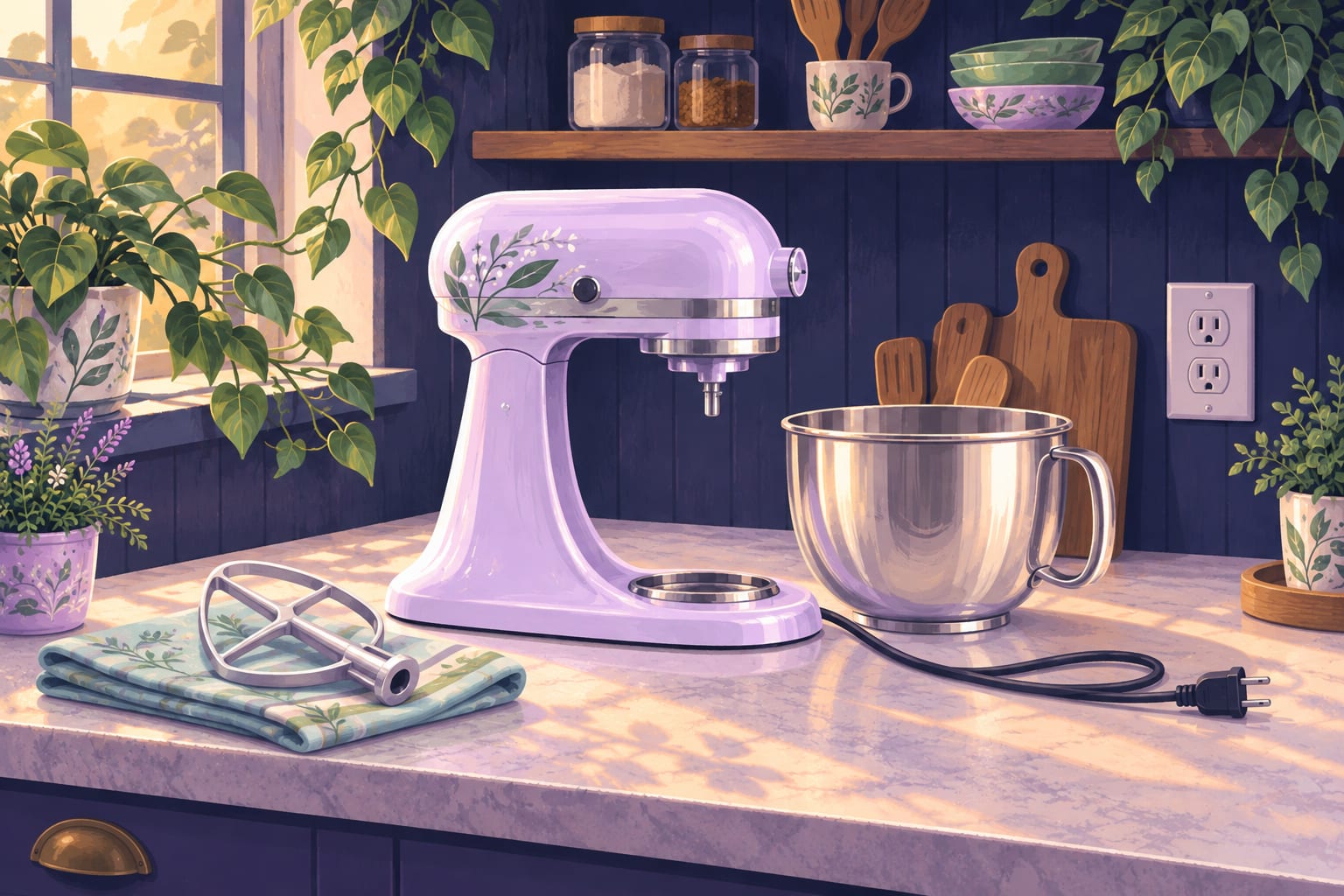
First, turn the mixer off and unplug it from the wall. Your fingers will be near the beater shaft soon, and an unplugged mixer can't start by accident, even if the speed lever gets bumped.
Now take off the beater, dough hook or whisk. Most push up and twist to come loose. Then lift out the bowl. On many mixers it twists off the base. On others, the bowl sits on two arms and lifts straight up.
Set the pieces by the sink.
Wash the bowl and attachments
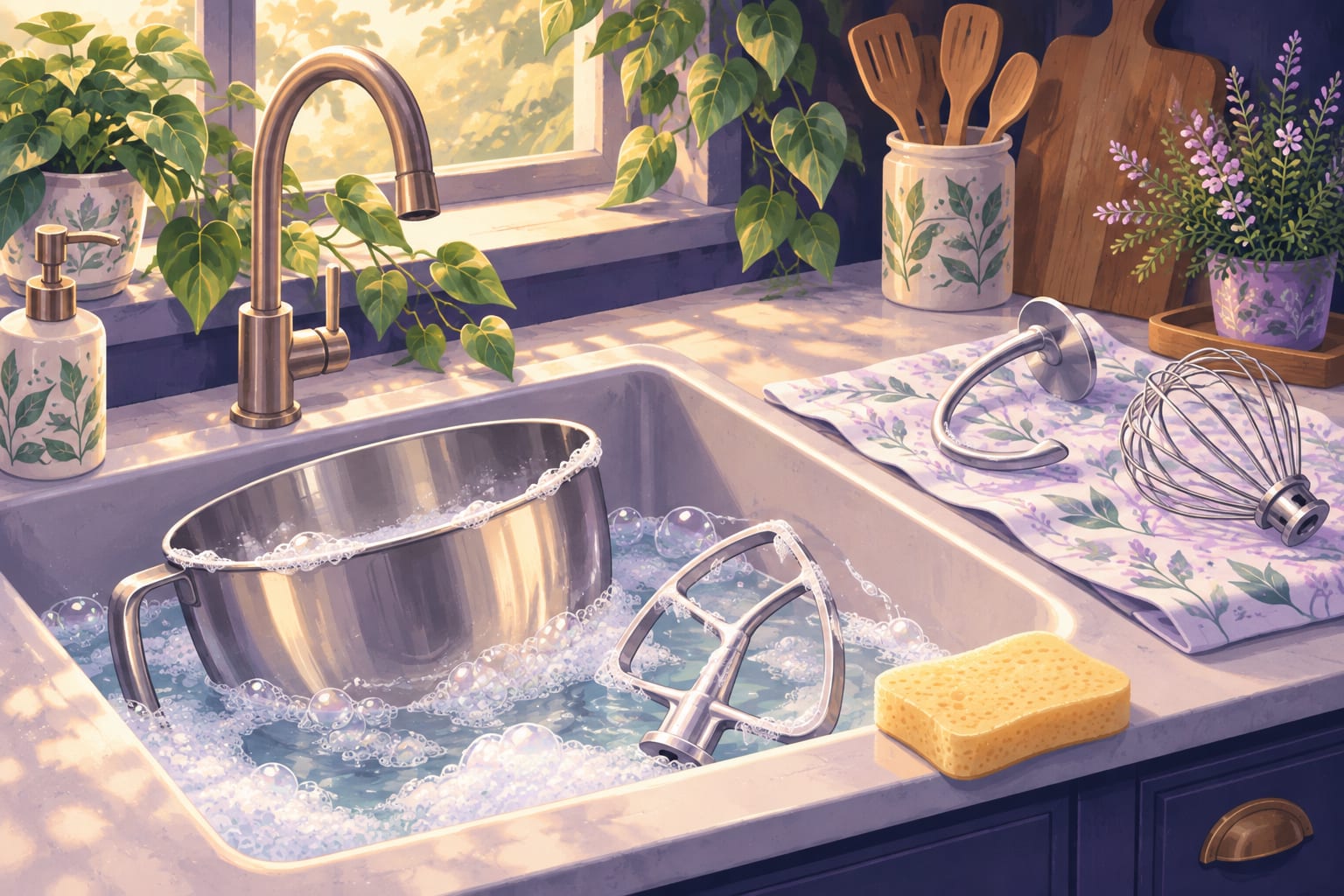
Fill the sink with warm water and a squeeze of dish soap, and wash the bowl and each attachment with a soft sponge. Dough dried on? Let them sit in the water for a few minutes first.
The dishwasher is where it gets tricky, so check your manual before you use it. Many metal bowls can go in. But some beaters and dough hooks, especially bare aluminum ones, come out dark or dull, and the wire whisk is often hand-wash only too. Dishwasher detergent is strong: fine on some metals, hard on others. For any part you're not sure about, a quick hand wash is the safe choice.
Rinse everything and set it on a towel.
Short on energy?
Unplug the mixer and put the bowl and attachments in the sink with warm, soapy water. That's enough for today. The body can wait.
Wipe the body
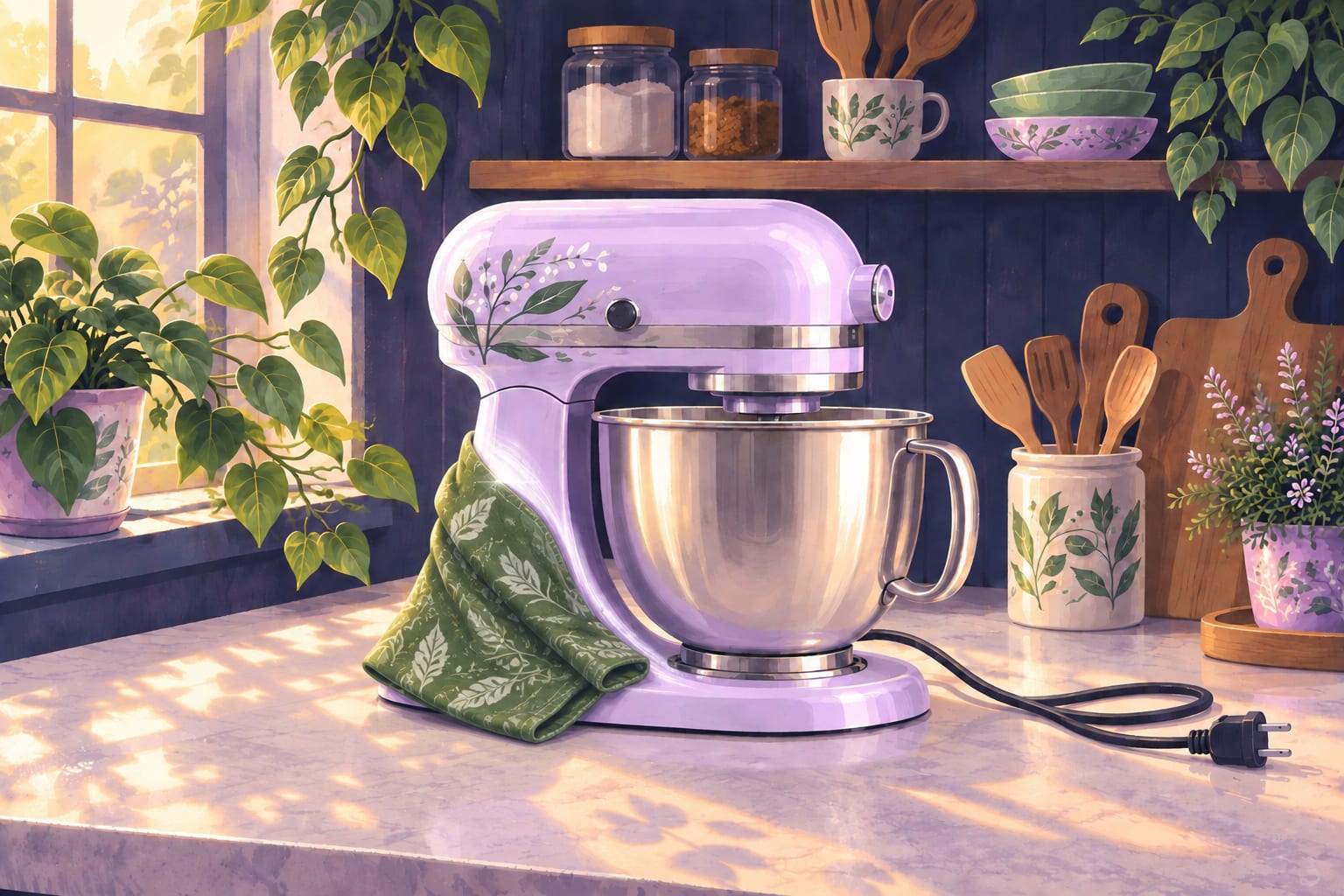
The motor is inside the body. So the mixer never goes in water, and it never goes under the faucet. Keep water away from the vents and any openings too.
Dip a soft cloth in warm, soapy water and wring it out until it's just damp. Wipe the head, the body, the base and the speed lever, and rinse your cloth often.
Dried batter comes off with a little patience. Lay the damp cloth over the spot for a minute or two to soften it, then wipe it away.
Clean the hidden spots
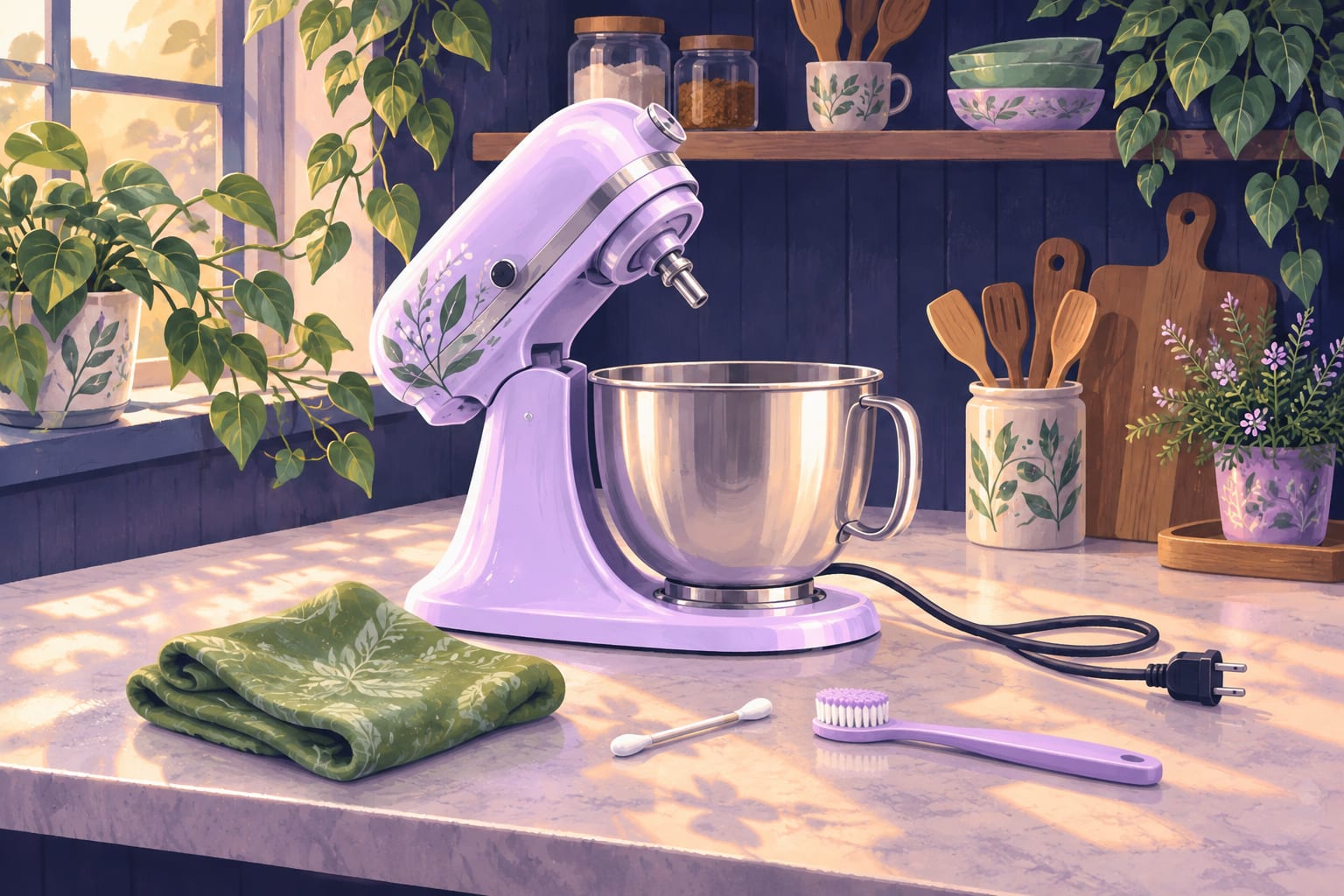
This is where the flour hides. Tilt the head back, or lower the bowl, depending on your mixer. Then look at three places:
One minute after baking
After each use, wash the bowl and attachments, and give the body a quick wipe with a damp cloth. It takes a minute, and nothing gets the chance to dry hard.
The hidden spots can wait for every few weeks, or for the end of a big baking day. Tilt the head back and clean them then. That's all it needs.
Worth a look underneath
The mess we can see is only part of the story. The rest settles quietly into the corners, and that's no one's fault. It's just how a busy kitchen works.
You don't have to catch it every time. Just tilt the head back now and then and take a look. A damp cloth and a few minutes, and the mixer is ready for the next good day.
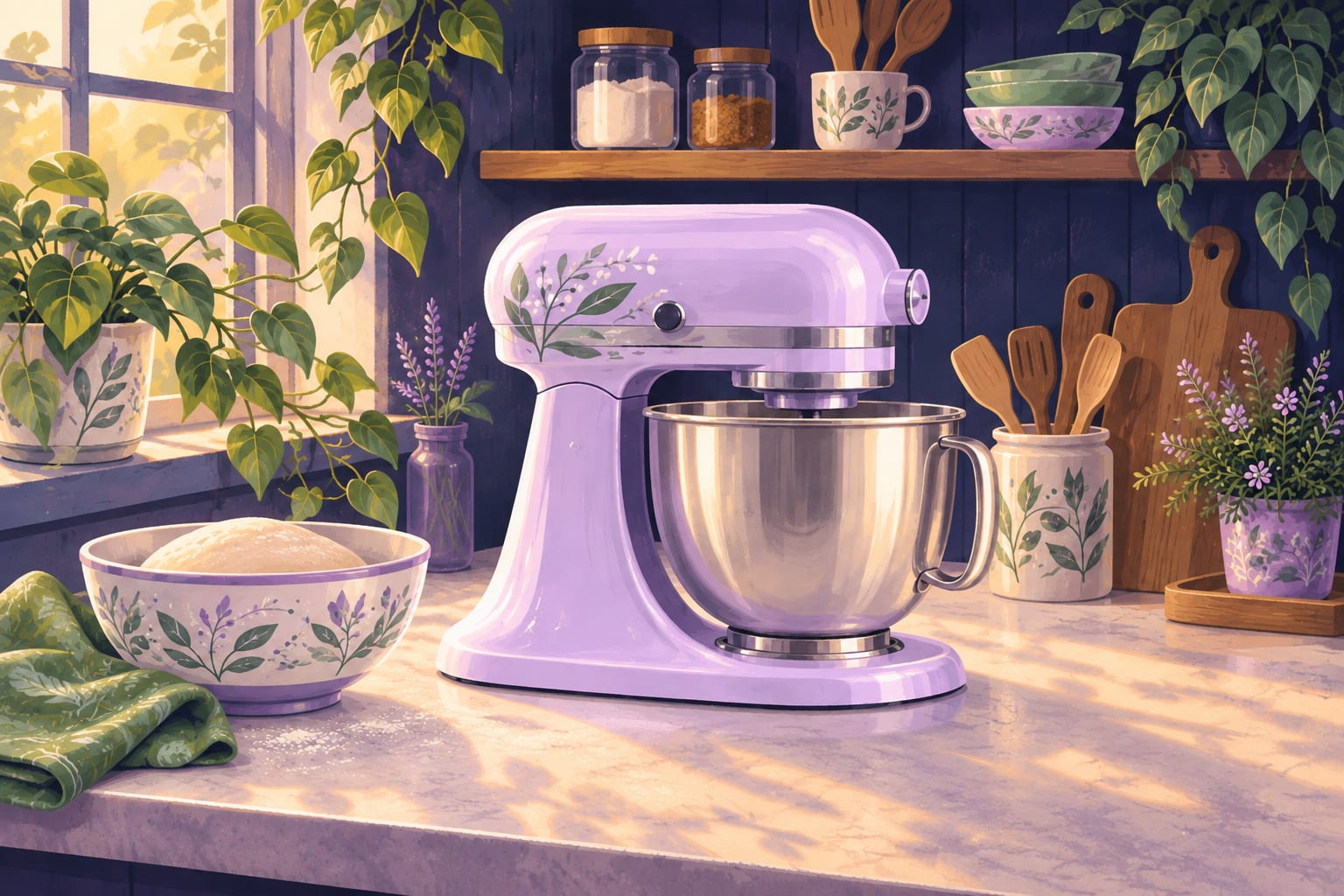
Look under the head. That's where the flour hides.