
Water hurts a wood floor more than dirt does.
Wring the Mop Until It Barely Drips
How to clean a wood floor without letting water soak into the boards.
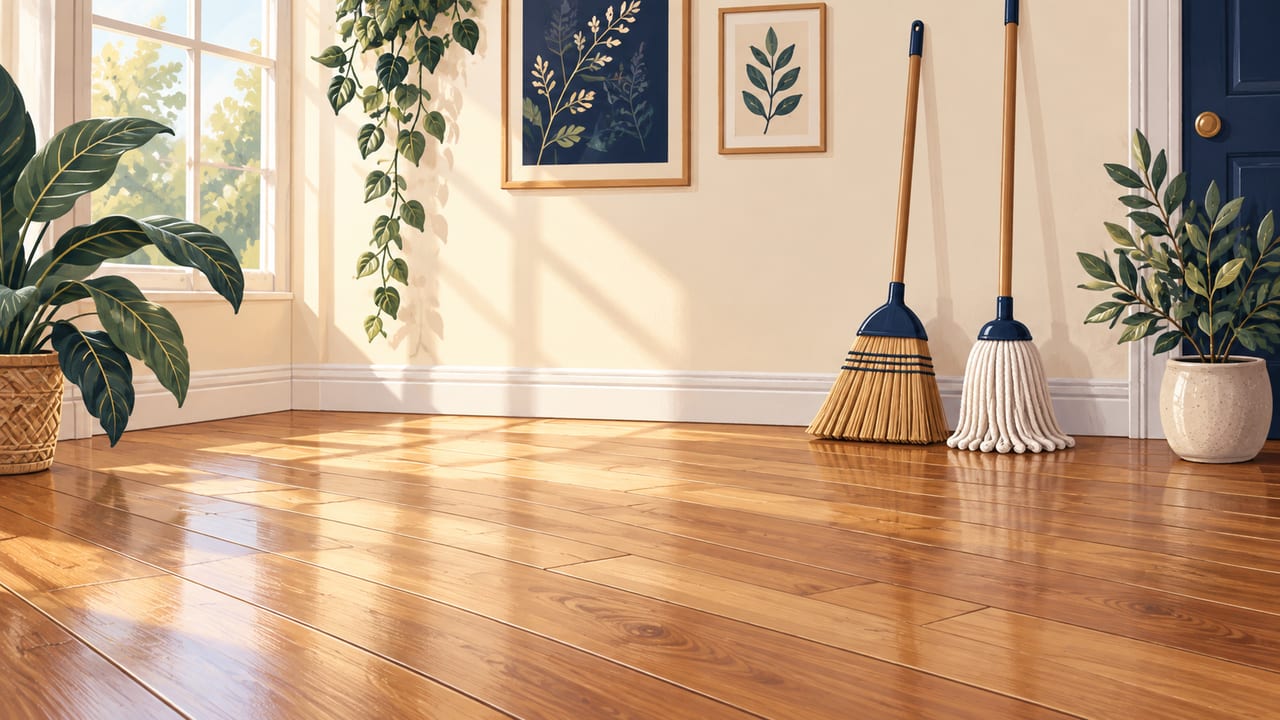
A wood floor can look fine after a wet mop and still be taking damage. Water that sits in the seams lifts the boards and dulls the finish.
So the trick isn't scrubbing harder. It's using less water, and drying what you do use.
Sweep first
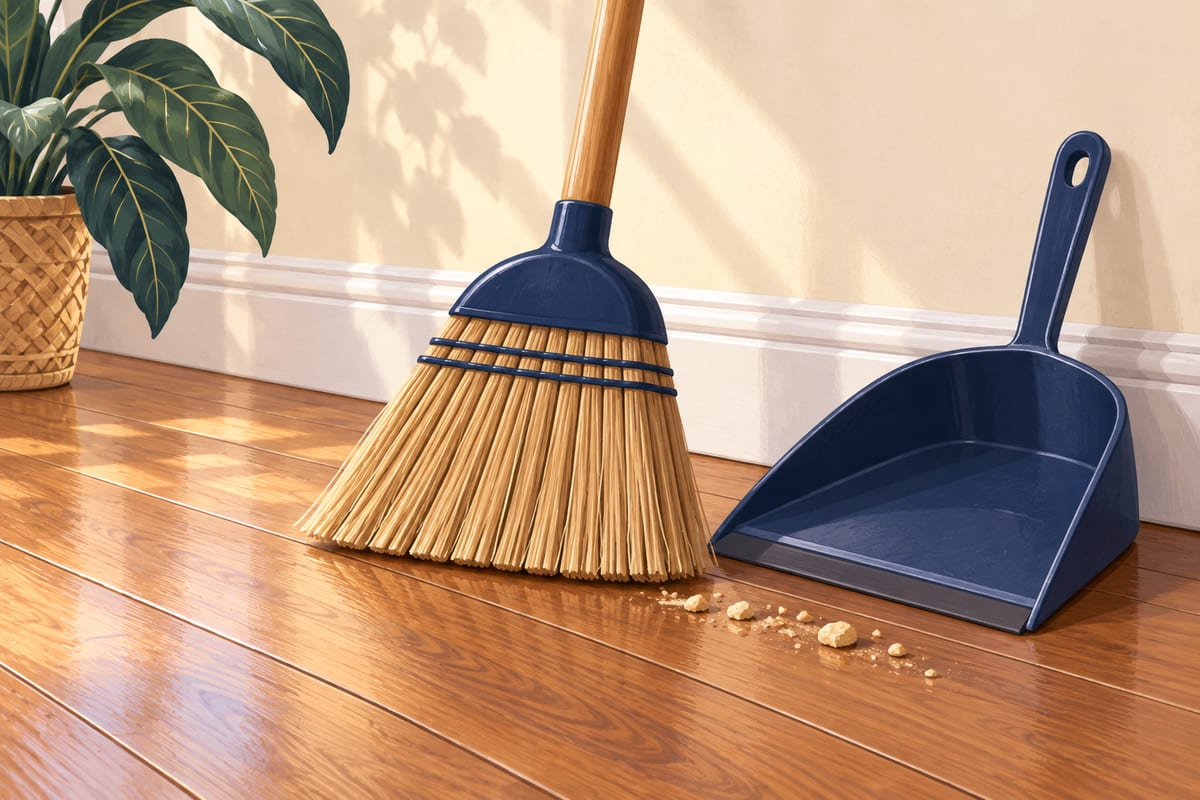
Sweep, or vacuum with the hard-floor setting, along the edges as well as the middle.
Grit under a mop scratches the finish. If the grit is already picked up, the mop only has to lift what's left.
Wring the mop until it is barely damp
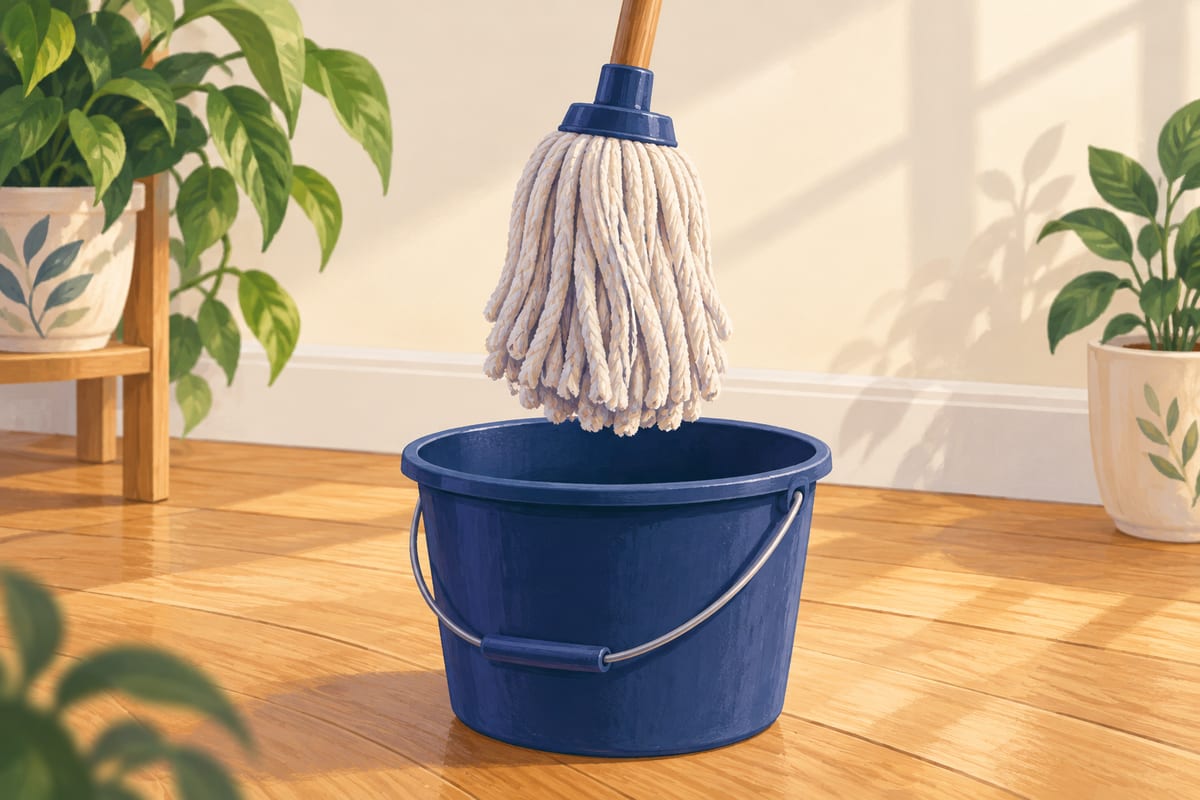
Mop with a mop wrung out until it is barely damp, working away from the door, then let the floor dry before walking on it.
A barely damp mop leaves a thin film that dries in minutes. A dripping mop leaves water that runs into the seams.
Let the floor dry
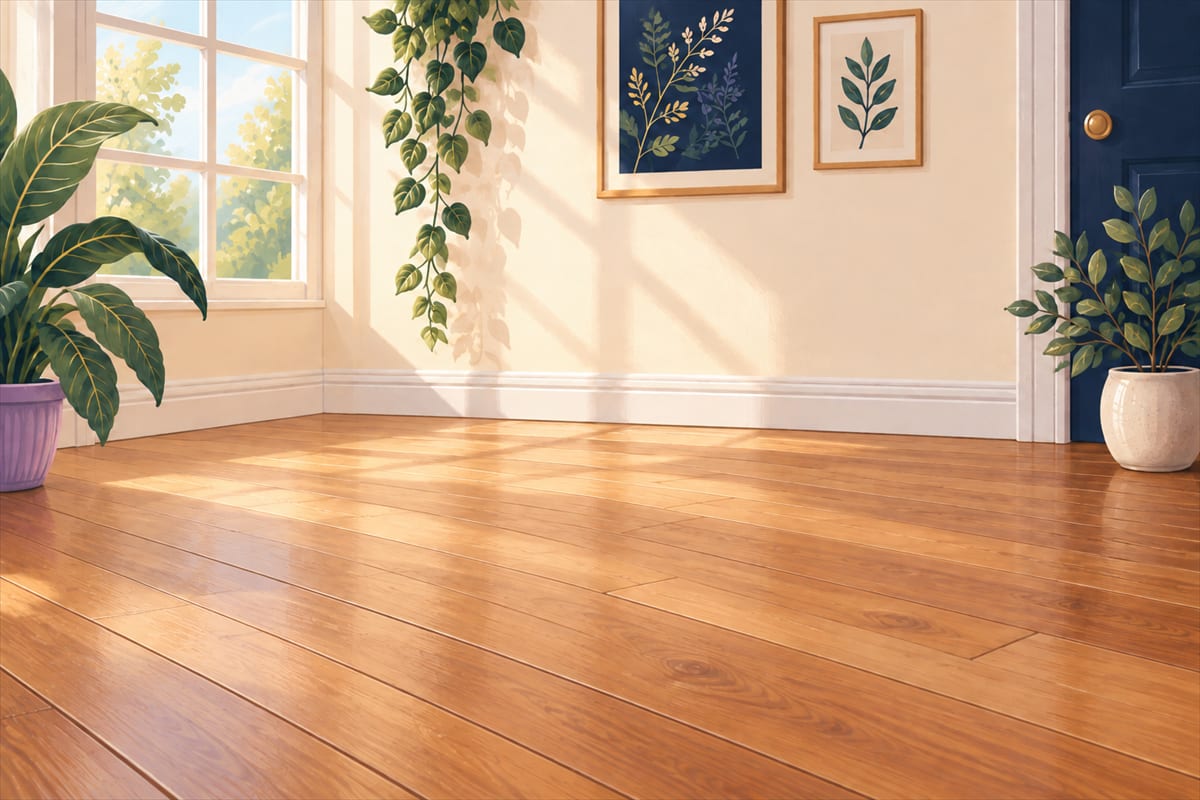
Stay off the floor until it's dry, and wipe up any spill the moment it happens.
Standing water is what does the harm. A dry floor can't lift.
Skip the steam mop
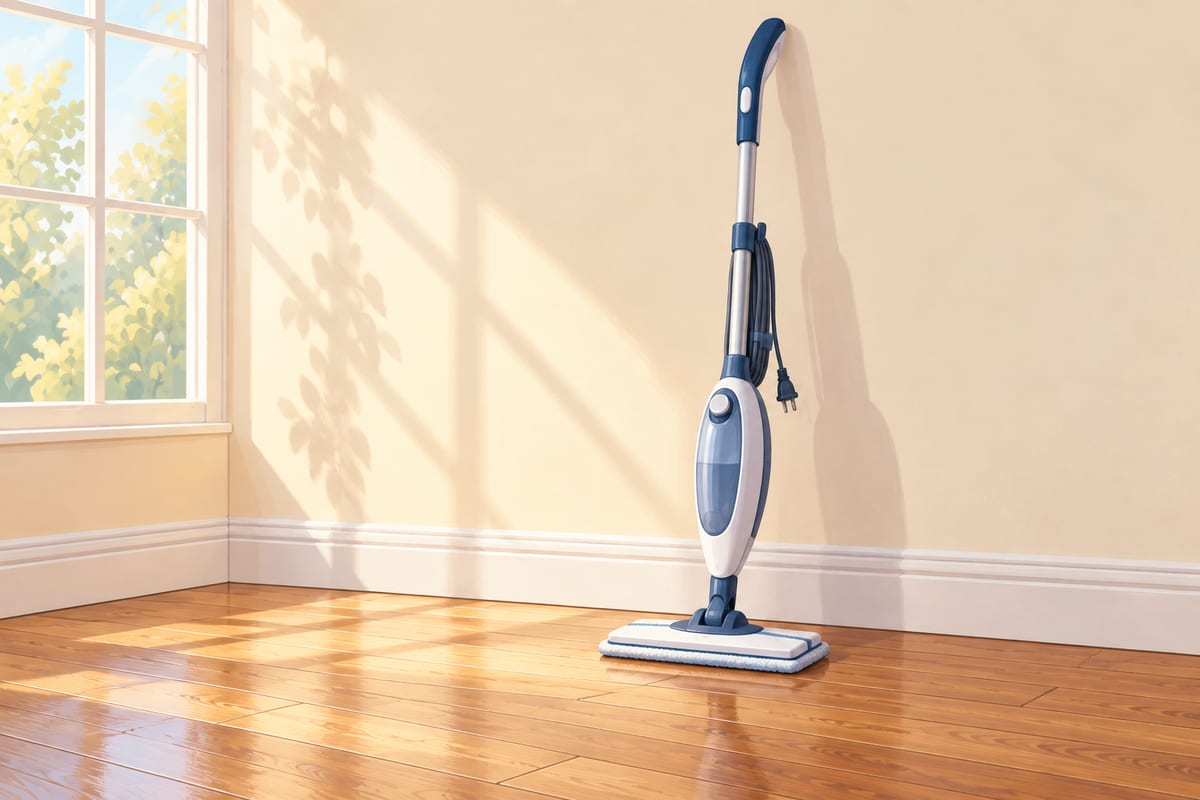
Don't use a steam mop on wood. Steam pushes hot water into the seams and can cloud the finish.
Get underneath, then finish at the baseboards
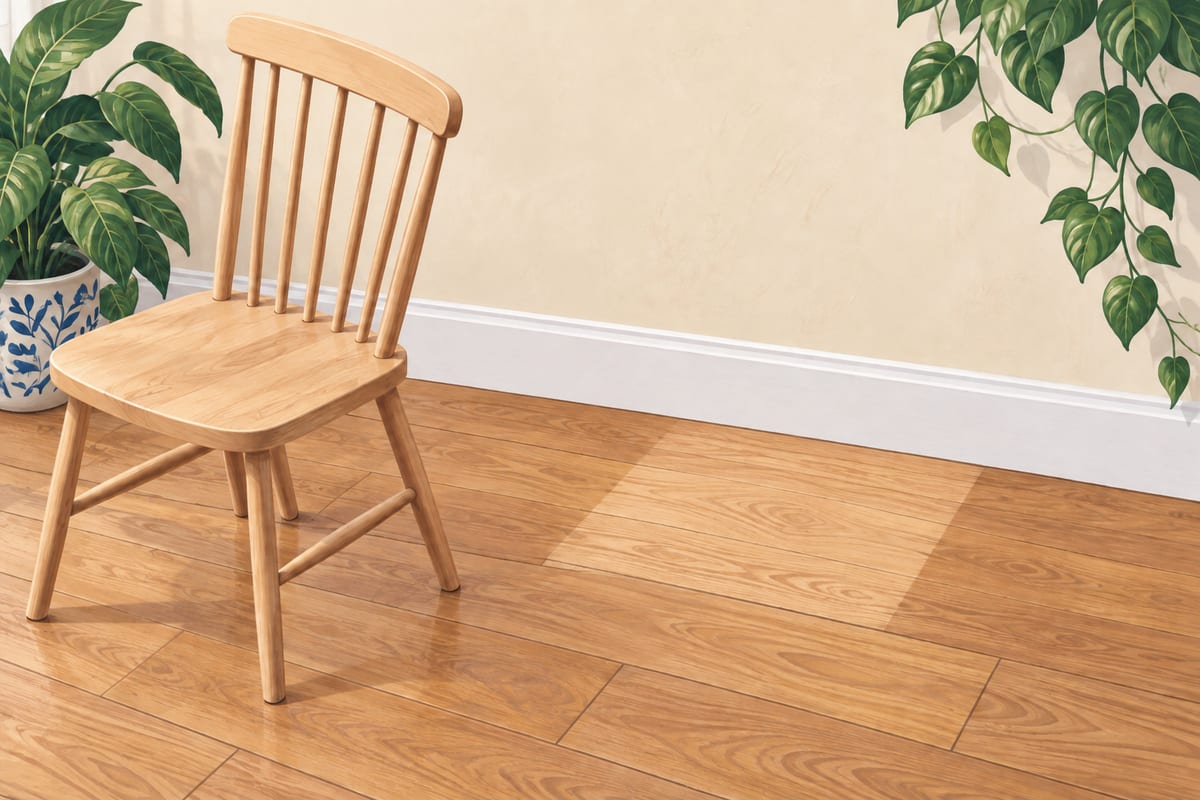
Move the lighter furniture and clean underneath. Then wipe along the baseboards.
Crumbs and dust collect where the broom doesn't reach, and they get ground into the finish the next time someone walks by.
Short on energy?
Just sweep the edges of the floor. That's enough for today.
The larger lesson
A wood floor doesn't wear out from being cleaned. It wears out from being wet. Less water, dried right away, does the whole job.
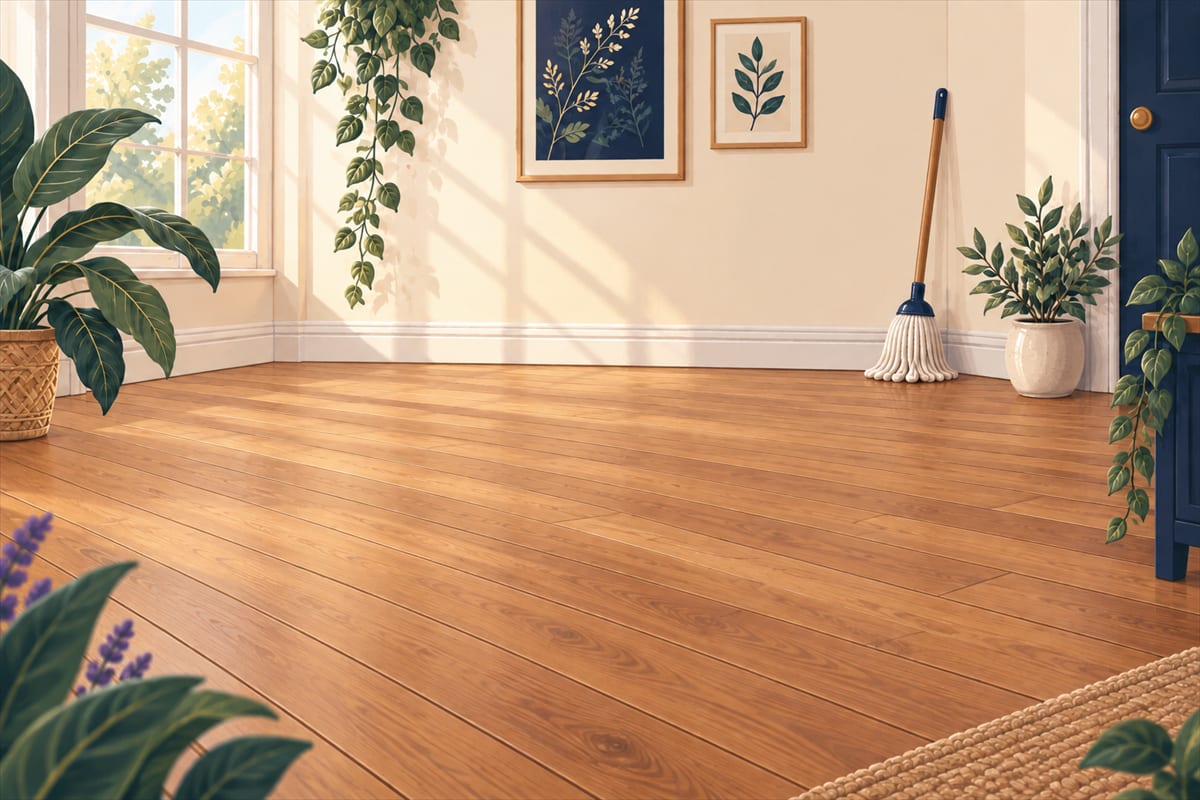
Barely damp is damp enough.